Participation in citizen science camera trap project dramatically increased school children’s knowledge of UK mammals
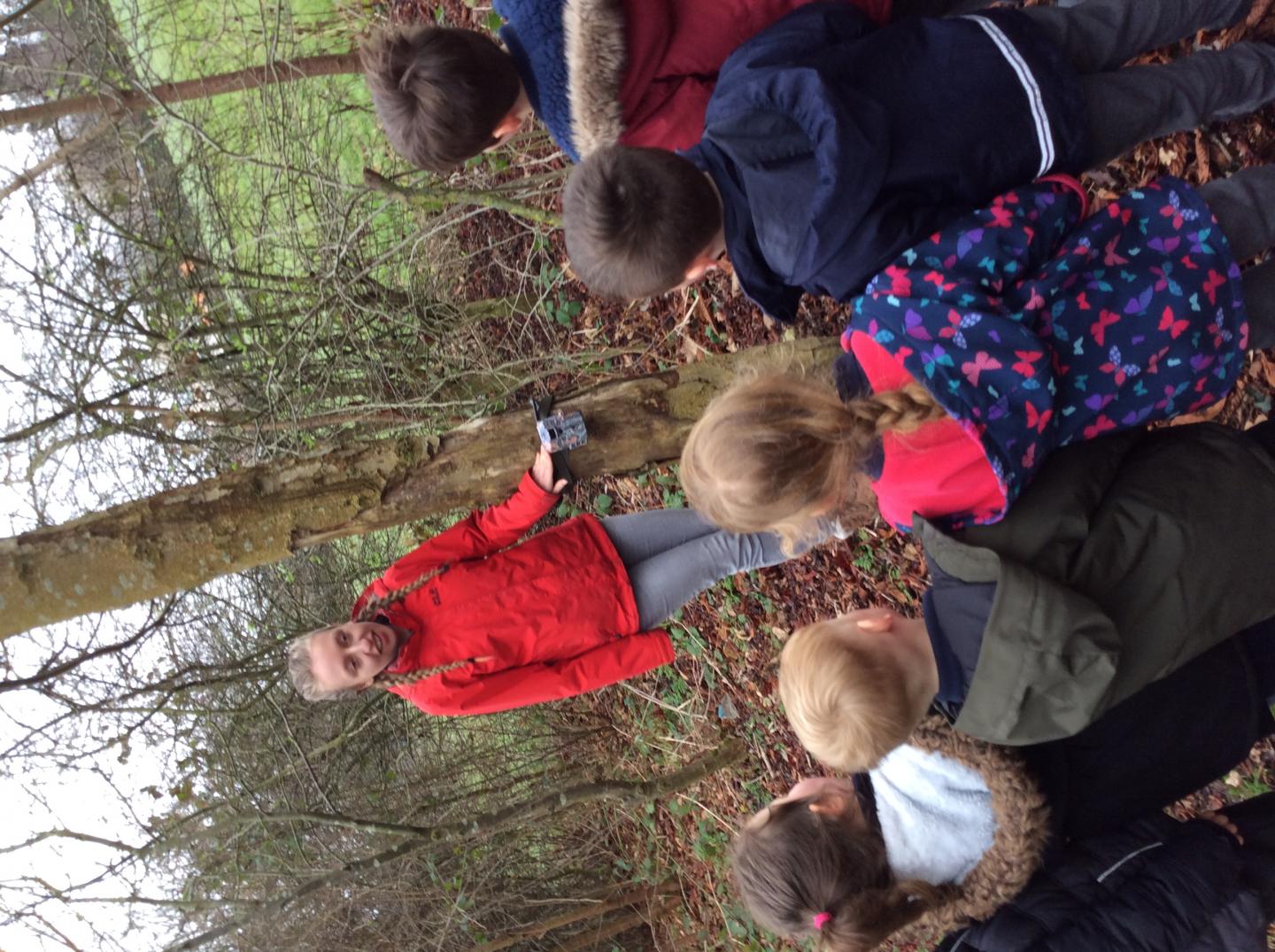
Credit: Samantha Mason
Prior to starting the project, which involved 3,000 primary school children across North East England, knowledge of UK mammals was generally poor. On average, pupils were able to name only three wild UK mammals. In most cases pupils were able to name more domestic animals than wild animals and a quarter of pupils named zoo animals like lions.
Samantha Mason, a PhD candidate at Durham University, who will be presenting the findings at the conference, said: “Some species that you might think more pupils would name such as hedgehogs and badgers were named by less than 20% of pupils, perhaps because of the strongly nocturnal nature of these species. Otter and beavers, both the focus of conservation successes over recent decades, were named by less than 5% of pupils.”
After participating in the project, pupils could name on average, six UK mammals. They were also more likely to name animals to species level rather than group, for instance ‘grey squirrel’ instead of ‘squirrel’. They could also better distinguish between native and introduced species.
Preliminary results also suggest that pupils had an increased connection to nature after participating in the project.
Teachers also showed an increased knowledge of UK mammals after the project and reported feeling inspired to include more outdoor learning in school. Some of the schools involved even went on to buy their own camera traps.
On the benefits of the MammalWeb project, Samantha Mason said: “Not only does this project increase the amount of data we have for UK wildlife, providing crucial knowledge to aid in conservation, it benefits the participants involved by increasing their knowledge and connection to nature, which in turn has been shown to have many positive benefits on physical and mental health.
“These benefits exert positive feedback on each other. When an individual benefits from being part of the project they will likely submit more records, and so will benefit even further from it. In many cases the initial intervention may only need to be small for it to spark this positive feedback loop and create a large impact.
“Schools have the potential to be key participants in ecological citizen science projects, contributing valuable data in large quantities. There seems to be a latent enthusiasm for local biodiversity within schools that we’re not currently tapping into.”
The MammalWeb project involved lending camera traps, normally used by researchers in the field, to 42 schools in the North East of England for one month. In that time schools contributed over 2,000 photo sequences and submitted over 13,000 classifications.
Schools also received either a workshop for pupils or training session for teachers where they learnt about UK mammals and practised classifying them. Children completed questionnaires before and after their involvement in the project, one of the key questions being “Please name all the mammals you know that live in the UK”.
The researchers found there was large variation in the size and quality in the outdoor areas of the schools. Some only had small areas of concrete with few places for camera traps, which consequently captured very little wildlife. “It is evident that, in these schools in particular, more effort needs to be put in to make sure these pupils have opportunities to learn about and connect with nature.”, said Samantha Mason.
The researchers also acknowledge that pressures on teachers and schools leave little scope for outdoor learning or extra-curricular activities on local wildlife. “One way of overcoming this is to try to integrate wider scientific projects with aspects of the curriculum.”, said Samantha. “For example, recognising that living things can be grouped in a variety of ways, could be taught by grouping species captured on camera traps into nocturnal/diurnal categories”.
With more support the researchers hope to expand the project to include more areas in the UK. This would allow them to compare the impacts of the project on children living in urban and rural environments. Other citizen sciences projects could also be brought in to expand beyond mammals.
“With sufficient funding, there is no reason why we couldn’t work with schools in Europe in the future”, said Samantha. “It would be particularly great for schools to classify camera trap photos from schools in different countries via MammalWeb, so they can compare the mammal communities.”
Samantha Mason will present MammalWeb’s work on Wednesday 11 December 2019 at the British Ecological Society annual meeting. The conference will bring together 1,200 ecologists from more than 40 countries to discuss the latest research.
###
Media Contact
Davy Falkner
[email protected]
44-075-259-66919
Original Source
https:/