


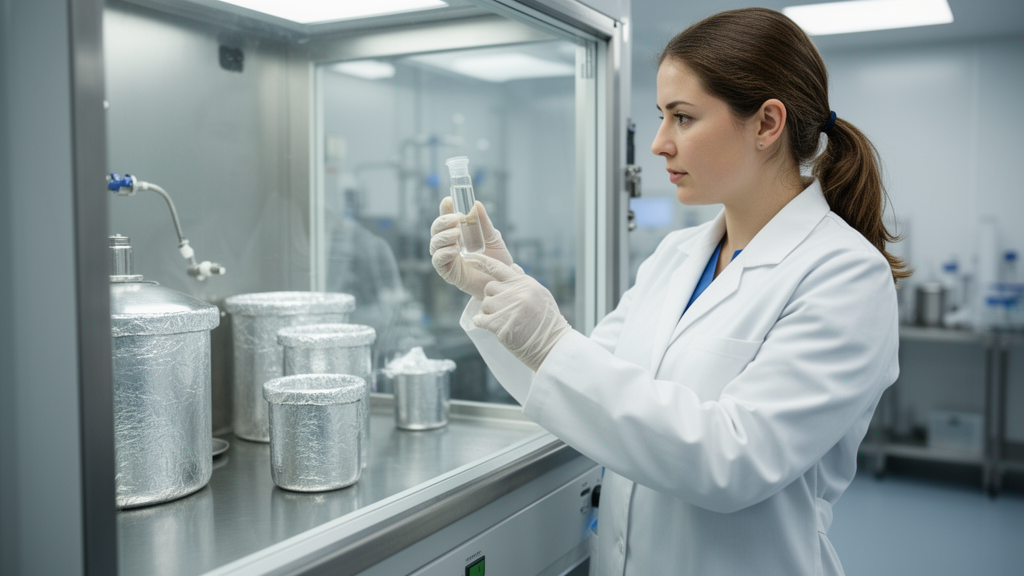
Scandium-44, an emerging PET radionuclide, has been produced and purified with a reproducibility level that its developers say makes it ready for clinical translation. A research article published in EJNMMI Radiopharmacy and Chemistry on 30 September 2026 describes an optimized production and separation workflow that overcomes long-standing problems with product quality, specifically the purity and pH reproducibility of the final product, and demonstrates automated radiopharmaceutical synthesis suitable for multiple patient doses.
Scandium-44 offers favourable physical properties for positron emission tomography, including a 4.04-hour half-life and positron emission. These characteristics, combined with a coordination chemistry similar to that of the radiolanthanides, support its use in theragnostic radiopharmaceuticals, where the same targeting molecule can carry an imaging or a therapeutic radionuclide. Until now, however, challenges in product quality have limited its use in automated radiopharmaceutical synthesis, which is what the study set out to address.
The team produced scandium-44 by proton irradiation of enriched calcium-44 targets and purified it using a chromatographic procedure based on DGA and AG MP-50 resins, delivering the radionuclide in ammonium acetate buffer.
Before settling on the optimized method, the researchers evaluated radiochemical separation using extraction and cation exchange resins, including DGA, TK221, TK222, AG MP-50 and AG 50 W-X8, in preliminary experiments. The final procedure was assessed for radionuclidic purity by γ-ray spectrometry and for chemical purity by ICP-MS, allowing the quality of each batch to be characterized quantitatively rather than inferred.
The performance figures reported in the study are substantial. Irradiation of 20 mg targets for one hour yielded up to 4.4 GBq of scandium-44 after separation. The optimized separation method provided reproducible product quality with low metal contamination, radionuclidic purity exceeding 99 percent and a stable pH of 4. These parameters matter in practice, because inconsistent pH and metal contamination are precisely the factors that can compromise downstream radiolabelling.
Manual labelling of [44Sc]Sc-DOTATOC achieved radiochemical purity greater than 95 percent at apparent molar activities of up to 50 MBq per nanomole, a measure of how much radioactivity can be attached per amount of targeting molecule.
The automated route is the step most directly relevant to clinical practice. Synthesis on an E&Z module produced [44Sc]Sc-DOTATOC with an 85 percent yield, in a formulation described as suitable for multiple patient doses: 180 MBq of activity, 100 µg of DOTATOC and 20 mL of final product.
The authors conclude that the study presents an optimized scandium-44 production and separation method achieving high purity and activity concentration, and that labelling to various ligands at high apparent molar activity indicates the purity, reproducibility and readiness of the approach for clinical translation. The article is currently available as an early, peer-reviewed accepted version, citable under a permanent DOI, subject to further edits before the final Version of Record appears.
For the nuclear medicine field, the result addresses a practical bottleneck rather than a conceptual one. By demonstrating reproducible radionuclidic purity above 99 percent, stable product pH, low metal contamination and automated synthesis with high yield, the study provides the production and quality foundation that would be needed before such tracers can be evaluated in patients. The findings reported are from this single production and labelling study; the authors describe the method as ready for clinical translation, with clinical use itself remaining the next step.
Subject of Research: Reproducible production, purification and automated radiolabelling of the PET radionuclide scandium-44 for nuclear medicine
Article Title: Unlocking the potential of scandium-44: reproducible production and radiolabelling methods towards clinical use in nuclear medicine
Article References: Favaretto, C., Moiseeva, A. N., Grundler, P. V., Théry, M. G., Beyer, D., Barrote, V. R., Zhang, H., Sommerhalder, A., Schibli, R., Gerchow, L. F., Müller, C., & van der Meulen, N. P. (2026). Unlocking the potential of scandium-44: reproducible production and radiolabelling methods towards clinical use in nuclear medicine. EJNMMI Radiopharmacy and Chemistry. https://doi.org/10.1186/s41181-026-00504-5
Image Credits: AI Generated
DOI: 10.1186/s41181-026-00504-5
Keywords: scandium-44, PET, radiopharmaceuticals, radionuclide production, calcium-44 targets, radiochemical separation, DOTATOC, theragnostics, automated synthesis, EJNMMI Radiopharmacy and Chemistry, radionuclidic purity, nuclear medicine
News Source: Bethany Barker. (October 28, 2026). Scandium-44 moves closer to the clinic with reproducible production and radiolabelling method. Scienmag.



