• HOME
  • NEWS
  • EXPLORE
    • CAREER
      • Companies
      • Jobs
    • EVENTS
    • iGEM
      • News
      • Team
    • PHOTOS
    • VIDEO
    • WIKI
  • BLOG
  • COMMUNITY
    • FACEBOOK
    • INSTAGRAM
    • TWITTER
Monday, May 11, 2026
BIOENGINEER.ORG
No Result
View All Result
  • Login
  • HOME
  • NEWS
  • EXPLORE
    • CAREER
      • Companies
      • Jobs
        • Lecturer
        • PhD Studentship
        • Postdoc
        • Research Assistant
    • EVENTS
    • iGEM
      • News
      • Team
    • PHOTOS
    • VIDEO
    • WIKI
  • BLOG
  • COMMUNITY
    • FACEBOOK
    • INSTAGRAM
    • TWITTER
  • HOME
  • NEWS
  • EXPLORE
    • CAREER
      • Companies
      • Jobs
        • Lecturer
        • PhD Studentship
        • Postdoc
        • Research Assistant
    • EVENTS
    • iGEM
      • News
      • Team
    • PHOTOS
    • VIDEO
    • WIKI
  • BLOG
  • COMMUNITY
    • FACEBOOK
    • INSTAGRAM
    • TWITTER
No Result
View All Result
Bioengineer.org
No Result
View All Result
Home NEWS Science News Biology

Salute the venerable ensign wasp, killing cockroaches for 25 million years

Bioengineer by Bioengineer
September 28, 2020
in Biology
Reading Time: 2 mins read
0
IMAGE
Share on FacebookShare on TwitterShare on LinkedinShare on RedditShare on Telegram

IMAGE

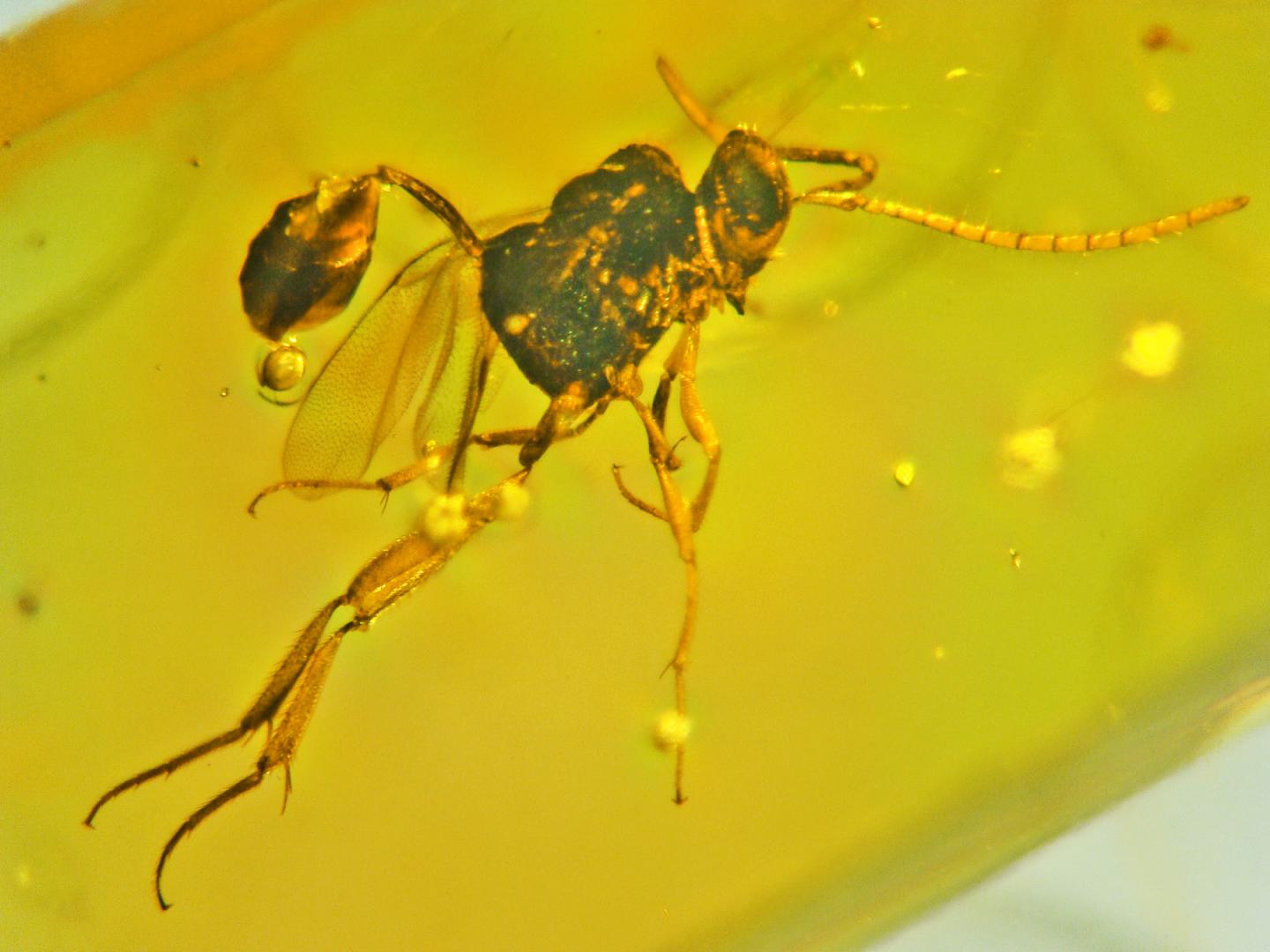
Credit: George Poinar Jr., Oregon State University

CORVALLIS, Ore. – An Oregon State University study has identified four new species of parasitic, cockroach-killing ensign wasps that became encased in tree resin 25 million years ago and were preserved as the resin fossilized into amber.

“Some species of ensign wasps have even been used to control cockroaches in buildings,” OSU researcher George Poinar Jr. said. “The wasps sometimes are called the harbingers of cockroaches – if you see ensign wasps you know there are at least a few cockroaches around. Our study shows these wasps were around some 20 or 30 million years ago, with probably the same behavioral patterns regarding cockroaches.”

Ensign wasps, of the Hymenoptera order and scientifically known as Evaniidae, earned their common name because their abdomen resembles a flag; an ensign is a large flag on a ship, usually flown at the stern or rear of the vessel, that indicates the ship’s nationality.

“As the wasps move about, their ‘ensign’ is constantly moving up and down as if they are flag waving,” said Poinar, professor emeritus in the OSU College of Science and an international expert in using plant and animal life forms trapped in amber to learn more about the biology and ecology of the distant past.

About 400 species of ensign wasps exist today, distributed across 20 genera. The wasps live everywhere except polar regions. They typically measure 5 to 7 millimeters in length and don’t sting or bite but are lethal for unhatched cockroaches.

A female ensign wasp will look for cockroach egg cases, known as ootheca, and lay an egg on or in one of the cockroach eggs inside the case. When the wasp egg hatches, the larva eats the cockroach egg where it was laid.

Successive instars of the larva then consume the other dozen or so eggs inside the cockroach egg case. Mature wasp larvae pupate within the cockroach egg case en route to coming out as adults, and no cockroach offspring emerge from an egg case infiltrated by an ensign wasp.

Analyzing Tertiary period specimens from Dominican amber, Poinar was able to describe three new species of ensign wasps: Evaniella setifera, Evaniella dominicana and Semaeomyia hispaniola. He described a fourth, Hyptia mexicana, from Mexican amber. The Tertiary period began 65 million years ago and lasted for more than 63 million years.

No cockroaches accompanied the wasps in the amber, but three flying termites were found along with an ensign wasp in one of the Dominican amber pieces. It’s likely the termites were sharing a nest with the cockroaches and this attracted the wasp, Poinar said.

###

Findings were published in the journal Historical Biology.

Media Contact
George Poinar Jr.
[email protected]

Original Source

https://beav.es/oPL

Related Journal Article

http://dx.doi.org/10.1080/08912963.2020.1818075

Tags: BiologyEcology/EnvironmentEntomologyEvolutionParasitology
Share12Tweet8Share2ShareShareShare2

Related Posts

Ancient Plant Populations Reveal Fresh Insights into Climate Resilience — Biology

Ancient Plant Populations Reveal Fresh Insights into Climate Resilience

May 8, 2026
Rare Brain Disorders in Children Linked to Mutations in Lesser-Known Protein Complex — Biology

Rare Brain Disorders in Children Linked to Mutations in Lesser-Known Protein Complex

May 8, 2026

From Odd Insect to Underwater Predator: The Remarkable Evolution of a Bloodthirsty Fruit Fly

May 8, 2026

SNU Professor Sangwoo Seo’s Team Develops Next-Generation CRISPR Biocontainment Technology to Control Microbial Survival Without DNA Cleavage

May 8, 2026
Please login to join discussion

POPULAR NEWS

  • Research Indicates Potential Connection Between Prenatal Medication Exposure and Elevated Autism Risk

    840 shares
    Share 336 Tweet 210
  • New Study Reveals Plants Can Detect the Sound of Rain

    727 shares
    Share 290 Tweet 181
  • Salmonella Haem Blocks Macrophages, Boosts Infection

    61 shares
    Share 24 Tweet 15
  • Breastmilk Balances E. coli and Beneficial Bacteria in Infant Gut Microbiomes

    57 shares
    Share 23 Tweet 14

About

We bring you the latest biotechnology news from best research centers and universities around the world. Check our website.

Follow us

Recent News

New Post-Hoc Analysis Explores Daily Oral Orforglipron Use in Adults Over 65 with Obesity, Regardless of Diabetes Status

Evaluating Digoxin Use in Patients with Symptomatic Rheumatic Heart Disease

Evaluating the Effectiveness and Safety of Digitalis Glycosides in Treating Heart Failure

Subscribe to Blog via Email

Enter your email address to subscribe to this blog and receive notifications of new posts by email.

Join 82 other subscribers
  • Contact Us

Bioengineer.org © Copyright 2023 All Rights Reserved.

Welcome Back!

Login to your account below

Forgotten Password?

Retrieve your password

Please enter your username or email address to reset your password.

Log In
No Result
View All Result
  • Homepages
    • Home Page 1
    • Home Page 2
  • News
  • National
  • Business
  • Health
  • Lifestyle
  • Science

Bioengineer.org © Copyright 2023 All Rights Reserved.