• HOME
  • NEWS
  • EXPLORE
    • CAREER
      • Companies
      • Jobs
    • EVENTS
    • iGEM
      • News
      • Team
    • PHOTOS
    • VIDEO
    • WIKI
  • BLOG
  • COMMUNITY
    • FACEBOOK
    • INSTAGRAM
    • TWITTER
Tuesday, September 1, 2026
BIOENGINEER.ORG
No Result
View All Result
  • Login
  • HOME
  • NEWS
  • EXPLORE
    • CAREER
      • Companies
      • Jobs
        • Lecturer
        • PhD Studentship
        • Postdoc
        • Research Assistant
    • EVENTS
    • iGEM
      • News
      • Team
    • PHOTOS
    • VIDEO
    • WIKI
  • BLOG
  • COMMUNITY
    • FACEBOOK
    • INSTAGRAM
    • TWITTER
  • HOME
  • NEWS
  • EXPLORE
    • CAREER
      • Companies
      • Jobs
        • Lecturer
        • PhD Studentship
        • Postdoc
        • Research Assistant
    • EVENTS
    • iGEM
      • News
      • Team
    • PHOTOS
    • VIDEO
    • WIKI
  • BLOG
  • COMMUNITY
    • FACEBOOK
    • INSTAGRAM
    • TWITTER
No Result
View All Result
Bioengineer.org
No Result
View All Result
Home NEWS Science News Biology

Salk neuroscientist receives new NSF award to model the brain

Bioengineer by Bioengineer
August 9, 2017
in Biology
Reading Time: 2 mins read
0
Share on FacebookShare on TwitterShare on LinkedinShare on RedditShare on Telegram
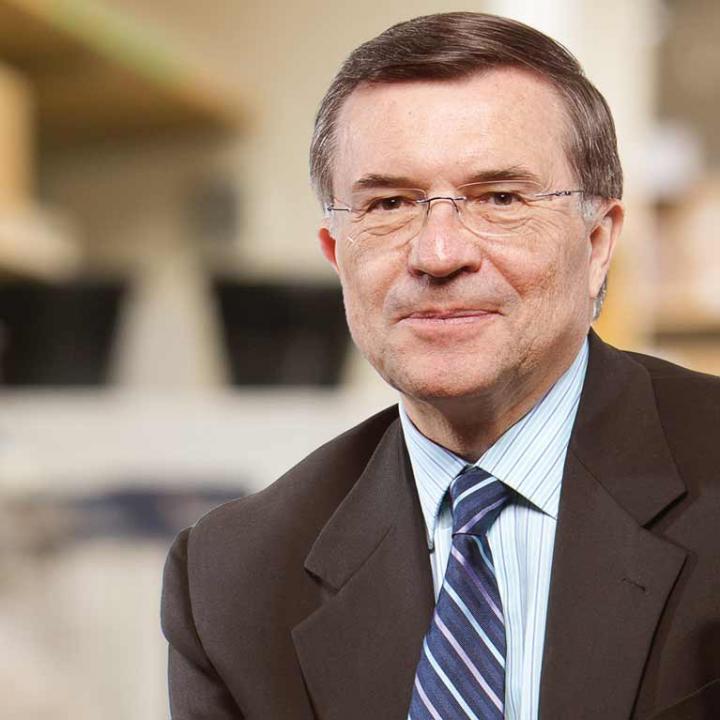
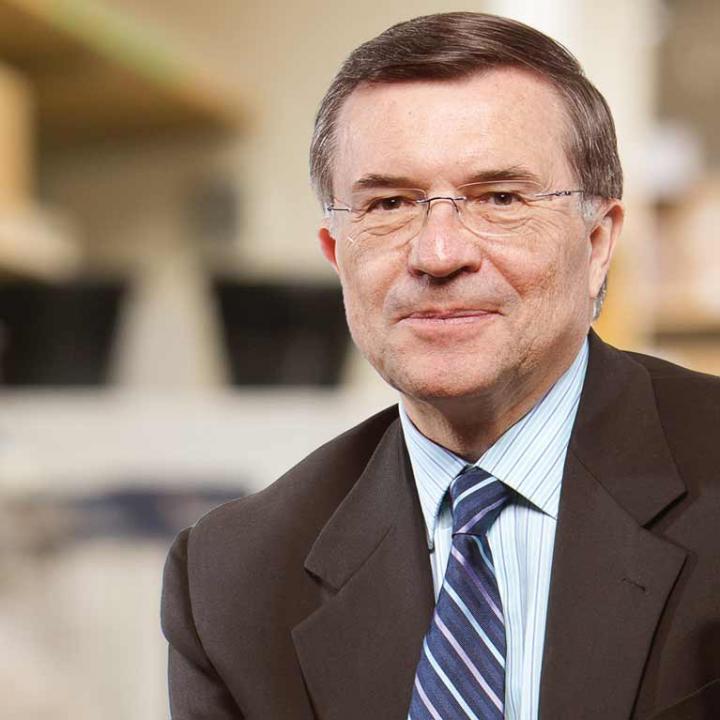
IMAGE

Credit: Salk Institute

LA JOLLA–As part of the National Science Foundation's funding for new multidisciplinary approaches to neuroscience, Salk Professor Terrence Sejnowski together with the California Institute of Technology will receive over $1 million over 3 years to pursue advanced modeling of the brain.

The NSF awarded a total of $16 million in 19 awards to cross-disciplinary teams from across the United States to conduct innovative research focused on neural and cognitive systems. The awards will contribute to NSF's investments in support of Understanding the Brain and the BRAIN Initiative, a coordinated research effort that seeks to accelerate the development of new neurotechnologies.

Sejnowski's lab uses computer modeling and other techniques to test hypotheses on how brain cells process, sort and store information. By creating and refining computational models on how the brain stores information for different activities, Sejnowski gets a better understanding of what information different cell types encode, what molecules are needed and how signals move throughout the brain. At the same time, his lab learns how diseases such as schizophrenia or Parkinson's might alter these patterns.

"Our new NSF award will enable us, together with Caltech collaborators, to model the brain as a layered control system operating on a wide range of time scales," says Sejnowski, who is a Howard Hughes Medical Institute investigator and holder of the Francis Crick chair. "We will test our models on humans with tasks that require fast reflexes and long-range planning, such as riding a mountain bike down a bumpy, twisting trail."

The new NSF projects leverage advanced research to investigate how neural and cognitive systems interact with education, engineering and computer science, thanks to the support of the NSF Integrative Strategies for Understanding Neural and Cognitive Systems (NCS) program. The NCS program supports innovative, boundary-crossing efforts to push the frontiers of brain science.

"It takes insight and courage to tackle these problems," said Ken Whang, NSF program director in the Computer and Information Science and Engineering Directorate (CISE). "These teams are combining their expertise to try to forge new paths forward on some of the most complex and important challenges of understanding the brain. They are posing problems in new ways, taking intellectual and technical risks that have huge potential payoff."

###

About the Salk Institute for Biological Studies:

Every cure has a starting point. The Salk Institute embodies Jonas Salk's mission to dare to make dreams into reality. Its internationally renowned and award-winning scientists explore the very foundations of life, seeking new understandings in neuroscience, genetics, immunology, plant biology and more. The Institute is an independent nonprofit organization and architectural landmark: small by choice, intimate by nature and fearless in the face of any challenge. Be it cancer or Alzheimer's, aging or diabetes, Salk is where cures begin. Learn more at: salk.edu.

Media Contact

Salk Communications
[email protected]
858-453-4100
@salkinstitute

Salk Institute for Biological Studies

Original Source

https://www.salk.edu/news-release/salk-neuroscientist-receives-new-nsf-award-model-brain/
Share12Tweet8Share2ShareShareShare2

Related Posts

Methylation puts parasites in motion

Methylation puts parasites in motion

August 31, 2026
Desiccation promotes DNA damage and rifampin resistance in Mycobacterium tuberculosis

Desiccation promotes DNA damage and rifampin resistance in Mycobacterium tuberculosis

August 31, 2026

Gastrointestinal Parasitism in Cattle and Water Buffaloes in Pakistan: Prevalence and Associated Risk Factors

August 31, 2026

Development of HPLC–PDA method for steviol glycosides analysis in food matrices

August 31, 2026
Please login to join discussion

POPULAR NEWS

  • β-Sitosterol from Ipomoea carnea Jacq. As a promising anti-inflammatory agent: Evidence from in silico modeling and in vitro validation

    29 shares
    Share 12 Tweet 7
  • Design, fabrication and characterization of a wearable Fiber Bragg grating sensor for cardiorespiratory monitoring using finger plethysmography

    29 shares
    Share 12 Tweet 7
  • KAIST opens the era of industrial-scale microbial foods, proposing growth strategies for the next-generation protein market

    29 shares
    Share 12 Tweet 7
  • Virologist awarded $2 million NIH grant to investigate how virus-infected cells live and die

    29 shares
    Share 12 Tweet 7

About

We bring you the latest biotechnology news from best research centers and universities around the world. Check our website.

Follow us

Recent News

β-Sitosterol from Ipomoea carnea Jacq. As a promising anti-inflammatory agent: Evidence from in silico modeling and in vitro validation

Design, fabrication and characterization of a wearable Fiber Bragg grating sensor for cardiorespiratory monitoring using finger plethysmography

KAIST opens the era of industrial-scale microbial foods, proposing growth strategies for the next-generation protein market

Subscribe to Blog via Email

Enter your email address to subscribe to this blog and receive notifications of new posts by email.

Join 85 other subscribers
  • Contact Us

Bioengineer.org © Copyright 2023 All Rights Reserved.

Welcome Back!

Login to your account below

Forgotten Password?

Retrieve your password

Please enter your username or email address to reset your password.

Log In
No Result
View All Result
  • Homepages
    • Home Page 1
    • Home Page 2
  • News
  • National
  • Business
  • Health
  • Lifestyle
  • Science

Bioengineer.org © Copyright 2023 All Rights Reserved.