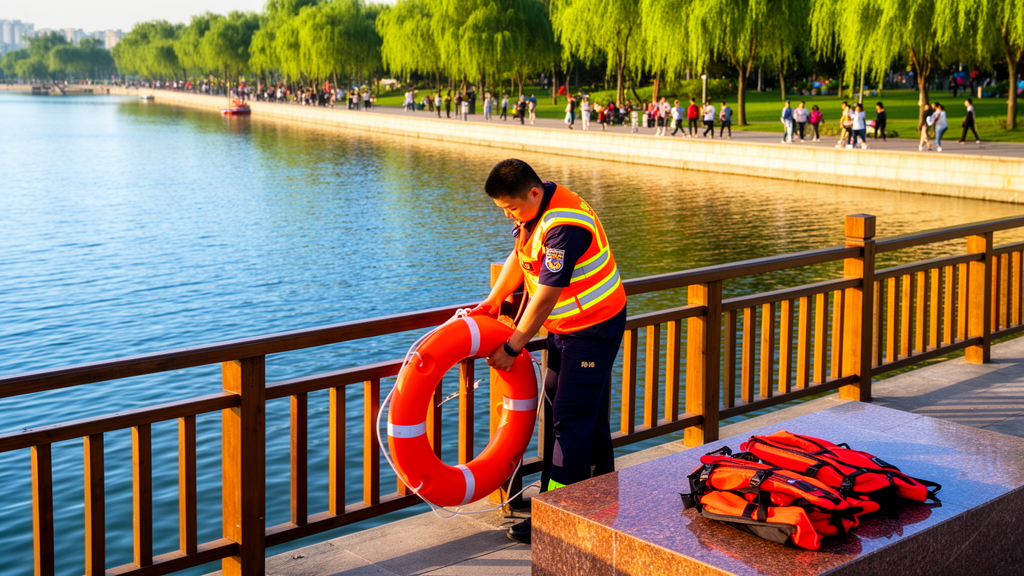
In a comparative case analysis of weather-related emergencies in China, differences in drowning prevention outcomes were consistently associated with how capability, opportunity, and motivation aligned within the warning-to-action window. The study evaluated how warning information is converted into water-safety behaviour, finding that protective outcomes were associated with translating warnings into operational and enforceable safety measures rather than leaving them purely informational. Across the cases, the alignment of capability, opportunity, and motivation was consistently associated with whether protective action successfully reduced exposure or failure pathways occurred.
Drowning remains a persistent yet preventable public health concern that intensifies during severe weather events such as sudden storms, typhoons, floods, and rapidly shifting hydrological conditions. These hazards compress the critical time window in which individuals and authorities can take protective action. While weather warnings, safety regulations, and formal emergency plans are increasingly accessible, casualties continue to happen when meteorological alerts fail to trigger timely, feasible, and strictly enforceable interventions on the ground.
To understand why warning information succeeds or fails to produce protective behaviour, the researchers employed a document-based comparative case study design focused on water-safety emergencies across China. The investigation reviewed publicly available official investigation reports, government notices, and media accounts. Cases were purposively selected to reflect contrasting outcomes, comparing severe casualty events against incidents where early protective measures effectively limited exposure to hazardous water conditions.
The case analysis was structured using an extended Capability–Opportunity–Motivation–Behaviour framework that categorised systemic factors into four core operational dimensions. Physical opportunity captured external environmental constraints, including hazard intensity, prevailing water conditions, and the duration of the available action window. Social opportunity encompassed administrative and organizational factors, such as warning delivery mechanisms, operational restrictions, supervisory oversight, rescue capacity, and cross-organisational coordination. Motivation accounted for human and institutional priorities, encompassing safety prioritisation, risk perception, acceptance of responsibility, and compliance avoidance. Finally, capability addressed operational competencies, including frontline risk recognition, decision-making under stress, command capacity, life-jacket enforcement, return-to-shore coordination, evacuation protocols, and emergency rescue mobilisation.
Physical opportunity constrained the time and conditions available for action, while social opportunity was closely associated with whether warnings were translated into enforceable measures. Protective-action pathways were primarily distinguished from failure pathways by high safety prioritisation, rapid risk recognition, clear acceptance of responsibility, and practical execution capacity. In contrast, failure pathways consistently emerged when emergency alerts remained merely informational instead of operational, when organizational responses to escalating risks were delayed or insufficient, and when frontline personnel faced limitations in practical water-safety capability.
Based on these comparative observations, the author concluded that drowning prevention during weather emergencies must be addressed as a complex behavioural systems and implementation challenge rather than simply an individual skill issue. Applying the extended COM-B framework provides a structured approach for pinpointing breakdowns along the warning-to-action chain and targeting public health interventions. The analysis highlighted the potential value of implementing actionable warning protocols, enforceable operating rules, strengthened frontline command capacity, consistent enforcement of safety equipment such as life jackets, clear public risk communication, and scenario-based training for severe weather emergencies.
Subject of Research: Drowning prevention and protective action during weather-related emergencies using an extended COM-B framework
Article Title: Converting weather warnings into water safety: a comparative case study of drowning prevention using an extended COM-B framework
Article References: Wang, X.-J. (2026). Converting weather warnings into water safety: a comparative case study of drowning prevention using an extended COM-B framework. BMC Public Health. https://doi.org/10.1186/s12889-026-30111-7
Image Credits: AI Generated
DOI: 10.1186/s12889-026-30111-7
Keywords: drowning prevention, weather warnings, water safety, extended COM-B framework, comparative case study, weather-related emergencies, protective action, physical opportunity, social opportunity, safety prioritisation, risk recognition, command capacity, life-jacket enforcement, return-to-shore organisation, emergency evacuation, rescue mobilisation
News Source: Ophelia Keating. (November 14, 2026). Safety Prioritisation and Execution Capacity Distinguished Drowning Prevention in China. Scienmag.