• HOME
  • NEWS
  • EXPLORE
    • CAREER
      • Companies
      • Jobs
    • EVENTS
    • iGEM
      • News
      • Team
    • PHOTOS
    • VIDEO
    • WIKI
  • BLOG
  • COMMUNITY
    • FACEBOOK
    • INSTAGRAM
    • TWITTER
Wednesday, September 2, 2026
BIOENGINEER.ORG
No Result
View All Result
  • Login
  • HOME
  • NEWS
  • EXPLORE
    • CAREER
      • Companies
      • Jobs
        • Lecturer
        • PhD Studentship
        • Postdoc
        • Research Assistant
    • EVENTS
    • iGEM
      • News
      • Team
    • PHOTOS
    • VIDEO
    • WIKI
  • BLOG
  • COMMUNITY
    • FACEBOOK
    • INSTAGRAM
    • TWITTER
  • HOME
  • NEWS
  • EXPLORE
    • CAREER
      • Companies
      • Jobs
        • Lecturer
        • PhD Studentship
        • Postdoc
        • Research Assistant
    • EVENTS
    • iGEM
      • News
      • Team
    • PHOTOS
    • VIDEO
    • WIKI
  • BLOG
  • COMMUNITY
    • FACEBOOK
    • INSTAGRAM
    • TWITTER
No Result
View All Result
Bioengineer.org
No Result
View All Result
Home NEWS Science News

Ryk needs a chaperone

Bioengineer by Bioengineer
November 27, 2017
in Science News
Reading Time: 2 mins read
0
Share on FacebookShare on TwitterShare on LinkedinShare on RedditShare on Telegram
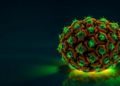
IMAGE

Credit: Image by Wen-Hsuan Chang/Wange Lu Lab/USC

Ryk has made the headlines by requiring a chaperone. But don't assume that Ryk is a badly behaved celebrity–it's actually a protein featured in a new study in the Proceedings of the National Academy of the Sciences (PNAS).

In the study, first authors Wen-Hsuan Chang from the USC Stem Cell laboratory of Wange Lu, Si Ho Choi from the Dongnam Institute of Radiological & Medical Sciences (DIRAMS) in South Korea, and their colleagues describe how Ryk and its chaperone contribute to the development of the brain's cortex, which is the gray matter responsible for consciousness.

During cortical development, a part of Ryk called the intracellular domain (ICD) must be chaperoned into the nucleus of the stem cells that become neurons. Chang's team discovered the identity of Ryk's chaperone: a protein named Smek.

Smek not only chaperones Ryk into the nucleus, which contains the stem cell's genes. Smek also works with Ryk to regulate the activity of key genes that transform stem cells into brain cells.

"Such studies not only help us understand the mechanisms of how stem cells become neurons, but also will be useful for us to develop therapies to treat neurological diseases and brain cancer," said Wange Lu, associate professor of stem cell biology and regenerative medicine, and biochemistry and molecular biology.

###

Additional authors include: Byoungsan Moon, Mingyang Cai, Jinlun Bai, Fan Gao, Ibrahim Hajjali, Daniel Campbell, and Leslie Weiner from USC; Jungmook Lyu from Konyang University in South Korea; and Zhongfang Zhao from Nankai University in China.

Ninety-five percent of this work was supported by $1,727,898 in U.S. federal funding from a National Institutes of Health grant (R01 NS067213-01A1). Five percent of the project was funded by $10,000 from two non-U.S. sources: a DIRAMS grant funded by the South Korean government (50590-2017), and the National Natural Science Foundation of China.

Media Contact

Zen Vuong
[email protected]
213-300-1381
@keckmedusc
Keck Medicine of USC

Share13Tweet8Share2ShareShareShare2

Related Posts

β-Sitosterol from Ipomoea carnea Jacq. As a promising anti-inflammatory agent: Evidence from in silico modeling and in vitro validation

β-Sitosterol from Ipomoea carnea Jacq. As a promising anti-inflammatory agent: Evidence from in silico modeling and in vitro validation

August 31, 2026
Design, fabrication and characterization of a wearable Fiber Bragg grating sensor for cardiorespiratory monitoring using finger plethysmography

Design, fabrication and characterization of a wearable Fiber Bragg grating sensor for cardiorespiratory monitoring using finger plethysmography

August 31, 2026

KAIST opens the era of industrial-scale microbial foods, proposing growth strategies for the next-generation protein market

August 31, 2026

Virologist awarded $2 million NIH grant to investigate how virus-infected cells live and die

August 31, 2026
Please login to join discussion

POPULAR NEWS

  • β-Sitosterol from Ipomoea carnea Jacq. As a promising anti-inflammatory agent: Evidence from in silico modeling and in vitro validation

    29 shares
    Share 12 Tweet 7
  • Design, fabrication and characterization of a wearable Fiber Bragg grating sensor for cardiorespiratory monitoring using finger plethysmography

    29 shares
    Share 12 Tweet 7
  • KAIST opens the era of industrial-scale microbial foods, proposing growth strategies for the next-generation protein market

    29 shares
    Share 12 Tweet 7
  • Virologist awarded $2 million NIH grant to investigate how virus-infected cells live and die

    29 shares
    Share 12 Tweet 7

About

We bring you the latest biotechnology news from best research centers and universities around the world. Check our website.

Follow us

Recent News

β-Sitosterol from Ipomoea carnea Jacq. As a promising anti-inflammatory agent: Evidence from in silico modeling and in vitro validation

Design, fabrication and characterization of a wearable Fiber Bragg grating sensor for cardiorespiratory monitoring using finger plethysmography

KAIST opens the era of industrial-scale microbial foods, proposing growth strategies for the next-generation protein market

Subscribe to Blog via Email

Success! An email was just sent to confirm your subscription. Please find the email now and click 'Confirm' to start subscribing.

Join 85 other subscribers
  • Contact Us

Bioengineer.org © Copyright 2023 All Rights Reserved.

Welcome Back!

Login to your account below

Forgotten Password?

Retrieve your password

Please enter your username or email address to reset your password.

Log In
No Result
View All Result
  • Homepages
    • Home Page 1
    • Home Page 2
  • News
  • National
  • Business
  • Health
  • Lifestyle
  • Science

Bioengineer.org © Copyright 2023 All Rights Reserved.