• HOME
  • NEWS
  • EXPLORE
    • CAREER
      • Companies
      • Jobs
    • EVENTS
    • iGEM
      • News
      • Team
    • PHOTOS
    • VIDEO
    • WIKI
  • BLOG
  • COMMUNITY
    • FACEBOOK
    • INSTAGRAM
    • TWITTER
Sunday, August 23, 2026
BIOENGINEER.ORG
No Result
View All Result
  • Login
  • HOME
  • NEWS
  • EXPLORE
    • CAREER
      • Companies
      • Jobs
        • Lecturer
        • PhD Studentship
        • Postdoc
        • Research Assistant
    • EVENTS
    • iGEM
      • News
      • Team
    • PHOTOS
    • VIDEO
    • WIKI
  • BLOG
  • COMMUNITY
    • FACEBOOK
    • INSTAGRAM
    • TWITTER
  • HOME
  • NEWS
  • EXPLORE
    • CAREER
      • Companies
      • Jobs
        • Lecturer
        • PhD Studentship
        • Postdoc
        • Research Assistant
    • EVENTS
    • iGEM
      • News
      • Team
    • PHOTOS
    • VIDEO
    • WIKI
  • BLOG
  • COMMUNITY
    • FACEBOOK
    • INSTAGRAM
    • TWITTER
No Result
View All Result
Bioengineer.org
No Result
View All Result
Home NEWS Science News Health

Rutgers researchers advance stem cell therapy with biodegradable scaffold

Bioengineer by Bioengineer
November 5, 2018
in Health
Reading Time: 2 mins read
0
Share on FacebookShare on TwitterShare on LinkedinShare on RedditShare on Telegram
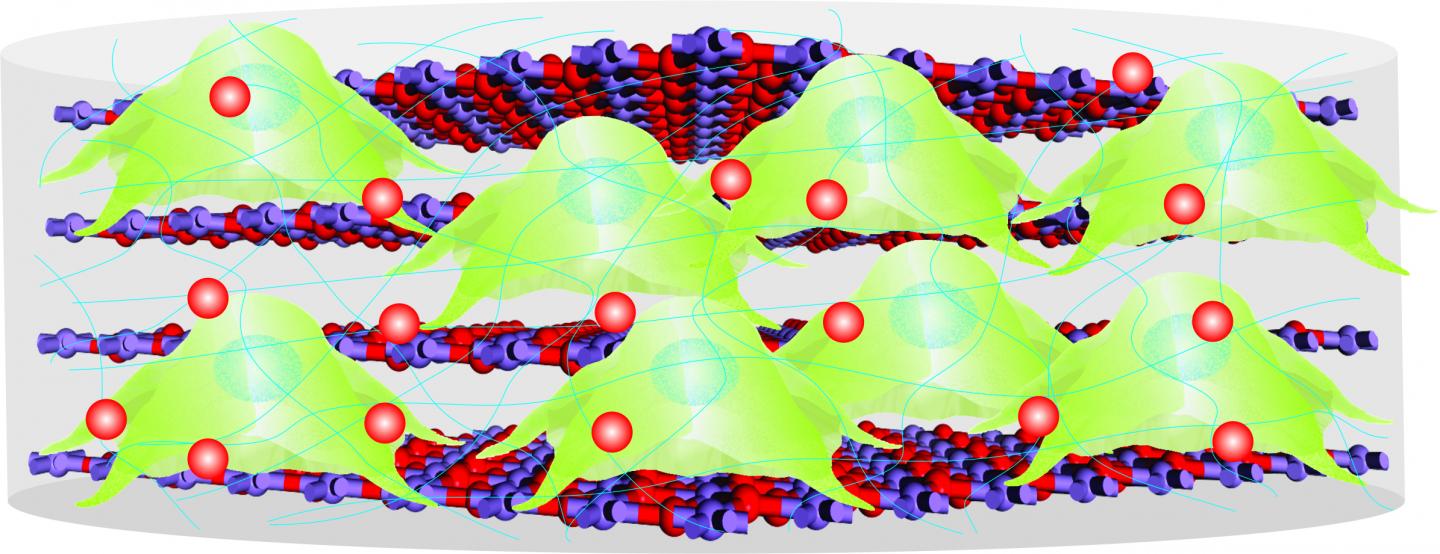
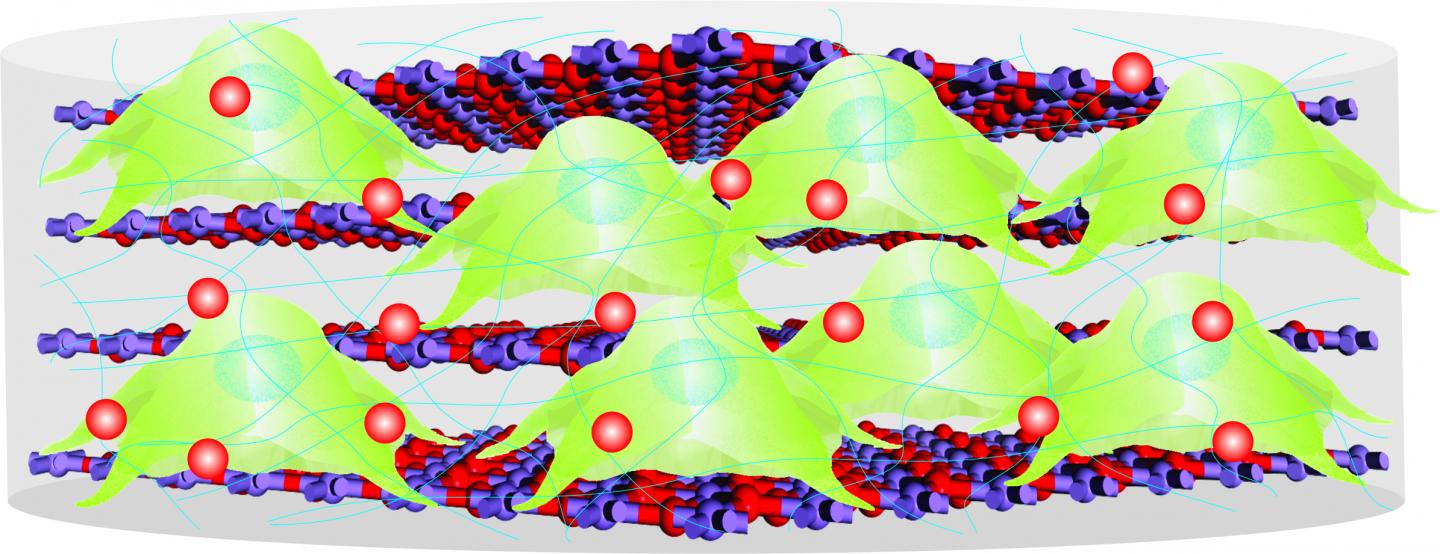
IMAGE

Credit: KiBum Lee, Letao Yang and Sy-Tsong Dean Chueng.

Rutgers scientists have created a tiny, biodegradable scaffold to transplant stem cells and deliver drugs, which may help treat Alzheimer's and Parkinson's diseases, aging brain degeneration, spinal cord injuries and traumatic brain injuries.

Stem cell transplantation, which shows promise as a treatment for central nervous system diseases, has been hampered by low cell survival rates, incomplete differentiation of cells and limited growth of neural connections.

So, Rutgers scientists designed bio-scaffolds that mimic natural tissue and got good results in test tubes and mice, according to a study in Nature Communications. These nano-size scaffolds hold promise for advanced stem cell transplantation and neural tissue engineering. Stem cell therapy leads to stem cells becoming neurons and can restore neural circuits.

"It's been a major challenge to develop a reliable therapeutic method for treating central nervous system diseases and injuries," said study senior author KiBum Lee, a professor in the Department of Chemistry and Chemical Biology at Rutgers University-New Brunswick. "Our enhanced stem cell transplantation approach is an innovative potential solution."

The researchers, in cooperation with neuroscientists and clinicians, plan to test the nano-scaffolds in larger animals and eventually move to clinical trials for treating spinal cord injury. The scaffold-based technology also shows promise for regenerative medicine.

###

The study included researchers from Rutgers and Kyung Hee University in South Korea.

Media Contact

Todd Bates
[email protected]
848-932-0550
@RutgersU

http://www.rutgers.edu

Related Journal Article

http://dx.doi.org/10.1038/s41467-018-05599-2

Share12Tweet8Share2ShareShareShare2

Related Posts

Tirzepatide Versus GLP-1 Agonists for Stroke Risk in Atrial Fibrillation and Diabetes

August 22, 2026
Real-world study examines psychotic complications of subcutaneous foslevodopa/foscarbidopa infusions in 198 patients

Real-world study examines psychotic complications of subcutaneous foslevodopa/foscarbidopa infusions in 198 patients

August 22, 2026

Blood-flow signals from liver vessels direct region-specific liver function through Wnt pathways

August 22, 2026

Proteomics Links Environmental and Genetic Parkinson’s Models to Purine Metabolism

August 22, 2026
Please login to join discussion

POPULAR NEWS

  • Dual-oxygen pancreatic cancer organoids mirror basal-classical diversity, spatial transcriptomics confirms

    29 shares
    Share 12 Tweet 7
  • Tirzepatide Versus GLP-1 Agonists for Stroke Risk in Atrial Fibrillation and Diabetes

    29 shares
    Share 12 Tweet 7
  • Real-world study examines psychotic complications of subcutaneous foslevodopa/foscarbidopa infusions in 198 patients

    29 shares
    Share 12 Tweet 7
  • Blood-flow signals from liver vessels direct region-specific liver function through Wnt pathways

    29 shares
    Share 12 Tweet 7

About

We bring you the latest biotechnology news from best research centers and universities around the world. Check our website.

Follow us

Recent News

Dual-oxygen pancreatic cancer organoids mirror basal-classical diversity, spatial transcriptomics confirms

Tirzepatide Versus GLP-1 Agonists for Stroke Risk in Atrial Fibrillation and Diabetes

Real-world study examines psychotic complications of subcutaneous foslevodopa/foscarbidopa infusions in 198 patients

Subscribe to Blog via Email

Enter your email address to subscribe to this blog and receive notifications of new posts by email.

Join 85 other subscribers
  • Contact Us

Bioengineer.org © Copyright 2023 All Rights Reserved.

Welcome Back!

Login to your account below

Forgotten Password?

Retrieve your password

Please enter your username or email address to reset your password.

Log In
No Result
View All Result
  • Homepages
    • Home Page 1
    • Home Page 2
  • News
  • National
  • Business
  • Health
  • Lifestyle
  • Science

Bioengineer.org © Copyright 2023 All Rights Reserved.