• HOME
  • NEWS
  • EXPLORE
    • CAREER
      • Companies
      • Jobs
    • EVENTS
    • iGEM
      • News
      • Team
    • PHOTOS
    • VIDEO
    • WIKI
  • BLOG
  • COMMUNITY
    • FACEBOOK
    • INSTAGRAM
    • TWITTER
Wednesday, April 22, 2026
BIOENGINEER.ORG
No Result
View All Result
  • Login
  • HOME
  • NEWS
  • EXPLORE
    • CAREER
      • Companies
      • Jobs
        • Lecturer
        • PhD Studentship
        • Postdoc
        • Research Assistant
    • EVENTS
    • iGEM
      • News
      • Team
    • PHOTOS
    • VIDEO
    • WIKI
  • BLOG
  • COMMUNITY
    • FACEBOOK
    • INSTAGRAM
    • TWITTER
  • HOME
  • NEWS
  • EXPLORE
    • CAREER
      • Companies
      • Jobs
        • Lecturer
        • PhD Studentship
        • Postdoc
        • Research Assistant
    • EVENTS
    • iGEM
      • News
      • Team
    • PHOTOS
    • VIDEO
    • WIKI
  • BLOG
  • COMMUNITY
    • FACEBOOK
    • INSTAGRAM
    • TWITTER
No Result
View All Result
Bioengineer.org
No Result
View All Result
Home NEWS Science News Health

Rutgers discovers new delivery system that could help prevent bacterial infections

Bioengineer by Bioengineer
October 8, 2018
in Health
Reading Time: 2 mins read
0
Share on FacebookShare on TwitterShare on LinkedinShare on RedditShare on Telegram

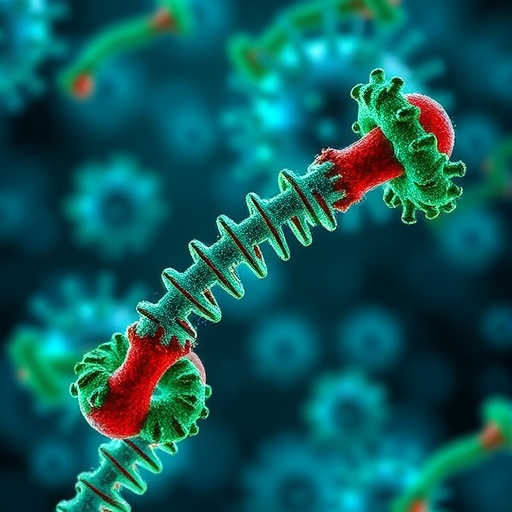
In a recent study in the Journal of The American Chemical Society, Professor Tewodros Asefa and Associate Professor Jeffrey Boyd synthesized nanostructured silica particles, considered to be promising drug carriers, that contained payloads of an antimicrobial agent. The researchers found that the particles were effective at killing two human bacterial pathogens.

"Interestingly, the particles were more effective at killing the bacteria than the antimicrobial was, which may highlight a more efficient mechanism for drug delivery," said Boyd, an Associate Professor in the Department of Biochemistry and Microbiology.

According to Boyd, bacteria are rapidly evolving and becoming resistant to antimicrobials – agents that kill or prevent the growth of microorganisms such as bacteria, viruses or fungi. The findings of this study could help them develop an antimicrobial therapy that would prevent bacterial infections or the growth of bacteria in unwanted locations.

This new mechanism allows compounds to slowly release antimicrobials into local environments, resulting in high amounts of the molecule in a specific location. This is a different scenario than when antibiotics are taken orally and they become widely distributed throughout the body.

"The new materials we have designed and built allow antibacterials to be more potent and have the ability to wipe out bacteria at smaller concentrations than the antibacterials can do on their own," said Asefa, a Professor in the Department of Chemistry and Chemical Biology and the Department of Chemical and Biochemical Engineering.

"This is because the newly designed nanomaterials allow the antibacterials to be localized, released slowly and attack the microorganism more effectively."

Rutgers researchers say the study could lead to the development of new microscopic particles containing drugs, anticeptics or pesticides that may increase the effectiveness of the therapy and aid in preventing antibacterial resistance. What they still need to determine is why these microscopic particles containing the antibacterial agents are more effective at destroying the bacteria than the antibacterial alone.

###

Media Contact

Caitlin Coyle
[email protected]
@RutgersU

http://www.rutgers.edu

https://news.rutgers.edu/rutgers-discovers-new-delivery-system-could-help-prevent-bacterial-infections/20181004#.W7Y0uZNKg8Y

Related Journal Article

http://dx.doi.org/10.1021/jacs.8b04843

Share12Tweet8Share2ShareShareShare2

Related Posts

Are Silicone Toothbrushes the Future of Oral Care?

April 22, 2026

Yoga Practice Shows Potential to Lower Blood Pressure in Individuals with Obesity

April 22, 2026

Memorials of Individuals Lost to Extreme Fatigue Reveal Common Themes

April 22, 2026

Transcription Factor 19 Eases Liver Damage from Palmitic Acid

April 22, 2026
Please login to join discussion

POPULAR NEWS

  • Research Indicates Potential Connection Between Prenatal Medication Exposure and Elevated Autism Risk

    801 shares
    Share 320 Tweet 200
  • Scientists Investigate Possible Connection Between COVID-19 and Increased Lung Cancer Risk

    65 shares
    Share 26 Tweet 16
  • Salmonella Haem Blocks Macrophages, Boosts Infection

    59 shares
    Share 24 Tweet 15
  • NSF funds machine-learning research at UNO and UNL to study energy requirements of walking in older adults

    101 shares
    Share 40 Tweet 25

About

We bring you the latest biotechnology news from best research centers and universities around the world. Check our website.

Follow us

Recent News

Are Silicone Toothbrushes the Future of Oral Care?

Wild gray bats modify their echolocation calls in response to group dynamics during flight

Significant Changes in Blood Protein Levels Observed from Childhood to Adulthood

Subscribe to Blog via Email

Enter your email address to subscribe to this blog and receive notifications of new posts by email.

Join 81 other subscribers
  • Contact Us

Bioengineer.org © Copyright 2023 All Rights Reserved.

Welcome Back!

Login to your account below

Forgotten Password?

Retrieve your password

Please enter your username or email address to reset your password.

Log In
No Result
View All Result
  • Homepages
    • Home Page 1
    • Home Page 2
  • News
  • National
  • Business
  • Health
  • Lifestyle
  • Science

Bioengineer.org © Copyright 2023 All Rights Reserved.