• HOME
  • NEWS
  • EXPLORE
    • CAREER
      • Companies
      • Jobs
    • EVENTS
    • iGEM
      • News
      • Team
    • PHOTOS
    • VIDEO
    • WIKI
  • BLOG
  • COMMUNITY
    • FACEBOOK
    • INSTAGRAM
    • TWITTER
Sunday, May 10, 2026
BIOENGINEER.ORG
No Result
View All Result
  • Login
  • HOME
  • NEWS
  • EXPLORE
    • CAREER
      • Companies
      • Jobs
        • Lecturer
        • PhD Studentship
        • Postdoc
        • Research Assistant
    • EVENTS
    • iGEM
      • News
      • Team
    • PHOTOS
    • VIDEO
    • WIKI
  • BLOG
  • COMMUNITY
    • FACEBOOK
    • INSTAGRAM
    • TWITTER
  • HOME
  • NEWS
  • EXPLORE
    • CAREER
      • Companies
      • Jobs
        • Lecturer
        • PhD Studentship
        • Postdoc
        • Research Assistant
    • EVENTS
    • iGEM
      • News
      • Team
    • PHOTOS
    • VIDEO
    • WIKI
  • BLOG
  • COMMUNITY
    • FACEBOOK
    • INSTAGRAM
    • TWITTER
No Result
View All Result
Bioengineer.org
No Result
View All Result
Home NEWS Science News Chemistry

Russian scientists discover one of the mechanisms of water formation on the moon

Bioengineer by Bioengineer
May 23, 2019
in Chemistry
Reading Time: 2 mins read
0
Share on FacebookShare on TwitterShare on LinkedinShare on RedditShare on Telegram

The discovery will help analyse the processes occurring near the lunar surface

The results of recent study conducted by the NASA Lunar Reconnaissance Orbiter, the agency’s automatic interplanetary station, show the existence of a ‘permafrost’ near the poles of the Moon with a relatively high content of water ice (up to 5% by weight). It is believed that water ice could supply a life support system for the future Russian Lunar Station and that it could also produce hydrogen-oxygen fuel for flights into deep space.

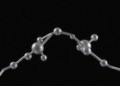
Researchers from the Higher School of Economics and the Space Research Institute of the Russian Academy of Sciences have discovered one of the mechanisms for how water forms on the Moon. Scientists have shown that silver hydroxide molecules are released from silicon dioxide in the lunar regolith (soil). These molecules react easily with hydrogen, leading to the formation of water and silver. This means that water molecules can be formed on the Moon. These molecules will become part of the near-surface lunar soil. In some areas, the proportion of water formed by this mechanism in lunar regolith may exceed 10-6 %.

It is usually assumed that water is brought to the Moon from outside. For example, the comet hypothesis on the origins of lunar ice argues that the impact of a comet on the surface of the Moon leads to the formation of a temporary lunar atmosphere. The volatile component of this atmosphere can accumulate in cold traps – constantly shaded areas of the Moon that exist in particular in the polar regions at the bottom of craters. Condensation of volatile compounds leads to the formation of ice.

‘The study demonstrates that water may form due to internal, continuously functioning mechanisms (comets hitting the lunar surface is a rather rare phenomenon). It turns out that the water on the Moon can be present not only in cold traps, but also in the near-surface lunar soil. Analysis of the processes occurring near the surface of the Moon should take this fact into account. For example, the presence of water can affect the photoelectric properties of the lunar regolith and the parameters of the plasma-dust system over the Moon,’ explains Sergey Popel, one of the study’s authors who serves as Professor of Physics at the Higher School of Economics and Head of the Laboratory at the Space Research Institute of the Russian Academy of Sciences.

###

Media Contact
Liudmila Mezentseva
[email protected]

Related Journal Article

https://iq.hse.ru/en/news/276244784.html
http://dx.doi.org/10.1134/S0010952519020047

Tags: AstrophysicsPlanets/MoonsSpace/Planetary Science
Share12Tweet8Share2ShareShareShare2

Related Posts

Miniature Sensor Uses Light to Detect Touch — Chemistry

Miniature Sensor Uses Light to Detect Touch

May 8, 2026
Iron Minerals Determine Whether Dissolved Organic Matter Fuels Microbes or Becomes Long-Term Carbon Storage — Chemistry

Iron Minerals Determine Whether Dissolved Organic Matter Fuels Microbes or Becomes Long-Term Carbon Storage

May 8, 2026

Kate Evans Appointed Associate Lab Director for Biological and Environmental Systems Science at ORNL

May 8, 2026

Advancing Multiscale Modeling and Overcoming Operational Challenges in Autothermal COâ‚‚-to-Methanol Reactors

May 8, 2026
Please login to join discussion

POPULAR NEWS

  • Research Indicates Potential Connection Between Prenatal Medication Exposure and Elevated Autism Risk

    840 shares
    Share 336 Tweet 210
  • New Study Reveals Plants Can Detect the Sound of Rain

    727 shares
    Share 290 Tweet 181
  • Scientists Investigate Possible Connection Between COVID-19 and Increased Lung Cancer Risk

    68 shares
    Share 27 Tweet 17
  • Salmonella Haem Blocks Macrophages, Boosts Infection

    61 shares
    Share 24 Tweet 15

About

We bring you the latest biotechnology news from best research centers and universities around the world. Check our website.

Follow us

Recent News

Evaluating Digoxin Use in Patients with Symptomatic Rheumatic Heart Disease

Evaluating the Effectiveness and Safety of Digitalis Glycosides in Treating Heart Failure

Urdu Fall Risk Questionnaire Adapted for Elderly

Subscribe to Blog via Email

Enter your email address to subscribe to this blog and receive notifications of new posts by email.

Join 82 other subscribers
  • Contact Us

Bioengineer.org © Copyright 2023 All Rights Reserved.

Welcome Back!

Login to your account below

Forgotten Password?

Retrieve your password

Please enter your username or email address to reset your password.

Log In
No Result
View All Result
  • Homepages
    • Home Page 1
    • Home Page 2
  • News
  • National
  • Business
  • Health
  • Lifestyle
  • Science

Bioengineer.org © Copyright 2023 All Rights Reserved.