Urban Congestion Relief Through Intelligent Routing-App Interventions: A Paradigm Shift in City Traffic Management
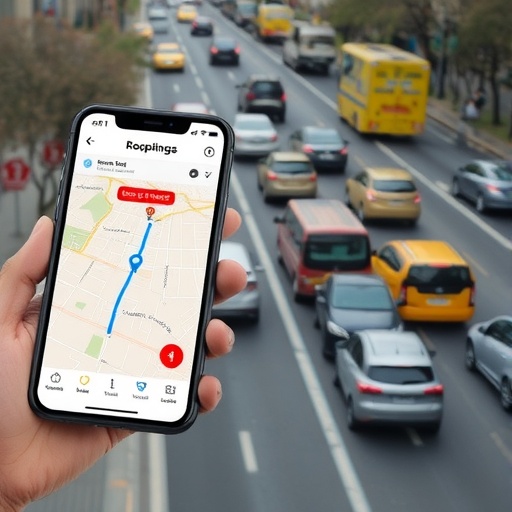
The relentless growth of urban environments across the globe has precipitated a parallel surge in vehicular congestion—a complex phenomenon undermining mobility, elevating pollution levels, and eroding the quality of life for city dwellers. Conventional traffic management strategies, often reliant on static infrastructure modifications such as road expansions and traffic signal adjustments, have reached their practical limits. An emerging frontier in mitigating urban congestion lies within the harnessing of advanced digital technologies, particularly the integration of real-time data analytics with routing applications used ubiquitously by commuters. Recent groundbreaking research unveiled by Arora, Bayen, Cabannes, and their colleagues in Nature Cities embarks on an ambitious exploration of this very premise, investigating the potential of dynamic routing-app interventions as tactical levers to alleviate urban congestion.
At the core of this research is the hypothesis that leveraging the behavioral responsiveness of drivers to app-generated routing directives can induce systemic traffic flow improvements, transcending the limitations of localized traffic optimizations. Unlike traditional traffic control mechanisms that operate with fixed or pre-programmed rules, modern routing applications provide an interactive, real-time communication channel that dynamically responds to evolving congestion patterns. This interplay between user behavior and algorithmic routing creates a feedback loop, offering fertile ground for experimentation in large-scale urban ecosystems.
The research team implemented a series of carefully controlled field experiments in multiple metropolitan areas, characterized by chronic congestion issues, to test the efficacy of app-driven routing interventions. The methodology involved modulating routing recommendations provided to a subset of drivers using popular navigation platforms while continuously monitoring traffic density, speed metrics, and emission profiles through a network of sensors and GPS data streams. This data-driven approach enabled the researchers to assess how incentivizing alternative route adoption or staggered travel times among participants influenced overall traffic distribution and congestion hotspots.
One of the standout features of the study was its commitment to preserving user autonomy while gently nudging route selection behaviors. Instead of mandating predetermined paths, the deployed interventions focused on transparent communication of traffic conditions alongside personalized routing suggestions crafted using machine learning models. These models factored in predicted congestion levels, expected travel times, and the spatial-temporal dynamics of urban traffic, ensuring that suggested alternatives were not only theoretically optimal but practically attractive to users.
The observed outcomes painted a compelling narrative. Across multiple urban contexts, the introduction of routing-app interventions led to statistically significant reduction in peak-period congestion. Key arterial roads, historically burdened with stop-and-go traffic, experienced improved throughput, while lesser-used parallel corridors saw increased but manageable load distributions. Such traffic load balancing effectively attenuated bottlenecks that conventional infrastructure modifications had failed to resolve. Moreover, the dynamic routing strategies contributed to smoother traffic flow patterns, reducing unnecessary idling times and thus curbing vehicular emissions—a critical co-benefit aligned with urban sustainability goals.
Delving into the technical underpinnings, the researchers employed reinforcement learning frameworks to optimize routing recommendations adaptively. These algorithms continuously integrated real-time traffic data, user compliance rates, and historical congestion trends to refine their decision-making processes. This adaptive learning mechanism was pivotal in accommodating the stochastic nature of urban traffic, including unanticipated events like accidents or sudden weather changes, enhancing the robustness of intervention efficacy.
Critically, the researchers also explored the social dimensions of their interventions. Recognizing that user acceptance and trust are fundamental to the success of app-driven traffic management, the study encompassed surveys and behavioral analyses to understand motivational drivers behind compliance. Findings indicated that transparency in communication, coupled with clear demonstrable benefits such as time savings, significantly boosted user engagement with routing suggestions, highlighting the importance of human-centric design in such digital systems.
The scalability of these experiments further positions routing-app interventions as transformational tools for urban planners and policymakers. Unlike physical infrastructure projects entailing substantial capital expenditures and prolonged timelines, digital routing modifications are inherently flexible and can be deployed rapidly across heterogeneous city landscapes. The research advocates for the incorporation of such intelligent systems into broader smart city frameworks, facilitating integrative traffic management that synergizes infrastructure, data analytics, and user behavior.
Despite the encouraging results, the study also foregrounds challenges warranting ongoing inquiry. Among these, the risk of shifting congestion rather than alleviating it entirely necessitates sophisticated algorithmic balancing to avoid creating secondary bottlenecks. Furthermore, the prevalence of privacy concerns regarding data collection and user tracking underscores the need for ethical governance and secure data handling protocols to maintain public trust.
The implications of this research extend into future urban mobility paradigms. As autonomous vehicles and connected infrastructure become more entrenched, routing-app frameworks will likely evolve into coordinated multi-agent systems capable of orchestrating complex traffic ecosystems with minimal human intervention. The demonstrated capacity of current routing-app interventions to modulate and improve urban congestion lays critical groundwork for such advancements, heralding a new era of intelligent traffic management.
Integrating these insights, city administrators are now empowered to design pilot programs that leverage existing navigation apps as low-barrier platforms for peripheral traffic optimization. By fostering collaboration between municipal authorities, app developers, and the commuting public, cities stand on the cusp of realizing adaptive, data-rich environments where urban congestion is actively managed through intelligent digital interventions rather than reactive measures.
In conclusion, the pioneering work by Arora et al. delineates a paradigm shift away from solely infrastructure-centric congestion mitigation towards a more holistic model that incorporates human behavior, artificial intelligence, and real-time data streams. As cities grapple with escalating mobility demands and environmental imperatives, routing-app interventions emerge as a scalable, effective, and user-friendly strategy with the potential to reshape the urban transportation landscape fundamentally. Continuing research and practical deployment in diverse urban contexts will be essential in refining these approaches to achieve sustainable, equitable, and resilient urban mobility ecosystems globally.
Subject of Research:
Article Title:
Article References:
Arora, N., Bayen, A., Cabannes, T. et al. Urban congestion relief experiments through routing-app interventions. Nat Cities (2026). https://doi.org/10.1038/s44284-026-00443-x
Image Credits: AI Generated
DOI: https://doi.org/10.1038/s44284-026-00443-x
Keywords: Urban congestion, routing applications, traffic management, real-time data analytics, adaptive algorithms, reinforcement learning, smart cities, digital interventions, traffic flow optimization
Tags: adaptive traffic control strategiesadvanced traffic management systemsdigital technologies in urban mobilitydriver behavior and routing appsdynamic traffic flow managementimproving commuter routing efficiencyintelligent routing app interventionsleveraging mobile apps for congestion reliefreal-time traffic data analyticsreducing city pollution with traffic appssystemic urban traffic improvementsurban traffic congestion solutions