• HOME
  • NEWS
  • EXPLORE
    • CAREER
      • Companies
      • Jobs
    • EVENTS
    • iGEM
      • News
      • Team
    • PHOTOS
    • VIDEO
    • WIKI
  • BLOG
  • COMMUNITY
    • FACEBOOK
    • INSTAGRAM
    • TWITTER
Tuesday, September 1, 2026
BIOENGINEER.ORG
No Result
View All Result
  • Login
  • HOME
  • NEWS
  • EXPLORE
    • CAREER
      • Companies
      • Jobs
        • Lecturer
        • PhD Studentship
        • Postdoc
        • Research Assistant
    • EVENTS
    • iGEM
      • News
      • Team
    • PHOTOS
    • VIDEO
    • WIKI
  • BLOG
  • COMMUNITY
    • FACEBOOK
    • INSTAGRAM
    • TWITTER
  • HOME
  • NEWS
  • EXPLORE
    • CAREER
      • Companies
      • Jobs
        • Lecturer
        • PhD Studentship
        • Postdoc
        • Research Assistant
    • EVENTS
    • iGEM
      • News
      • Team
    • PHOTOS
    • VIDEO
    • WIKI
  • BLOG
  • COMMUNITY
    • FACEBOOK
    • INSTAGRAM
    • TWITTER
No Result
View All Result
Bioengineer.org
No Result
View All Result
Home NEWS Science News

Roots of Alzheimer’s disease can extend as far back as the womb

Bioengineer by Bioengineer
January 27, 2017
in Science News
Reading Time: 3 mins read
0
Share on FacebookShare on TwitterShare on LinkedinShare on RedditShare on Telegram
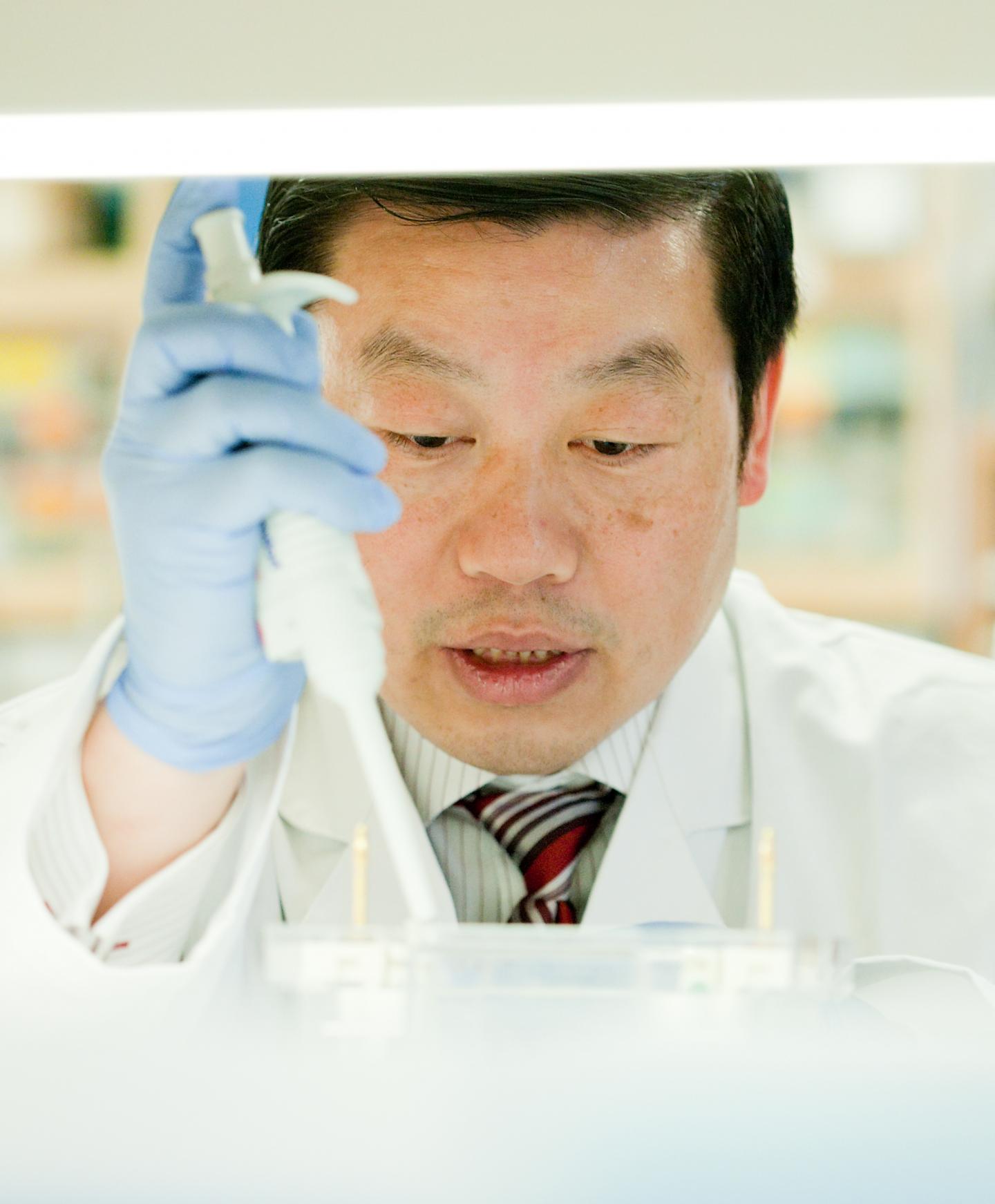
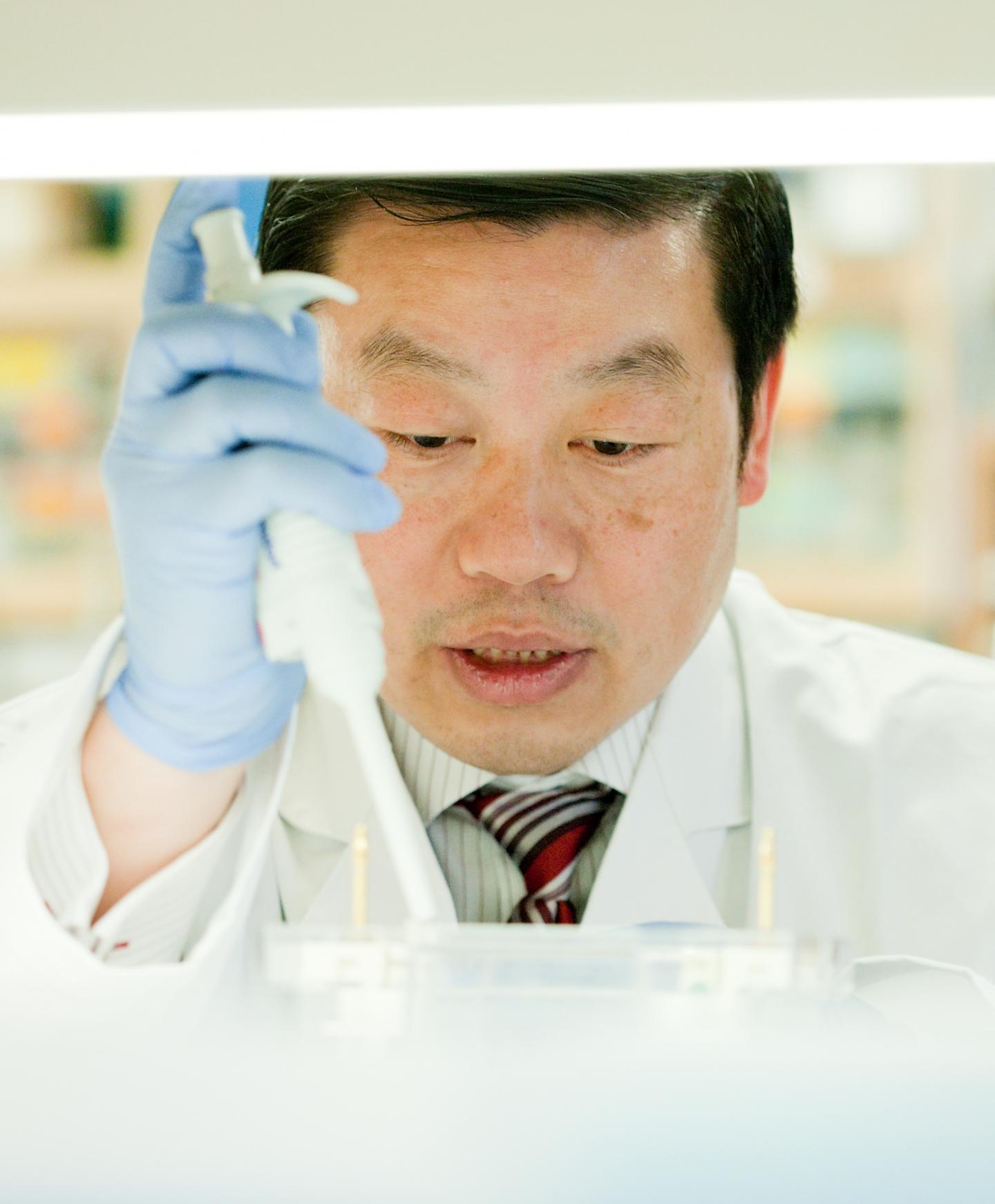
IMAGE

Credit: University of British Columbia

Biochemical reactions that cause Alzheimer's disease could begin in the womb or just after birth if the fetus or newborn does not get enough vitamin A, according to new research from the University of British Columbia.

These new findings, based on studies of genetically-engineered mice, also demonstrate that supplements given to newborns with low levels of vitamin A could be effective in slowing the degenerative brain disease.

"Our study clearly shows that marginal deficiency of vitamin A, even as early as in pregnancy, has a detrimental effect on brain development and has long-lasting effect that may facilitate Alzheimer's disease in later life," said Dr. Weihong Song, a professor of psychiatry and Canada Research Chair in Alzheimer's Disease.

For this research, Song built on previous studies that have linked low levels of vitamin A with cognitive impairments. In collaboration with Dr. Tingyu Li and others at Children's Hospital of Chongqing Medical University, they examined the effects of vitamin A deprivation in the womb and infancy on Alzheimer's model mice. These early developmental stages are crucial periods during which brain tissue is "programmed" for the rest of a person's life.

The researchers found that even a mild vitamin A deficiency increased the production of amyloid beta, the protein that forms plaques that smother and ultimately kill neurons in Alzheimer's disease. He also found that these mice, when deprived of vitamin A, performed worse as adults on a standard test of learning and memory.

Even when the mice deprived of vitamin A in the womb were given a normal diet as pups, they performed worse than mice who received a normal amount of the nutrient in the womb but were deprived after birth. In other words, the damage had already been done in the womb.

Still, Song and his collaborators also showed that some reversal is possible: Mice who were deprived in utero but then given supplements immediately after birth performed better on the tests than mice who weren't given such supplements.

"In some cases, providing supplements to the newborn Alzheimer's disease model mice could reduce the amyloid beta level and improve learning and memory deficits," said Song. "It's a matter of the earlier, the better."

The study, published today in Acta Neuropathologica, also included new evidence in humans of the vitamin A-dementia connection in later years. Examining 330 elderly people in Chongqing, Song and his collaborators found that 75 per cent of those with either mild or significant vitamin A deficiency had cognitive impairment, compared to 47 per cent of those with normal vitamin A levels.

However, Dr. Song cautions against overreacting to this news. Vitamin A deficiency, though common in many low-income regions of the world, is rare in North America, and excess intake of the nutrient could be harmful. Pregnant women in particular should not take excessive vitamin A supplements. A balanced diet is the best way to ensure adequate levels of the nutrient.

###

A portion of the research was funded by the National Natural Science Foundation of China and Canadian Institutes of Health Research.

Media Contact

Brian Kladko
[email protected]
778-838-4169
@UBCnews

http://www.ubc.ca

############

Story Source: Materials provided by Scienmag

Share12Tweet8Share2ShareShareShare2

Related Posts

β-Sitosterol from Ipomoea carnea Jacq. As a promising anti-inflammatory agent: Evidence from in silico modeling and in vitro validation

β-Sitosterol from Ipomoea carnea Jacq. As a promising anti-inflammatory agent: Evidence from in silico modeling and in vitro validation

August 31, 2026
Design, fabrication and characterization of a wearable Fiber Bragg grating sensor for cardiorespiratory monitoring using finger plethysmography

Design, fabrication and characterization of a wearable Fiber Bragg grating sensor for cardiorespiratory monitoring using finger plethysmography

August 31, 2026

KAIST opens the era of industrial-scale microbial foods, proposing growth strategies for the next-generation protein market

August 31, 2026

Virologist awarded $2 million NIH grant to investigate how virus-infected cells live and die

August 31, 2026
Please login to join discussion

POPULAR NEWS

  • β-Sitosterol from Ipomoea carnea Jacq. As a promising anti-inflammatory agent: Evidence from in silico modeling and in vitro validation

    29 shares
    Share 12 Tweet 7
  • Design, fabrication and characterization of a wearable Fiber Bragg grating sensor for cardiorespiratory monitoring using finger plethysmography

    29 shares
    Share 12 Tweet 7
  • KAIST opens the era of industrial-scale microbial foods, proposing growth strategies for the next-generation protein market

    29 shares
    Share 12 Tweet 7
  • Virologist awarded $2 million NIH grant to investigate how virus-infected cells live and die

    29 shares
    Share 12 Tweet 7

About

We bring you the latest biotechnology news from best research centers and universities around the world. Check our website.

Follow us

Recent News

β-Sitosterol from Ipomoea carnea Jacq. As a promising anti-inflammatory agent: Evidence from in silico modeling and in vitro validation

Design, fabrication and characterization of a wearable Fiber Bragg grating sensor for cardiorespiratory monitoring using finger plethysmography

KAIST opens the era of industrial-scale microbial foods, proposing growth strategies for the next-generation protein market

Subscribe to Blog via Email

Enter your email address to subscribe to this blog and receive notifications of new posts by email.

Join 85 other subscribers
  • Contact Us

Bioengineer.org © Copyright 2023 All Rights Reserved.

Welcome Back!

Login to your account below

Forgotten Password?

Retrieve your password

Please enter your username or email address to reset your password.

Log In
No Result
View All Result
  • Homepages
    • Home Page 1
    • Home Page 2
  • News
  • National
  • Business
  • Health
  • Lifestyle
  • Science

Bioengineer.org © Copyright 2023 All Rights Reserved.