Credit: Washington University in St. Louis
Researchers have thought that cancer begins when a single cell goes rogue in the body, then begins to grow and multiply. Now, they are investigating evidence of more damage when a group of cells breaks off from a colony and more follow, leading to large-scale metastasis.
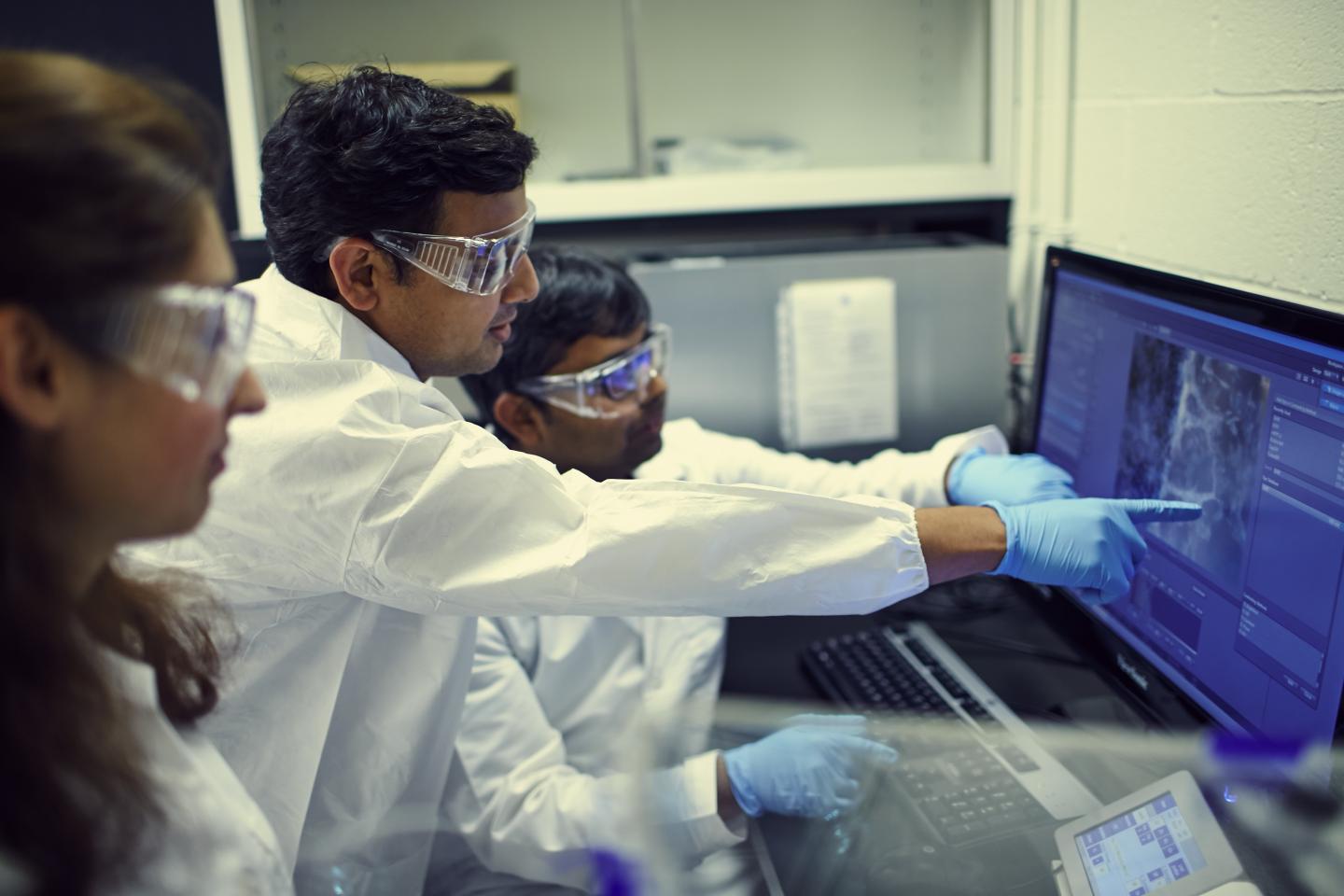
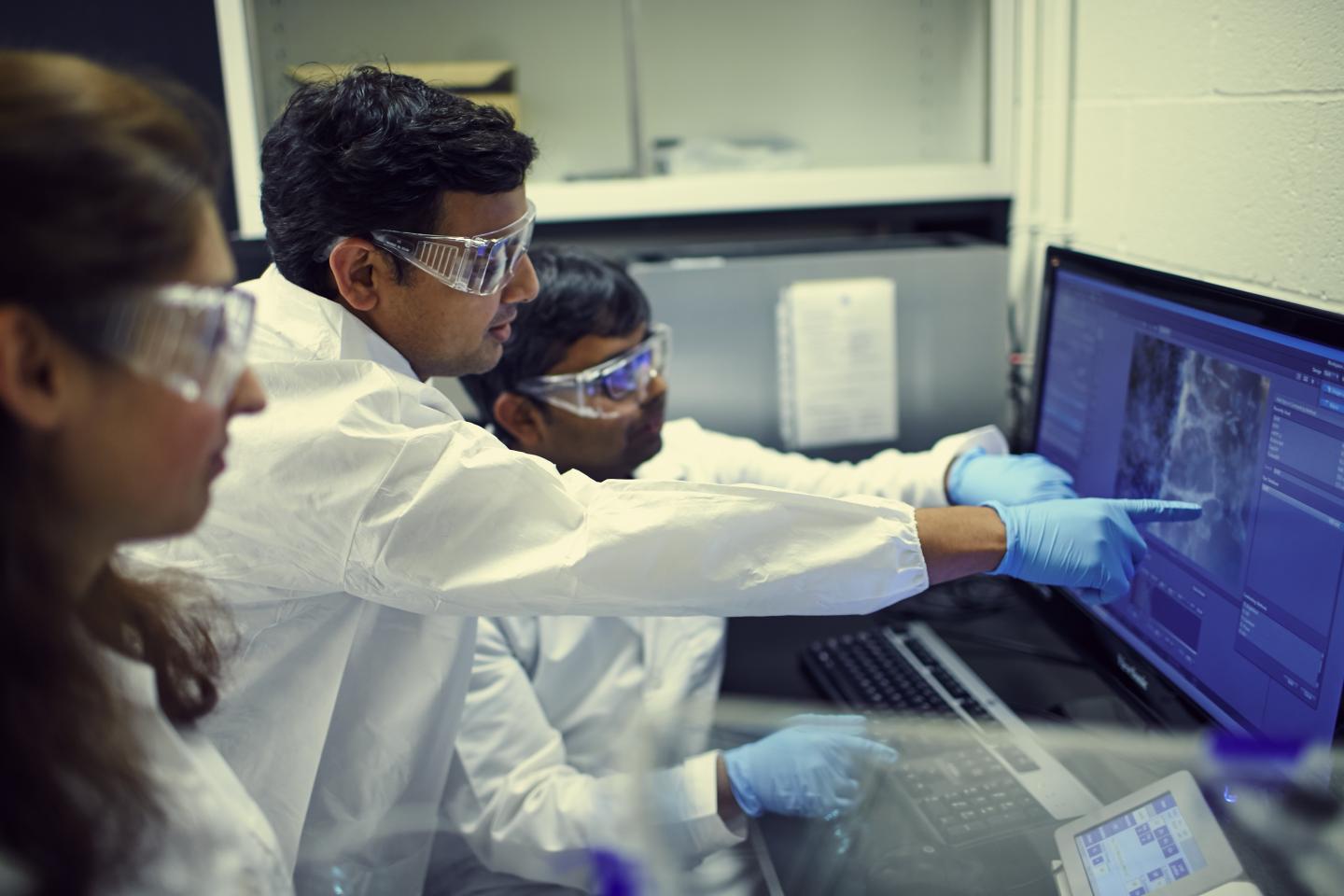
Amit Pathak, a mechanical engineer at Washington University in St. Louis who specializes in mechanobiology, plans to take a closer look at various aspects of cell group behavior with a prestigious five-year, $1.9 million grant for early-stage investigators from the National Institutes of Health (NIH). The Outstanding Investigator Award provides support for research that falls within the mission of the National Institute of General Medical Sciences Maximizing Investigators' Research Award (MIRA) program. The funding gives an investigator flexibility to conduct research without specific aims.
Pathak, assistant professor of mechanical engineering and materials science in the School of Engineering & Applied Science, plans to build on previous research into cell behavior in mechanically heterogeneous environments. His work centers around the epithelial-mesenchymal transition (EMT), or cells' transition from a group to independence. Epithelial cells, which are found in blood vessels and in the lining of various organs in the body, can change into mesenchymal cells, which are important in both embryonic development and cancer metastasis. Most healthy cells like to stay together, but in disease processes such as cancer, the integrity of the group is somehow compromised. In previous research, Pathak showed that the stiffer the tissues, the more likely EMT will take place.
"We are very interested in tumor invasion and fibrosis," Pathak said. "In this project, we will look at how group cells behave in confinement, how they process the temporal information as to which environment they are coming from. We're looking at the mechanisms behind disease pathways and fundamental cell behavior to determine how that leads to disease outcome."
Pathak plans to study the role of confinement on group cells' behavior, measure how deeply cells feel and determine where memory is stored within the cell.
In the past five years, Pathak and his lab have created a computational model showing that epithelial cells are more likely to break off from their groups when in a confined environment. In addition, they studied the mechanical memories of grouped cells in both soft and stiff environments to show that cells maintain the properties they had in their previous environment before they move. His lab created a patent-pending device that allows them to measure how long the cells' memory lasts in the new environment. Most recently, his lab also found that a defect in tissue boundaries can lead normal cells to take on characteristics of diseased cells, such as cancer cells, and invade the surrounding tissue.
###
Pathak's lab conducts both computational modeling and experimentation, which expedites the discovery process. He is participating in the National Science Foundation-funded Science and Technology Center for Engineering Mechanobiology (CEMB), a collaboration between Washington University and the University of Pennsylvania.
Media Contact
Erika Ebsworth-Goold
[email protected]
314-935-2914
@WUSTLnews
Original Source
https://source.wustl.edu/2018/08/role-of-cell-group-behavior-in-cancer-target-of-1-9-million-award/