Some ancestral rodents likely had repeated infections with SARS-like coronaviruses, leading them to acquire tolerance or resistance to the pathogens, according to new research publishing November 18th in PLOS Computational Biology by Sean King and Mona Singh of Princeton University, US. This raises the possibility that modern rodents may be reservoirs of SARS-like viruses, the researchers say.
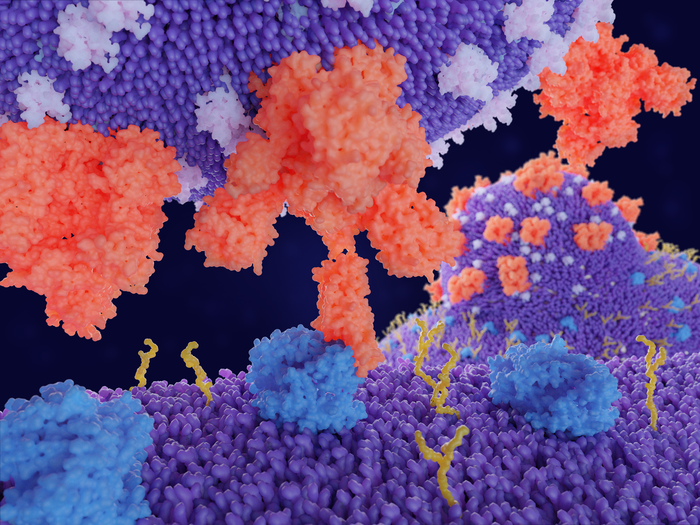
Credit: Juan Gaertner, iStock.com/selvanegra (https://www.istockphoto.com/portfolio/selvanegra?mediatype=photography), CC-BY 4.0 (https://creativecommons.org/licenses/by/4.0/)
Some ancestral rodents likely had repeated infections with SARS-like coronaviruses, leading them to acquire tolerance or resistance to the pathogens, according to new research publishing November 18th in PLOS Computational Biology by Sean King and Mona Singh of Princeton University, US. This raises the possibility that modern rodents may be reservoirs of SARS-like viruses, the researchers say.
SARS-CoV-2, the virus that causes COVID-19 infection, is of zoonotic origin—it jumped from a non-human animal to humans. Previous research has shown that Chinese Horseshoe bats are a host of numerous SARS-like viruses and tolerate these viruses without extreme symptoms. Identifying other animals that have adapted tolerance mechanisms to coronaviruses is important for awareness of potential viral reservoirs that can spread new pathogens to humans.
In the new research, King and Singh performed an evolutionary analysis, across mammalian species, of the ACE2 receptors, used by SARS viruses to gain entry into mammalian cells. Primates had highly conserved sequences of amino acids in the sites of the ACE2 receptor known to bind SARS viruses. Rodents, however, had a greater diversity — and an accelerated rate of evolution — in these spots. Overall, the results indicated that SARS-like infections have not been evolutionary drivers in primate history, but that some rodent species have likely been exposed to repeated SARS-like coronavirus infections for a considerable evolutionary period.
“Our study suggests that ancestral rodents may have had repeated infections with SARS-like coronaviruses and have acquired some form of tolerance or resistance to SARS-like coronaviruses as a result of these infections,” the authors add. “This raises the tantalizing possibility that some modern rodent species may be asymptomatic carriers of SARS-like coronaviruses, including those that may not have been discovered yet.”
############
In your coverage, please use this URL to provide access to the freely available article in PLOS Computational Biology: https://journals.plos.org/ploscompbiol/article?id=10.1371/journal.pcbi.1009560
Citation: King SB, Singh M (2021) Comparative genomic analysis reveals varying levels of mammalian adaptation to coronavirus infections. PLoS Comput Biol 17(11): e1009560. https://doi.org/10.1371/journal.pcbi.1009560
Author Countries: United States
Funding: This work has been supported in part by the National Institutes of Health (NIH) R01-GM076275 (to M.S.) and 5T32GM007388 (to Princeton University Department of Molecular Biology). The funders had no role in study design, data collection and analysis, decision to publish, or preparation of the manuscript.
Journal
PLoS Computational Biology
DOI
10.1371/journal.pcbi.1009560
Method of Research
Computational simulation/modeling
Subject of Research
Not applicable
COI Statement
The authors have declared that no competing interests exist.