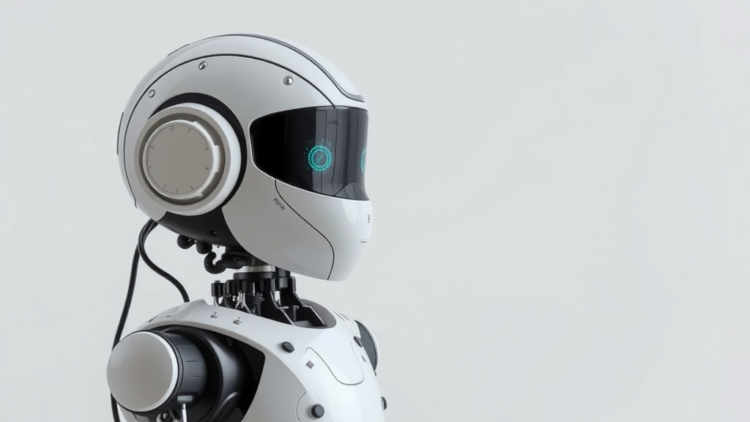
A provocative new analysis has called into question one of the most celebrated promises of social robotics: that friendly machines can ethically help autistic children learn social skills. The study, a critical review published in the open-access journal AI & Society, scrutinizes six European Union–funded social robotics projects launched under the Horizon 2020 initiative and finds that, beneath their polished demonstrations and optimistic headlines, these projects share a fundamental ethical blind spot. According to the author, the deepest problem is not data privacy or robot safety, though those matter, but the uncritical assumption that the goal of robot-assisted therapy should be teaching autistic children to behave like neurotypical children in the first place.
The analysis examines the projects BabyRobot, CARER-AID, DE-ENIGMA, DREAM, PlusMe and IM-TWIN, all of which developed semi-autonomous robots or robotic soft toys intended to support autism interventions. Several used well-known humanoid platforms such as Nao, Kaspar and Probo, while the sister projects PlusMe and IM-TWIN designed toy-like soft devices described as Transitional Wearable Companions. None of the robots were intended to operate fully autonomously; many experiments relied on Wizard-of-Oz control, in which human operators quietly steered the machines while researchers worked on the technical scaffolding for semi-autonomous behavior. The interventions targeted socio-emotional and communicative skills such as joint attention, emotion recognition, perspective-taking and imitation, drawing heavily on behaviorist psychology, sometimes blended with developmental and cognitive approaches.
Because robotics papers rarely report ethics practices in detail, a problem the author likens to the ethics black-box known in artificial intelligence research, the study mined formal EU project deliverables, documents that grant agreements require researchers to produce for transparency and accountability. Using a critical thematic analysis informed by critical disability studies and critical autism studies, the author coded each project independently and then compared them across cases, looking explicitly for absences: ethical issues that were never mentioned, mentioned only vaguely, or discussed without nuance. Notably, the author writes from an insider standpoint as an autistic researcher, an approach grounded in what has been called a counterventionist strategy, which seeks to disrupt the normalization agenda embedded in human-computer interaction research rather than treat disability as a problem awaiting technological repair.
The projects varied in their ethical engagement. All obtained ethics committee approvals and parental consent, and all addressed privacy, data protection and physical safety to varying degrees. The DREAM project stood out for surveying stakeholders on whether robots should even be used in autism therapy, on emotional attachment and deception, and on robot autonomy. DE-ENIGMA conducted an extensive user-requirements analysis with educators, flagging concerns that children might become attached to robots, dependent on them, or deceived about the machines’ capacity for feeling and reciprocation, and it openly acknowledged sensory sensitivities. Yet only two projects, DE-ENIGMA and CARER-AID, explicitly sought the children’s assent rather than relying solely on parents. Several projects, including CARER-AID, PlusMe and IM-TWIN, never discussed children’s well-being at all, and the ethics deliverables of PlusMe and IM-TWIN were classified as confidential, illustrating how opaque the ethics of even publicly funded research can become.
The analysis then confronts a more uncomfortable question: whether the interventions themselves rest on solid evidence. Drawing on meta-research, the article notes that autism intervention science has produced roughly a thousand reports over three decades yet still lacks sufficient randomized controlled trials, and that a major meta-analysis of 150 group-based studies involving young autistic children found widespread risk of bias. When studies at significant risk of bias were removed, effect sizes dropped to statistical non-significance. Reported gains tend to be short-term, context-bound and poor at generalizing to everyday life, and adverse events are rarely monitored or reported. Widely recommended interventions, the review argues, therefore carry uncertain efficacy and unacknowledged potential harms, a finding that matters enormously when robots are presented as efficient new vehicles for delivering those same interventions.
The theoretical commitments embedded in the projects come in for particular scrutiny. Several projects invoked the Theory of Mind account of autism, which frames autistic people as lacking the ability to ascribe mental states to others, and some drew on the Empathizing-Systematizing framework, which characterizes the autistic brain as hyper-male and low in empathy. The review argues these models misrepresent and pathologize autistic people as a neurominority, and it contrasts them with the double empathy problem, formulated by autistic scholar Damian Milton, which holds that communication breakdowns between autistic and non-autistic people are mutual rather than a deficit located in one person. The DREAM project built its robot-assisted intervention on applied behavior analysis, or ABA, an operant-conditioning regimen of reinforcement and punishment that can run twenty to forty hours per week, described by critics as essentially a full-time job for a three-year-old.
The evidence on ABA’s safety is deeply contested. Researchers have documented that camouflaging autistic traits is a unique risk marker for suicidality, and mixed-methods studies have reported associations between ABA exposure and symptoms of post-traumatic stress, with autistic adults describing experiences of forced compliance, erosion of agency and trauma. A recent analysis of more than 17,000 autistic youth in a US national sample found preliminary evidence linking ABA exposure to increased mental health hospitalizations, though causation cannot be established. From a bioethics standpoint, it has been argued that ABA systematically violates the principles of nonmaleficence and justice by infringing on children’s autonomy. The review’s central charge is stark: the DREAM project did not mention this critique, and none of the projects employing behaviorist techniques acknowledged the weak evidence base or potential risks of the interventions their robots were designed to deliver.
The analysis also documents how the projects classified autistic children’s autonomy in pathologizing terms. In DE-ENIGMA, a child who failed to respond was labeled non-compliant, while needing several repetitions to comply counted as low engagement; self-regulatory behaviors arising from overstimulation were treated as interruptions to be corrected. In DREAM, distraction or task avoidance was categorized as maladaptive behavior. Even positive reinforcement carried costs: in CARER-AID, when institutionalized, intellectually disabled autistic children answered incorrectly, the Nao robot emitted an unpleasant sound with red eyes, a punishment technique the researchers defended as pedagogically important. In the sister projects, soft wearable companions were deliberately designed to arouse emotional attachment and reward eye contact and physical touch, despite evidence that eye contact can produce amygdala-mediated hyperarousal and genuine pain for many autistic people, and that joint attention in naturalistic play develops through non-gaze-based pathways in both autistic and neurotypical children.
Equally troubling is the pattern the review identifies as testimonial quieting, a structural form of epistemic injustice in which autistic people are deemed incapable of contributing knowledge about their own lives. Most projects justified excluding autistic children from design and feedback by citing communication difficulties, then consulted teachers, therapists and parents instead. The DREAM project’s stakeholder survey had no category for autistic respondents at all, and its collaborative-ethics approach, while democratic, drew overwhelmingly non-autistic input, a configuration critics warn can produce the tyranny of the majority for minority communities. Community research priority studies cited in the review show autistic people rank social-skills interventions among their lowest research priorities, while the primary barrier to socializing, according to experimental work on thin-slice judgments, is the reluctance of neurotypical peers to interact with them.
The article’s conclusion is that these technologies, as currently conceived, function less as assistive tools than as curative ones, in the sense defined by bioethicist Joseph Stramondo: any technology that treats disability as a problem to be erased through normalization is curative, whereas assistive technology expands access while preserving identity. Because the projects consistently framed autism as a costly public-health burden and defined success as neurotypical performance, their robots operated as disciplinary apparatuses that surveil, datafy and condition autistic behavior, in tension with the United Nations Convention on the Rights of Persons with Disabilities. The author argues that no ethically acceptable robot-assisted therapy for autistic children can exist until the field shifts from deficit-based models toward neurodiversity-affirming, participatory practices, in which autistic children and adults are treated as knowers and experts, consent and assent are continuously renegotiated, and the purpose of support becomes self-determination rather than compliance. Until roboticists ask whose values their technologies encode and whether a robot is even the right solution, the answer to the question posed by the paper’s title remains, uncomfortably, no.
Subject of Research: Ethics of robot-assisted autism interventions for autistic children
Article Title: Can there really be ethical robots for autistic children?
Article References: Elmadagli, C. (2026). Can there really be ethical robots for autistic children?. AI & SOCIETY. https://doi.org/10.1007/s00146-026-03372-4
Image Credits: AI Generated
DOI: 10.1007/s00146-026-03372-4
Keywords: social robotics, autism, robot-assisted therapy, research ethics, neurodiversity, technoableism, applied behavior analysis, Horizon 2020, epistemic injustice, human-robot interaction, critical autism studies, AI ethics
Cite Scienmag News
APA MLA Chicago
Denise Maddox. (September 27, 2026). Robot Therapies for Autistic Children Face a Hard Ethical Reckoning. Scienmag. https://scienmag.com/robot-therapies-for-autistic-children-face-a-hard-ethical-reckoning/
Denise Maddox. “Robot Therapies for Autistic Children Face a Hard Ethical Reckoning.” Scienmag, 27 September 2026, https://scienmag.com/robot-therapies-for-autistic-children-face-a-hard-ethical-reckoning/. Accessed 27 September 2026.
Denise Maddox. “Robot Therapies for Autistic Children Face a Hard Ethical Reckoning.” Scienmag. September 27, 2026. https://scienmag.com/robot-therapies-for-autistic-children-face-a-hard-ethical-reckoning/
Copy citation Download RIS
Tags: AI ethicsapplied behavior analysisautismAutism therapy roboticscritical autism studiesepistemic injusticeethical blind spots in autism roboticsethical challenges in robot therapyethical considerations in social roboticsEuropean Union funded autism robot projectsHorizon 2020human-robot interactionhumanoid robots for autismneurodiversityneurodiversity and social robotsresearch ethicsrobot-assisted autism interventionsrobot-assisted therapysemi-autonomous robots in autism treatmentsocial roboticssocial robotics and neurotypical behavior normalizationsoft robotic toys for autism supporttechnoableismWizard-of-Oz robot control in therapy