Surgeons in China have reported a single-case operation in which a robotic platform was used to rebuild a patient’s bladder neck and close an abnormal connection between the bladder and rectum at the same time. The 59-year-old man had developed both problems after radical prostatectomy. One year after the combined repair, he was passing urine normally, was continent, and had a measured peak urine flow of 24.5 millilitres per second, with no recurrence of either complication, according to the case report published in BMC Urology.
The two conditions are individually recognised after prostate cancer surgery, but their combination is described as rare. The first, vesicourethral anastomotic stricture, is a narrowing at the surgical join where the bladder was reconnected to the urethra during the original operation. The second, vesicorectal fistula, is an abnormal channel between the bladder and the rectum. Its presence explained a striking symptom in this patient: fecaluria, the passage of faecal matter in the urine, alongside progressive difficulty urinating.
Magnetic resonance imaging added a further problem, revealing extensive necrotic tissue behind the pubic bone. Dead tissue in this region is a serious obstacle to repair, because sutures placed through poorly vascularised tissue are unlikely to hold. The authors note that this combination presents significant challenges for conventional therapies, and that detailed reports on repairing both simultaneously with robotic assistance remain scarce.
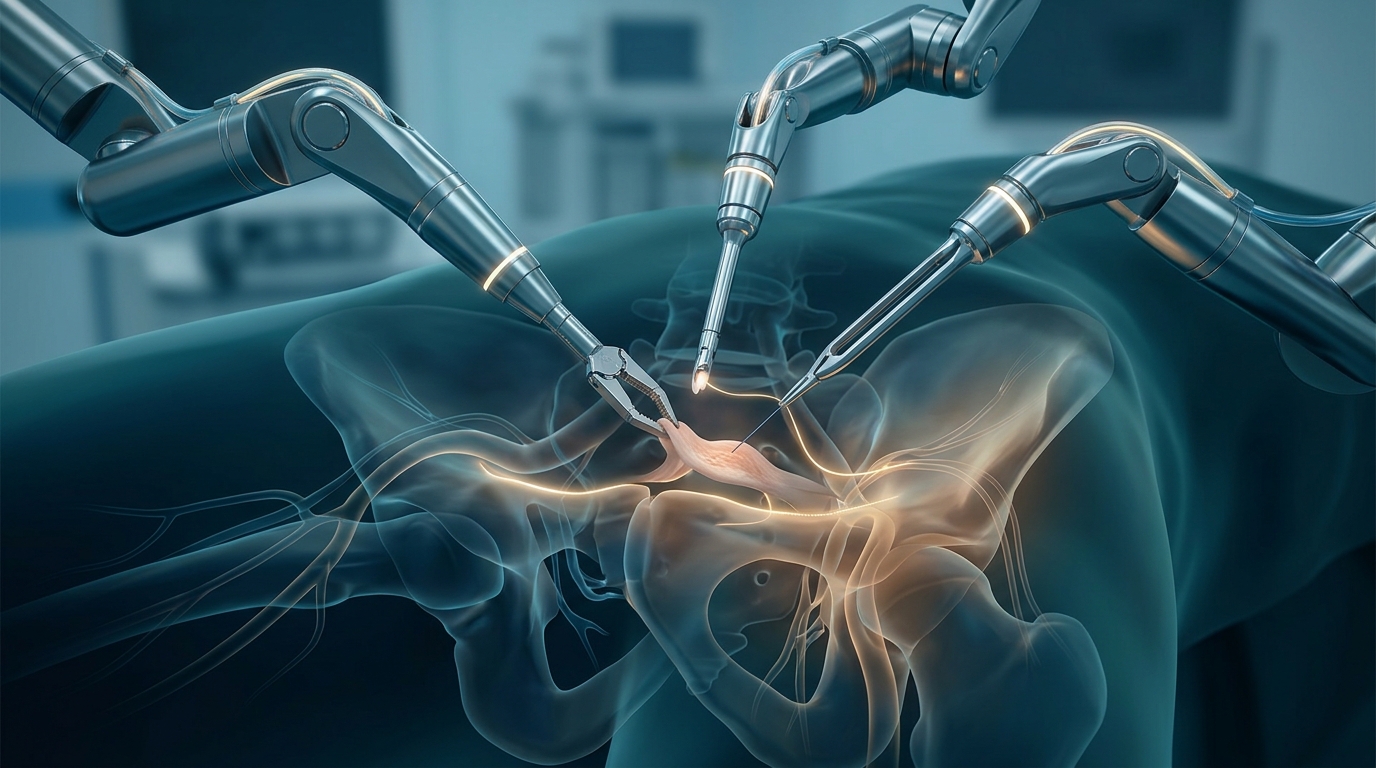
The operation was performed with a Da Vinci robotic-assisted laparoscopic system through a transabdominal approach. Robotic platforms are increasingly used for complex genitourinary reconstruction because the magnified view and instrument articulation allow fine suturing in a deep, confined field. The surgeons first debrided the necrotic retropubic tissue, then closed the fistula in two layers, a technique intended to give the repair security between the urinary and intestinal tracts.
The most distinctive element followed. Rather than trying to salvage the original bladder neck, the diseased structure was abandoned entirely. A new bladder neck was created on the anterior bladder wall, and this freshly constructed outlet was joined to the urethra in a tension-free anastomosis, meaning the connection is made without pulling or stretch on the suture line, a principle regarded as important for healing and for reducing the risk that the join narrows again.
At one-year follow-up, the patient voided normally and maintained urinary continence, with a Qmax of 24.5 millilitres per second, a value within the range expected for unobstructed urination. No recurrence of the stricture or the fistula was documented, and no complications were reported. The authors conclude that robot-assisted transabdominal bladder neck reconstruction combined with vesicorectal fistula repair is a feasible and effective minimally invasive option for this difficult post-prostatectomy condition.
The evidence behind that conclusion has clear limits. This is a single case report, published as an accepted manuscript shared early and subject to further edits before the final version of record. A favourable outcome in one patient demonstrates feasibility in that patient; it does not establish how often the technique would succeed across a wider population, how it compares with alternative strategies, or which patients are suitable candidates. Longer-term durability also remains an open question for future cases to address.
Subject of Research: Robotic bladder neck reconstruction with vesicorectal fistula repair after radical prostatectomy
Article Title: Robot-assisted bladder neck reconstruction for vesicourethral anastomotic stricture complicated with vesicorectal fistula after radical prostatectomy: a case report
Article References: Pan, Y., Ni, K., Huang, J., & Song, L. (2026). Robot-assisted bladder neck reconstruction for vesicourethral anastomotic stricture complicated with vesicorectal fistula after radical prostatectomy: a case report. BMC Urology. https://doi.org/10.1186/s12894-026-02314-y
Image Credits: AI Generated
DOI: 10.1186/s12894-026-02314-y
Keywords: radical prostatectomy, vesicourethral anastomotic stricture, vesicorectal fistula, robotic surgery, bladder neck reconstruction, Da Vinci robotic system, urinary continence, case report, BMC Urology, minimally invasive surgery, Robot-assisted, bladder
News Source: Ophelia Keating. (November 6, 2026). Robot Surgery Rebuilds Bladder Neck and Repairs Rectal Fistula After Prostatectomy. Scienmag.