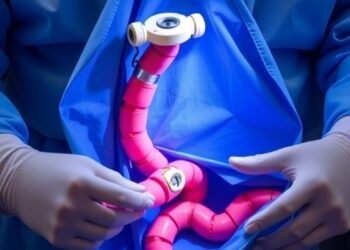
Evolutionary robotics is a new exciting area of research which draws on Darwinian evolutionary principles to automatically develop autonomous robots. In a new research article published in Frontiers in Robotics and AI, researchers add more complexity to the field by demonstrating for the first time that just like in biological evolution, embodied robot evolution is impacted by epigenetic factors.
In evolutionary robotics, an artificial "gene pool" is created, which produces genomes each of which encodes the control system of a robot. Each robot is then allowed to act and perform tasks according to its "genetically" specified controller, and the robot's fitness is ranked according to how well it performs a certain task. The robots are then allowed to reproduce by swapping genetic material with each other, comparable to biological sexual reproduction. However, the genomes of living organisms are also affected by development — events during their lifetime that lead to epigenetic changes. In biology, this interplay between evolution and development is known as evo-devo, which has emphasized the importance of non-genetic factors on an organism's phenotype. "For roboticists, the evo-devo challenge is to create physically embodied systems that incorporate the three scales of time and the processes inherent in each: behavior, development, and evolution. Because of the complexity of building and evolving physical robots, this is a daunting challenge in the quest for the "evolution of things", say authors and co-project leads Mr Jake Brawer and Mr Aaron Hill. "As an initial step toward this goal, in this paper we create a physically embodied system that allows us to examine systematically how developmental and evolutionary processes interact."
In their study, the Vassar College research team wanted to create a system that could be used to study how genetic (evolutionary) and epigenetic (developmental) factors interact in robot evolution, and how epigenetic factors affect the evolvability of robots. While previous studies have focused on the effects of evolution in physically embodied robots, this is the first time that researchers have also taken into account the epigenetic aspect in this type of experiment. "An explicit evo-devo approach has proven invaluable in the evolution of artificial neural networks. Development serves as a new type of evolutionary driver–alongside the genetic factors of mutation, recombination, and selection–facilitating evolvability in embodied agents," explain Brawer and Hill. "We note that what is missing from evolutionary robotics is not development per se but rather physically embodied development. We take the first simple steps toward combining the two by examining the interactions of epigenetic and genetic factors in the evolution of physically embodied and simulated robots."
In this experiment, the fitness of individual robots was measured by how well they performed in two tasks: light gathering (phototaxis) and obstacle avoidance, and a randomized mating algorithm was used to determine which parental "genomes" should be combined to produce the next generation of robots. Here, the genes consisted of binary code that allowed for different possible wirings of the robot hardware. The phenotype — the physical expression of the genome – of the robots was modified in each generation by altering their wiring in accordance with the new genetic setup. This was repeated until 10 generations of robots had been created and ranked by fitness. To complement the experiment on physical robots, the team also created and evolved simulated robots, and compared the evolutionary outcomes of the physical and simulated robot populations.
The experiments were run until the robots lost all mobility, since the mating algorithm allowed low-fitness individuals to remain in the gene pool and reproduce. The results show that robot populations with an epigenetic factor evolved differently than populations where development was not taken into account. Despite the robots not evolving greater light capturing skills, the team are enthusiastic about the results, since the aim of this preliminary study was above all to demonstrate the importance of including epigenetic factors in robot evolution, and to develop a conceptual and physical methodology that makes this possible. "It is important to note that our goal was not to show adaptive evolution per se but rather to test the hypothesis that epigenetic factors can alter the evolutionary dynamics of a population of physically embodied robots. The results do indeed suggest demonstrate the broad importance of including EOs in investigations of evolvability," say Brawer and Hill. "To our knowledge, our work represents the first physically embodied epigenetic factors to be used in the evolution of physically embodied robots."
This research was published into a broader research topic: Evolvability, Environments, Embodiment & Emergence in Robotics.
###
Media Contact
Melissa Cochrane
[email protected]
0041-787-246-393
@frontiersin
http://www.frontiersin.org
############
Story Source: Materials provided by Scienmag