• HOME
  • NEWS
  • EXPLORE
    • CAREER
      • Companies
      • Jobs
    • EVENTS
    • iGEM
      • News
      • Team
    • PHOTOS
    • VIDEO
    • WIKI
  • BLOG
  • COMMUNITY
    • FACEBOOK
    • INSTAGRAM
    • TWITTER
Friday, July 3, 2026
BIOENGINEER.ORG
No Result
View All Result
  • Login
  • HOME
  • NEWS
  • EXPLORE
    • CAREER
      • Companies
      • Jobs
        • Lecturer
        • PhD Studentship
        • Postdoc
        • Research Assistant
    • EVENTS
    • iGEM
      • News
      • Team
    • PHOTOS
    • VIDEO
    • WIKI
  • BLOG
  • COMMUNITY
    • FACEBOOK
    • INSTAGRAM
    • TWITTER
  • HOME
  • NEWS
  • EXPLORE
    • CAREER
      • Companies
      • Jobs
        • Lecturer
        • PhD Studentship
        • Postdoc
        • Research Assistant
    • EVENTS
    • iGEM
      • News
      • Team
    • PHOTOS
    • VIDEO
    • WIKI
  • BLOG
  • COMMUNITY
    • FACEBOOK
    • INSTAGRAM
    • TWITTER
No Result
View All Result
Bioengineer.org
No Result
View All Result
Home NEWS Science News Biology

Roaming seabirds need ocean-wide protection

Bioengineer by Bioengineer
November 15, 2023
in Biology
Reading Time: 2 mins read
0
Petrel
Share on FacebookShare on TwitterShare on LinkedinShare on RedditShare on Telegram

Seabirds roam far and wide in the Indian Ocean – so they need ocean-wide protection, new research shows.
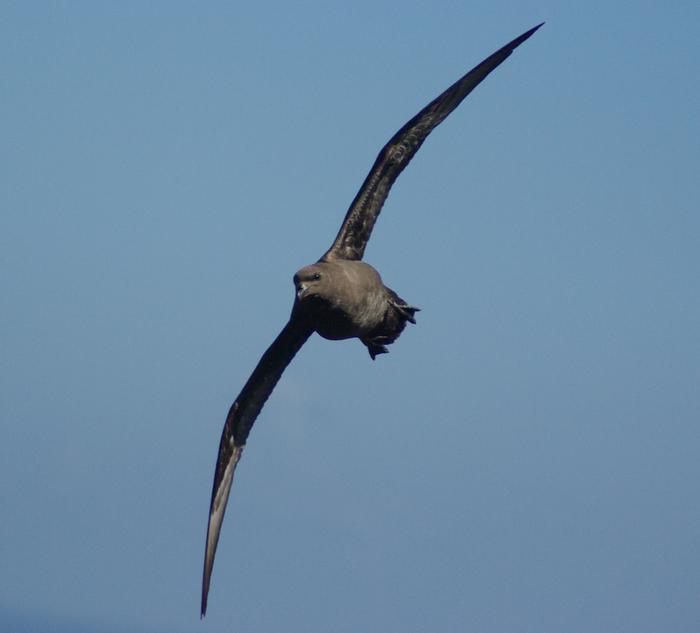
Petrel

Credit: Malcolm Nicoll (ZSL)

Seabirds roam far and wide in the Indian Ocean – so they need ocean-wide protection, new research shows.

All other oceans are known to contain “hotspots” where predators including seabirds feast on prey.

But the new study – by a team including Exeter, Heriot-Watt and Réunion universities, and ZSL – found no such concentrations in the Indian Ocean.

With seabirds facing numerous threats due to human activity, their survival depends on protecting the open ocean.

“Efforts are being made to protect key breeding colonies, but until now little was known about where Indian Ocean seabirds go when they’re not breeding,” said Dr Alice Trevail, from the Environment and Sustainability Institute at Exeter’s Penryn Campus in Cornwall.

“We found that seabirds are extremely mobile outside of breeding times, with no focussed hotspots.

“Marine Protected Areas (MPAs) exist in the Indian Ocean, but the birds in our study spent an average of no more than four days in any of the five largest MPAs per year.”

The study collected tracking data on nine seabird species during non-breeding periods.

“These birds mostly prey on small fish, so they are affected by human activities including overfishing and pollution,” Dr Trevail said.

“As the birds roam widely and spend much of their time outside national waters, we need international action – like the recent High Seas Treaty – to protect them.

“No country can act in isolation to protect these birds.”

The study was funded by the Bertarelli Foundation.

The paper, published in the journal Current Biology, is entitled: “Tracking seabird migration in the tropical Indian Ocean reveals basin-scale conservation need.”


Journal

Current Biology

DOI

10.1016/j.cub.2023.10.060

Article Title

Tracking seabird migration in the tropical Indian Ocean reveals basin-scale conservation need

Article Publication Date

15-Nov-2023

Share12Tweet8Share2ShareShareShare2

Related Posts

Evolution-Inspired Biosensors Revolutionize Lipid Tracking in Real Time — Biology

Evolution-Inspired Biosensors Revolutionize Lipid Tracking in Real Time

July 2, 2026
New Study Reveals How to Reduce Risk of Dangerous Wildlife Encounters This Summer — Biology

New Study Reveals How to Reduce Risk of Dangerous Wildlife Encounters This Summer

July 2, 2026

Hepatic IFRD1 Alleviates Metabolic Dysfunction-Linked Steatohepatitis Through the GLUD1/α-KG Pathway

July 2, 2026

Intricate Food Webs Support Ecosystem Health and Stability

July 2, 2026

POPULAR NEWS

  • Detection of EDCs in Breast Milk and Infant Urine Up to Six Months Highlights Early Exposure Risks

    77 shares
    Share 31 Tweet 19
  • Saying Goodbye to PGY-6: Pediatric Fellowship Realities

    103 shares
    Share 41 Tweet 26
  • New Drug Candidate Developed at McMaster Shows Potential for Treating Brain Cancer

    58 shares
    Share 23 Tweet 15
  • KTU Researchers Explore Ultrasound’s Role in Enhancing Blood Flow Beyond Diagnostics

    53 shares
    Share 21 Tweet 13

About

BIOENGINEER.ORG

We bring you the latest biotechnology news from best research centers and universities around the world. Check our website.

Follow us

Recent News

Steatosis Drives Liver Metastasis Diversity in CRC

Unlocking the Mysteries of Alzheimer’s Disease

Pensoft Introduces New Peer-Reviewed Journal of Regeneration to Advance Restorative Biology Across Species

Subscribe to Blog via Email

Enter your email address to subscribe to this blog and receive notifications of new posts by email.

Join 83 other subscribers
  • Contact Us

Bioengineer.org © Copyright 2023 All Rights Reserved.

Welcome Back!

Login to your account below

Forgotten Password?

Retrieve your password

Please enter your username or email address to reset your password.

Log In
No Result
View All Result
  • Homepages
    • Home Page 1
    • Home Page 2
  • News
  • National
  • Business
  • Health
  • Lifestyle
  • Science

Bioengineer.org © Copyright 2023 All Rights Reserved.