Every year, roughly fifty million cattle in China are loaded onto trucks and hauled hundreds of kilometers to slaughter, and the journey itself can quietly change the meat that ends up on the plate. A new study published in Food Science & Nutrition has now traced exactly how that change happens, down to the genes and proteins inside the muscle. By combining RNA sequencing with high-resolution mass spectrometry, researchers in Gansu Province showed that a single 15-hour road trip is enough to measurably darken meat color, toughen muscle fibers, increase drip loss, and reshape the volatile aroma compounds that give beef its characteristic smell. The work is among the first to integrate transcriptomics and proteomics to explain how pre-slaughter stress rewrites the molecular biology of dairy beef.
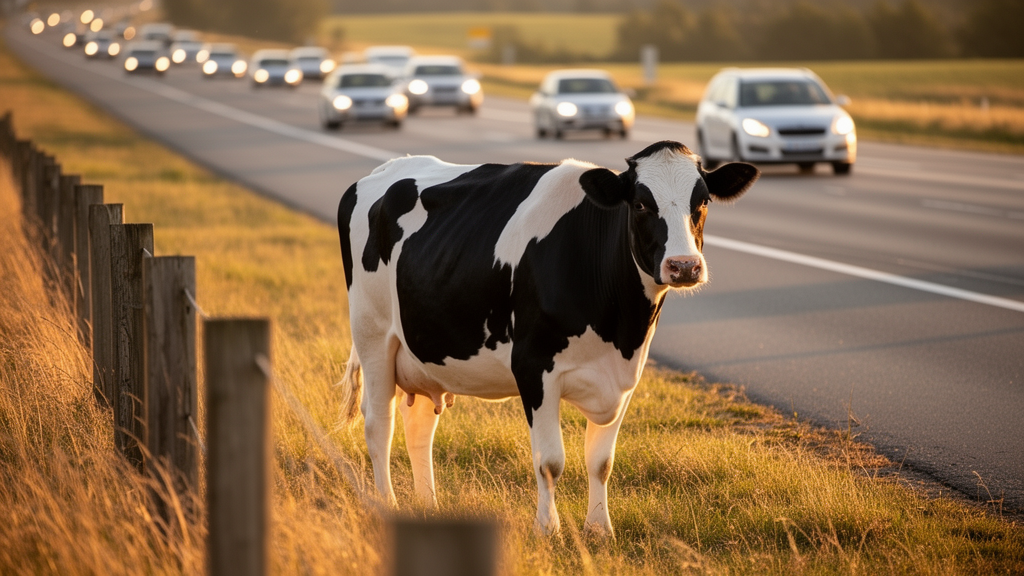
The experiment was carefully controlled. The team selected twelve Holstein steers of similar weight, roughly 637 kilograms each, raised under identical nutrition and management at a ranch in Minle County. Six animals stayed home as controls. The other six were loaded onto a truck and driven 892 kilometers at an average speed of 75 kilometers per hour, a trip lasting just over fifteen hours, with feed and water withheld during transit as is standard practice. The next morning, both groups were slaughtered within the same one-hour window at two abattoirs using identical standardized procedures. Samples of the longissimus lumborum, the prized loin muscle between the tenth and thirteenth ribs, were snap-frozen in liquid nitrogen for molecular analysis, while other portions were prepared for electron microscopy and flavor profiling.
The physical differences between the two groups were striking. Meat from transported steers had significantly lower lightness, redness, and yellowness values, meaning it looked visibly darker and less appealing. Shear force, a standard measure of toughness, rose from about 10.4 kilograms-force in controls to 12.6 in the transported group, a highly significant increase. Drip loss and water loss rate both climbed, while marbling scores dropped from an average of 4.0 to 2.5 on the study’s six-point scale. Ultimate pH fell from 5.89 to 5.52, though the researchers note it remained within the normal physiological range, suggesting the stress was not severe enough to trigger the classic pale, soft, exudative defect seen in pork and poultry. Cooking loss, curiously, was actually lower in the transported group.
Transmission electron microscopy revealed the structural basis for these changes. In control animals, sarcomeres, the repeating contractile units of muscle, were significantly longer than in transported steers, while myofibril diameter showed no difference. The transported muscle also showed substantially more myofibrillar autolysis, a self-digestion of the contractile apparatus during the 24-hour postmortem aging period. Because most of the water in lean meat is held between the thick and thin filaments inside myofibrils, contraction and shrinkage of these structures squeezes water out of the cell. That mechanical explanation dovetails neatly with the measured increases in drip loss and water loss, and with the shorter sarcomeres that also account for the higher shear force and poorer tenderness.
Flavor changed too. Using gas chromatography coupled with ion mobility spectrometry, the team detected 53 volatile compounds in the loin samples and positively identified 42 of them, including ten ketones, eleven alcohols, fifteen aldehydes, four esters, a furan, and acids. Principal component analysis separated the transported and control groups cleanly, indicating a substantial shift in the aroma profile. Several compounds associated with desirable aromatic notes dropped significantly after transport, including hexanal, which carries apple and fresh-green notes; octanal and benzaldehyde, which contribute fruity, fatty, and almond-like aromas; and ethyl acetate, a fruity ester. Levels of 2,3-butanedione and acetoin, which impart a cheese-like aroma, also fell sharply. Meanwhile, acetone, nonanal, and 2-hexenal rose. The net effect is a measurable erosion of the fruity and fragrant top notes that make cooked beef appealing.
To understand the biology behind these changes, the researchers sequenced the muscle transcriptome and quantified the proteome. RNA sequencing identified 14,581 genes, of which 639 were differentially expressed between the groups: 174 upregulated and 465 downregulated in transported animals. Mass spectrometry using data-independent acquisition identified 2,013 proteins, with 99 differing significantly between groups, 48 up and 51 down. A statistical model built on the protein abundance data separated the two groups almost perfectly, with goodness-of-fit and prediction values of 0.99 and 0.964 respectively, and permutation testing confirmed the model was not overfitted.
Pathway analysis pointed to a surprising culprit: ferroptosis, an iron-dependent form of programmed cell death driven by lipid peroxidation of cell membranes. This pathway, along with JAK-STAT signaling and mineral absorption, was strongly enriched among upregulated proteins in transported muscle. The mechanism makes physiological sense. Transport stress disrupts iron ion homeostasis, and myoglobin, the protein that gives red meat its color, is itself a major reservoir of iron in muscle. When lipid peroxidation runs unchecked, it generates reactive aldehydes such as hexenal, compounds that are both cytotoxic and flavor-active. Lipid peroxidation also damages muscle fiber architecture, causing cytoplasmic loss and connective tissue atrophy, which increases water loss. At the transcriptional level, the differentially expressed genes clustered in the MAPK and PI3K-Akt signaling pathways, both known to regulate fatty acid biosynthesis and postmortem muscle metabolism.
Eight genes changed at both the RNA and protein levels, and they tell a coherent story. HMOX1, heme oxygenase 1, a canonical biomarker of oxidative stress that degrades heme into antioxidant biliverdin, was upregulated, likely a compensatory defense against transport-induced oxidative damage, though heme degradation can also dull meat color. BDH1, the first enzyme of ketone body metabolism, was also upregulated, plausibly reflecting the metabolic shift caused by feed restriction during the journey. On the downregulated side were COL1A1, the gene for type I collagen, the dominant structural protein of muscle connective tissue; FMOD, fibromodulin, which organizes the extracellular matrix and regulates myoblast differentiation; MYL3, a myosin light chain expressed in slow-twitch fibers and associated with tenderness; and SLC16A3, a lactate transporter. Reduced expression of collagen and myofibrillar genes aligns with the observed myofibrillar autolysis, sarcomere shortening, and toughness.
The correlations between molecules and meat traits were tight. BDH1 and PFN2, the two upregulated genes, showed the strongest positive correlations with shear force and drip loss, meaning their expression tracked the toughness and water loss that transport inflicted. Among the downregulated genes, COL1A1, FMOD, and SLC16A3 correlated most strongly negatively with shear force, while MYL3 correlated negatively with drip loss and marbling grade. Quantitative real-time PCR confirmed the RNA sequencing results for all eight genes, validating the transcriptomic data. A protein-protein interaction network identified HMOX1 and COL1A1 as key hub nodes, suggesting that upregulated stress proteins directly or indirectly suppress the structural proteins that maintain meat quality.
The practical implications reach well beyond the laboratory. Dairy bulls already supply a large share of the world’s beef, roughly 45 percent in the European Union and 30 percent in the United States, and their meat quality matters economically. This study suggests that transport stress impairs beef through a specific, targetable mechanism involving ferroptosis, lipid peroxidation, and the suppression of collagen and myofibrillar genes, and it nominates HMOX1 and BDH1 as candidate biomarkers for assessing stress in production systems. The authors acknowledge limitations: they did not measure lairage rest after transport, transit temperature, humidity, or stocking density, all of which are known to modulate stress, and no sensory panel tasted the meat. Previous work in pigs shows that a two-to-three-hour rest before slaughter can substantially blunt these effects. Still, the message is clear and molecularly grounded: the road to the slaughterhouse is not a neutral interlude, but an active force that reshapes the genome’s output, the muscle’s architecture, and ultimately the aroma of the beef itself.
Subject of Research: Effects of transportation stress on Holstein beef quality, flavor, and muscle gene and protein expression
Article Title: Integrating Transcriptomic and Proteome Analysis to Understand Muscle Qualities and Related Regulatory Factors of Holstein Beef Under Transportation Stress
Article References: Lei, Z., Cheng, S., Yang, R., Shi, J., Li, Z., & Liu, W. (2026). Integrating Transcriptomic and Proteome Analysis to Understand Muscle Qualities and Related Regulatory Factors of Holstein Beef Under Transportation Stress. Food Science & Nutrition, 14(10), Article e72415. https://doi.org/10.1002/fsn3.72415
Image Credits: AI Generated
DOI: 10.1002/fsn3.72415
Keywords: transportation stress, Holstein cattle, beef quality, transcriptomics, proteomics, ferroptosis, meat flavor, longissimus lumborum, HMOX1, COL1A1, sarcomere, lipid peroxidation
News Source: Juliet Wilcox. (October 17, 2026). Road Stress Rewrites the Genes and Flavor of Holstein Beef. Scienmag.