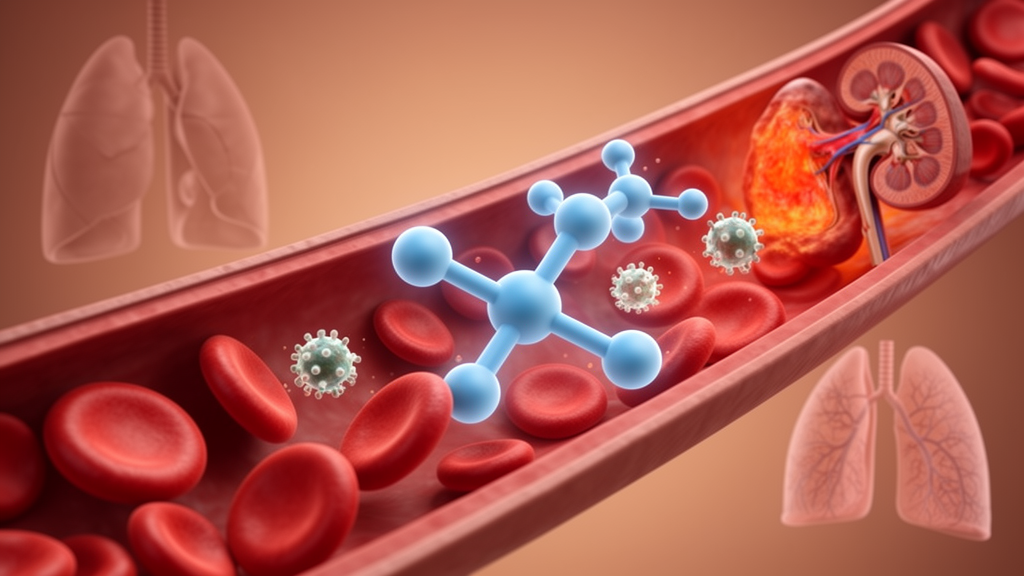
A 54-year-old man who arrived at a Bulgarian hospital with failing kidneys, flooded lungs, and white blood cell counts so extreme that doctors initially suspected leukemia or overwhelming infection has become the subject of a detailed case report illustrating how modern biologic therapy can rescue patients with one of medicine’s most dangerous autoimmune conditions. The report, published in the journal Pharmacia, documents the clinical and pharmaceutical journey of a patient with severe PR3-ANCA pulmonary-renal syndrome, a rare disorder in which the immune system attacks small blood vessels in both the kidneys and the lungs simultaneously.
Antineutrophil cytoplasmic antibody-associated vasculitis, abbreviated as AAV, is a systemic autoimmune disease characterized by necrotizing inflammation of small blood vessels. When it strikes both the lungs and the kidneys, clinicians call it pulmonary-renal syndrome, and it ranks among the most lethal presentations of any autoimmune disease. Patients typically develop rapidly progressive glomerulonephritis, in which the kidney’s filtering units are destroyed within days or weeks, alongside pulmonary infiltrates or diffuse alveolar hemorrhage that can suffocate the patient from within. Without aggressive immunosuppressive treatment, mortality is high and kidney failure is often irreversible.
The patient in this case had been in good health until early 2023, with a medical history notable only for kidney stones. In January 2023, routine laboratory tests revealed persistent leukocytosis, an elevated white blood cell count. Over the following months he developed abdominal pain, muscle and joint aches, low-grade fever, fatigue, and swelling of the lower limbs. Multiple courses of empirical antibiotics were administered without any improvement, a pattern that should raise suspicion of a non-infectious cause. His condition then deteriorated dramatically: urine output fell to oliguria and progressed to complete anuria, accompanied by laboratory evidence of severe systemic inflammation.
On admission to the Department of Nephrology at St. George University Hospital in Plovdiv in May 2023, the man was in poor general condition, with arterial hypertension, peripheral edema, pallor, pulmonary congestion, and clinical signs of fluid overload. Laboratory investigations revealed extreme leukocytosis reaching 41 × 10⁹ per liter, thrombocytosis up to 850 × 10⁹ per liter, markedly elevated inflammatory markers, severe acute kidney injury, electrolyte disturbances, and hypoalbuminemia. Serum creatinine, a key marker of kidney failure, reached 700 µmol/L, while potassium climbed to 6.6 mmol/L, a level that threatens fatal cardiac arrhythmia.
Immunological testing provided the diagnostic turning point. The patient tested positive for proteinase 3-ANCA with a cytoplasmic staining pattern, the immunological signature of this form of vasculitis. Critically, antibodies against the glomerular basement membrane were negative, ruling out Goodpasture’s disease, and microbiological cultures showed no infection. Computed tomography of the chest and abdomen revealed bilateral pulmonary infiltrates, pleural and pericardial effusions, pleural-based pulmonary lesions, and enlarged paraaortic lymph nodes, findings that initially kept both severe infection and malignancy in the differential diagnosis.
A percutaneous kidney biopsy settled the question. Light microscopy showed pauci-immune necrotizing crescentic glomerulonephritis, a pattern in which inflammatory cells form crescent-shaped crescents around the glomeruli while immunofluorescence shows little or no immune complex deposition. This histopathological picture is consistent with PR3-ANCA-associated rapidly progressive glomerulonephritis and, importantly, indicated advanced active disease with an unfavorable prognosis for renal recovery. The extent of crescent formation meant that even with perfect treatment, the kidneys were unlikely to regain function.
Treatment began with the standard induction regimen: high-dose corticosteroids and cyclophosphamide, an alkylating chemotherapy agent that has anchored vasculitis therapy for decades. The patient also received hemodialysis, broad-spectrum antimicrobials including meropenem, vancomycin, and metronidazole, thromboembolic prophylaxis with enoxaparin, and human albumin to correct low blood protein levels. Despite this intensive combination, renal recovery was not achieved, and concerns grew about cumulative cyclophosphamide toxicity, which limits prolonged use particularly in critically ill patients already at high risk of infection.
A multidisciplinary team therefore made the decision to escalate to rituximab, an anti-CD20 monoclonal antibody marketed as MabThera. The pharmaceutical rationale was compelling on several fronts. Rituximab works by selectively depleting CD20-positive B lymphocytes, the cells responsible for producing the ANCA antibodies that drive the inflammatory attack. It has demonstrated efficacy comparable to cyclophosphamide for remission induction, with particular effectiveness in PR3-ANCA-positive disease. Crucially for this dialysis-dependent patient, rituximab is not significantly eliminated through the kidneys and is not effectively removed by hemodialysis, so no dose adjustment was necessary. Before initiating the biologic, the team screened for hepatitis B, hepatitis C, and HIV because of the risk of viral reactivation under immunosuppression.
The outcome demonstrated both the power and the limits of modern therapy. Following rituximab administration, systemic inflammatory activity stabilized and the pulmonary involvement regressed, with no new manifestations outside the kidneys during follow-up. However, renal recovery never occurred, and the patient remained chronically dependent on dialysis, a consequence the authors attribute to the advanced crescentic glomerular injury and the delayed diagnosis. The case underscores a sobering reality: controlling the immune attack cannot always reverse damage already done to organs destroyed before treatment began.
Beyond the individual outcome, the report carries broader lessons for the management of severe vasculitis. Delayed diagnosis and high inflammatory burden are associated with irreversible renal damage and increased mortality, making early recognition of ANCA-associated disease essential when patients present with unexplained kidney failure and lung infiltrates. The authors emphasize that careful pharmaceutical monitoring, including complete blood counts, inflammatory markers, electrolytes, immunoglobulin levels to detect hypogammaglobulinemia, and vigilant surveillance for opportunistic infections, remains essential during biologic immunosuppressive therapy. The successful coordination among nephrologists, clinical pharmacists, pathologists, and intensive care specialists in this case illustrates that multidisciplinary care is not an administrative nicety but a determinant of survival in these complex, rapidly evolving diseases.
Subject of Research: Rituximab therapy for severe PR3-ANCA-associated pulmonary-renal syndrome
Article Title: Rituximab therapy in severe PR3 – ANCA pulmonary–renal syndrome: A clinical and pharmaceutical case report
Article References: Nikolov, D., Nikolov, G., Kitova, L., Kitov, S., Kitova, M.-F., & Mihaylova, A. A. (2026). Rituximab therapy in severe PR3-ANCA pulmonary–renal syndrome: A clinical and pharmaceutical case report. Pharmacia, 73, Article e201634. https://doi.org/10.3897/pharmacia.73.e201634
Image Credits: AI Generated
DOI: 10.3897/pharmacia.73.e201634
Keywords: rituximab, ANCA-associated vasculitis, pulmonary-renal syndrome, PR3-ANCA, glomerulonephritis, case report, autoimmune disease, kidney failure, hemodialysis, immunosuppression, B-cell depletion, clinical pharmacology
News Source: Ophelia Keating. (October 17, 2026). Rituximab rescues severe PR3-ANCA pulmonary-renal syndrome when standard drugs fail. Scienmag.