A landmark analysis conducted through the Global Burden of Disease (GBD) Study and recently published in The Lancet Oncology reveals a sobering forecast for breast cancer worldwide. The study projects a dramatic surge in breast cancer incidence, estimating a rise from 2.3 million cases in 2023 to an alarming 3.5 million by the year 2050. This one-third increase underscores the escalating global health challenge posed by breast carcinoma. More concerning is the projection that annual deaths related to breast cancer will nearly double, climbing from 764,000 in 2023 to approximately 1.4 million in 2050. The analysis highlights a striking disparity: lower-resource countries will bear the brunt of this increasing mortality, reflecting persistent and widening inequities in cancer detection, treatment access, and health system infrastructure.
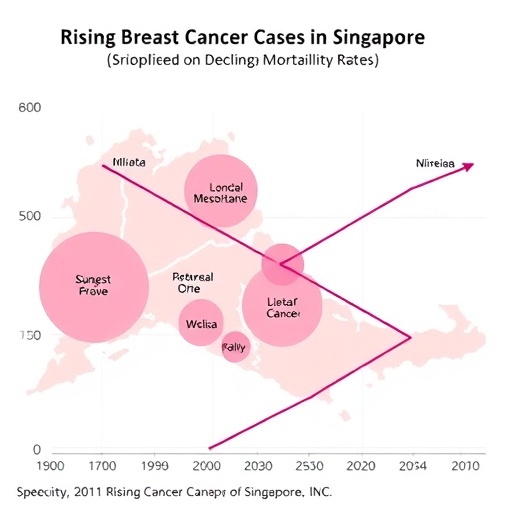
In stark contrast to this bleak global landscape, Singapore presents a noteworthy counter-narrative marked by increasing breast cancer incidence alongside declining mortality rates. While the global estimated age-standardised incidence rate (ASIR) has modestly increased from 42.4 per 100,000 women in 1990 to 49.3 in 2023, Singapore’s trajectory has been more pronounced. The city-state’s ASIR rose from 41.58 to 62.33 per 100,000 women over the same period, suggesting that although incidence is rising, Singapore remains below the averages observed in other high-income countries. This divergence provides a valuable case study illustrating how advanced health systems can decouple incidence from fatality through effective screening, diagnosis, and treatment interventions.
Singapore’s epidemiological data reflect broader demographic and societal transitions typical of high-income countries. The country’s higher ASIR compared to regional peers such as Brunei and South Korea, but lower than Japan, is shaped in part by improved mammographic screening coverage and increased life expectancy. Notably, breast cancer incidence in Singapore has escalated especially among women aged 65 and above, aligning with the nation’s ageing demographic profile. This detailed age-specific rise highlights the critical importance of targeted public health strategies that address the nuanced needs of an ageing population at risk of breast malignancies.
Dr. Marie Ng, an Associate Professor at the Yong Loo Lin School of Medicine and co-senior author of the study, emphasizes the global inequity inherent in breast cancer outcomes. “Breast cancer is a significant challenge for women marked by global inequity. Its impact is felt most acutely in lower-income countries, where late-stage diagnoses and limited care access result in unacceptable mortality rates,” she explains. This underlines the necessity for equitable investments in healthcare infrastructure and access, especially in resource-challenged environments. The divergence in mortality trajectories highlights how socio-economic context fundamentally shapes cancer impacts.
Demographic and reproductive factors account for key drivers of rising breast cancer incidence globally and in Singapore. Increasing median age at first birth, which shifted from 27.5 years in 1990 to 31.6 years in 2024, combined with a declining total fertility rate from 1.77 to 1.02 during the same interval, embodies reproductive pattern changes linked to heightened breast cancer risks. These reproductive parameters—reflective of widespread socio-cultural shifts in high-income economies—modulate hormonal exposure and breast tissue differentiation, establishing a biological basis for increased susceptibility observed epidemiologically.
On a worldwide scale, the incidence uptick is most dramatic in low-income countries where age-standardised rates have surged by approximately 147% since 1990. This staggering escalation not only indicates shifts in environmental and lifestyle risk factors but also exacerbates already entrenched disparities in cancer control between affluent and resource-poor nations. The growing burden in these regions calls attention to urgent public health imperatives focused on prevention, early detection, and expanding healthcare infrastructure best practices adapted to local needs.
Mortality trends further differentiate global patterns. Overall age-standardised mortality rates (ASMR) have slightly decreased from 17.0 to 16.1 per 100,000 between 1990 and 2023. However, this aggregate truth conceals a polarization: mortality plummeted by roughly 30% in high-income countries, while in low-income regions, it nearly doubled. Singapore aligns with the favorable high-income trajectory, recording a significant 16.7% mortality decline from 14.97 to 12.47 per 100,000 within the last decade alone. This improved survival landscape epitomizes the life-saving impact of comprehensive cancer control strategies.
Singapore’s advancements in breast cancer mortality reduction are rooted in enhanced early detection and treatment access. The introduction of BreastScreen Singapore in 2002 exemplifies this progress, with a substantial shift in diagnosis towards earlier stages—56.3% of recent cases are detected at Stage I, nearly doubling from a decade earlier. Early stage diagnosis correlates strongly with improved prognosis and expanded therapeutic options. Such progress contrasts sharply with global trends where many countries face challenges of late presentation and limited treatment availability, contributing to poor survival outcomes.
Survival gains are further evidenced by the dramatic improvement in five-year relative survival rates, which increased from 49.9% in the 1970s to 84.2% for 2019–2023 cohorts. This represents a quantum leap in cancer management, attributable to advancements in surgical techniques, systemic therapies, radiotherapy, as well as enhanced supportive care measures. Singapore’s integrated healthcare system facilitates timely access to this state-of-the-art care, highlighting systemic strengths pivotal to survival improvements even amidst rising disease incidence.
While screening and treatment remain essential, the GBD study highlights critical opportunities for prevention. Approximately 28% of the global breast cancer burden in 2023—equivalent to around 6.8 million lost healthy life years—is attributable to six modifiable lifestyle and metabolic risk factors. These include, most prominently, high red meat consumption, followed by tobacco use, elevated blood sugar levels, high body mass index (BMI), alcohol use, and physical inactivity. Notably, although tobacco- and alcohol-related burdens have decreased in recent decades, metabolic risk factors have persisted or worsened, underscoring evolving public health challenges.
Singapore’s current public health milieu, characterized by rising rates of obesity, diabetes, and sedentary lifestyles, parallels these global metabolic risk trends. Rapid urbanization and lifestyle transitions intensify these risks, creating a complex interplay between demographic shifts and modifiable factors in influencing breast cancer patterns. Accordingly, the nation sits at a crossroads requiring policy innovation to curb metabolic risk prevalence through accessible healthy choices, community engagement, and sustained preventive strategies.
Despite breast cancer remaining the leading cause of cancer-related death among Singaporean women, the nation’s declining mortality rates and improving survival starkly contrast the worsening prognosis seen in many lower-resource settings. This divergence reinforces the principle that economic development, coupled with strategic health system investments—especially universal access to early detection and high-quality care—can shift the burden away from mortality towards manageable morbidity. Singapore’s experience thus offers a replicable model for health equity improvement.
Dr. Ng encapsulates this dual-faceted reality: “As countries undergo economic development and demographic transition, breast cancer incidence can rise. However, strong screening programmes and universal access to high-quality care are shifting the burden from mortality to morbidity, meaning people live longer with better health outcomes, even while incidence climbs.” This nuanced understanding informs the global fight against breast cancer, emphasizing both medical innovation and systemic health equity.
The study also underscores a fundamental message: combating the escalating breast cancer burden demands coordinated global public health action. This encompasses investment in early detection programs, lifestyle risk reduction policies, equitable access to cutting-edge treatments, and addressing social determinants of health. Singapore’s Island success story exemplifies how integrated, sustained political will and health infrastructure development can mitigate mortality and improve quality of life—even as demographic and metabolic risk factors evolve.
Ultimately, the global and Singaporean breast cancer data collectively intimate a clear refrain: rising incidence is not an inexorable harbinger of increasing mortality. Effective strategies encompassing prevention, early diagnosis, and equitable care have the power to transform outcomes. However, realizing this paradigm shift on a planetary scale hinges on addressing widening global disparities through investment, innovation, and inclusive healthcare delivery—imperatives that will define the trajectory of breast cancer control in the coming decades.
Subject of Research: Global burden, epidemiology, and future trends of breast cancer among females, with a focus on incidence, mortality, and risk factors stratified by country income levels.
Article Title: Global, regional, and national burden of breast cancer among females, 1990–2023, with forecasts to 2050: a systematic analysis for the Global Burden of Disease Study 2023
News Publication Date: 2-Mar-2026
Web References: DOI: 10.1016/S1470-2045(25)00730-2
Keywords: Breast cancer incidence, breast cancer mortality, global health disparities, age-standardised incidence rate, age-standardised mortality rate, breast cancer risk factors, metabolic risk, early detection, cancer screening, high-income countries, low-income countries, epidemiological trends
Tags: age-standardised incidence rate breast cancerbreast cancer epidemiology Singaporebreast cancer healthcare infrastructure challengesbreast cancer incidence trends Singaporebreast cancer public health strategiesbreast cancer survival rates Singaporebreast cancer treatment access inequitiescancer detection disparities low-resource countriesdeclining breast cancer mortality ratesglobal breast cancer projections 2050Global Burden of Disease breast cancer studyrising breast cancer cases worldwide