


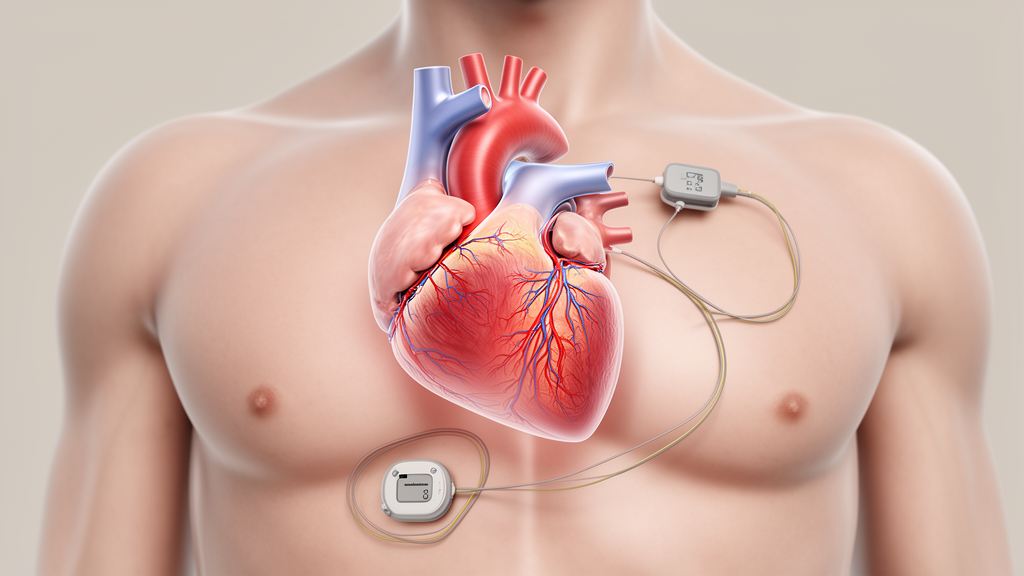
Cardiologists in China have reported a salvage technique for patients whose pacemaker leads need revision but whose left brachiocephalic vein is completely blocked, a situation that normally prevents standard left-sided lead replacement. In a single case published in BMC Cardiovascular Disorders, the team implanted a left bundle branch area pacing lead from the right side of the chest and then tunneled it under the skin across the anterior chest wall to the patient’s existing left pectoral pocket, avoiding the creation of a second surgical pocket.
The patient presented with pacemaker lead malfunction, and imaging showed persistent left subclavian vein stenosis together with occlusion of the left brachiocephalic vein. Because these venous abnormalities precluded a standard revision through the left side, the operators chose a right-sided approach. Left bundle branch area pacing is increasingly applied for physiological pacing, but lead implantation in patients with left-sided venous anomalies or occlusion remains challenging, the authors note.
To adapt the technique to the right-sided venous trajectory, the team used a C315-His sheath that was manually bent to 90 degrees. This modified sheath shape was the technical key that allowed the lead to be delivered from the right side. The newly implanted lead was then routed subcutaneously across the chest to the original left pectoral pocket, so the existing pocket was maintained and no additional pocket had to be created.
According to the case report, satisfactory pacing parameters were achieved after the operation. At the one-month follow-up, the patient remained event-free and had no complications. The authors describe the approach as a viable salvage option for pacemaker revision in patients with left-sided venous obstruction, and they suggest that avoiding a secondary pocket may theoretically reduce pocket-related complications.
As a single-patient case report, the findings describe what was possible in one individual rather than demonstrating safety or efficacy across a population. The authors state that the reduced complication risk is theoretical, and the report is shared as an early, peer-reviewed accepted version that is subject to further edits. The technique combines two elements: a manually reshaped sheath that facilitates right-sided lead implantation, and subcutaneous rerouting that preserves the original generator pocket. For patients facing the same combination of left subclavian stenosis and left brachiocephalic vein occlusion, the report documents one documented alternative when the standard left-sided route is unavailable.
Subject of Research: A case report of right-sided left bundle branch area pacing with subcutaneous tunneling for pacemaker lead revision in left brachiocephalic vein occlusion.
Article Title: Right-sided left bundle branch area pacing with contralateral subcutaneous tunneling for lead revision in left brachiocephalic vein occlusion: a case report
Article References: Chen, W., Yu, S., Cheng, J., He, Y., Chen, H., Han, J., Wen, B., Hu, X., Guo, L., Jin, K., Xiang, M., & Ma, H. (2026). Right-sided left bundle branch area pacing with contralateral subcutaneous tunneling for lead revision in left brachiocephalic vein occlusion: a case report. BMC Cardiovascular Disorders. https://doi.org/10.1186/s12872-026-06847-w
Image Credits: AI Generated
DOI: 10.1186/s12872-026-06847-w
Keywords: left bundle branch area pacing, pacemaker lead revision, brachiocephalic vein occlusion, subclavian vein stenosis, subcutaneous tunneling, C315-His sheath, case report, cardiac pacing, venous obstruction, pacing complications, Right-sided, left
News Source: Ophelia Keating. (October 29, 2026). Right-Sided Heart Pacemaker Lead With Chest Tunneling Offers Salvage When Main Vein Is Blocked. Scienmag.



