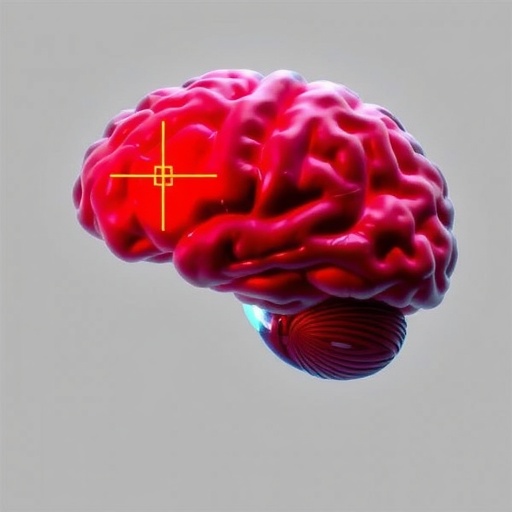
In a groundbreaking development that could redefine therapeutic interventions for post-traumatic stress disorder (PTSD), a recent study published in Nature Communications reveals how targeted right amygdala ablation significantly alleviates maladaptive negative interpretation biases and associated PTSD symptoms. This pioneering clinical exploration marks a paradigm shift in understanding the neural circuitry underlying the persistence of PTSD, unveiling new corridors for precision neurosurgery as a viable treatment for those unresponsive to conventional therapies.
The amygdala, an almond-shaped cluster of nuclei nestled deep within the temporal lobes, has long been recognized as a critical hub for emotional processing, especially fear and threat detection. PTSD, which afflicts millions globally, is often characterized by a persistent over-activation of fear responses, intrusive memories, and a pronounced tendency to interpret ambiguous stimuli negatively—termed maladaptive negative interpretation bias. This study, led by a multidisciplinary team including Xie, van Rooij, and Sun, offers powerful evidence connecting the maladaptive cognitive-emotional biases directly to activity localized within the right amygdala.
Prior neuroimaging research has repeatedly implicated hyperactivity in the amygdala when PTSD patients are exposed to trauma-related cues. Building on these insights, the researchers hypothesized that surgical intervention geared specifically at the right amygdala could mitigate the pervasive negative interpretative biases and symptom severity. Employing state-of-the-art stereotactic neurosurgical techniques, they conducted a precision ablation in a carefully selected patient exhibiting severe, treatment-resistant PTSD, whose clinical profile included debilitating anxiety, hypervigilance, and frequent re-experiencing symptoms.
Before surgery, comprehensive neuropsychological assessments were administered to evaluate the patient’s interpretation styles using behavioral paradigms designed to probe responses to ambiguous emotional stimuli. The results documented a pronounced negative bias, with the patient disproportionately interpreting neutral cues as threatening. Functional magnetic resonance imaging (fMRI) scans concurrently demonstrated hyperconnectivity between the right amygdala and prefrontal cortex regions implicated in emotional regulation, suggesting maladaptive circuits sustaining the disorder.
Following the focused right amygdala ablation, remarkable clinical and neurofunctional changes were observed. Postoperative assessments revealed a substantial reduction in PTSD symptom severity, indexed through standardized scales such as the Clinician-Administered PTSD Scale (CAPS) and the PTSD Checklist (PCL). More notably, behavioral tasks demonstrated a significant normalization of interpretation biases, indicating a recalibration of emotional processing circuits. Neuroimaging corroborated these findings, showing decreased hyperactivity within the amygdala and a restoration of more balanced connectivity patterns with regulatory cortical areas.
This transformative clinical observation challenges the dogma that surgical ablation of limbic structures, traditionally viewed as high-risk and last-resort, is too invasive for affective disorders. The precision of contemporary neurosurgical techniques, combined with advanced neuroimaging guidance, has enabled interventions that are both targeted and minimally disruptive, heralding a new era of “circuit-based” psychiatry where dysfunctional networks can be modulated to restore healthy emotional function.
The study also opens crucial questions about lateralization of amygdala function in PTSD. Although both hemispheres contribute to emotional processing, this case advocates a particularly critical role for the right amygdala in sustaining maladaptive negative interpretative bias. This lateralized approach challenges existing therapeutic paradigms, suggesting that bespoke interventions targeting unilateral dysfunction might yield superior outcomes compared to more generalized treatments.
From a mechanistic standpoint, the authors argue that the ablation interrupts the pathological loop wherein the right amygdala perpetuates excessive threat signaling, thereby alleviating downstream dysregulation in cognitive appraisal and memory encoding circuits notably involving the hippocampus and ventromedial prefrontal cortex (vmPFC). This disruption facilitates the breaking of intrusive fear memories and the attenuation of hypervigilant states by recalibrating the balance between threat appraisal and safety signaling.
Importantly, the study emphasizes the ethical and clinical rigor underpinning the intervention. The patient underwent exhaustive psychiatric evaluation, pharmacological trials, and psychotherapeutic attempts before surgical consideration, highlighting the procedure’s place as a last-resort yet highly promising option. The multidisciplinary team included neurosurgeons, psychiatrists, and neuropsychologists who closely monitored postoperative outcomes over extended follow-up periods to ensure safety and efficacy.
This investigative breakthrough also aligns with burgeoning research in neuromodulation, such as deep brain stimulation (DBS) and transcranial magnetic stimulation (TMS), but contrasts with these by directly ablating hyperactive neural tissue rather than modulating it externally. While neuromodulation techniques offer reversibility, ablation provides a definitive and, as demonstrated, effective means to interrupt entrenched pathological circuits in refractory cases.
The authors caution that, despite the extraordinary results, the study’s sample size—a single patient case—is inherently limited, necessitating rigorous replication in larger cohorts to establish generalizability and to refine criteria for surgical candidacy. Additionally, long-term monitoring is essential to detect any delayed adverse effects or compensatory neural changes that might impact cognitive or emotional functions.
Further investigations are poised to explore whether similar approaches targeting other limbic or paralimbic structures could benefit broader PTSD phenotypes or related disorders with overlapping neurocognitive dysfunctions such as major depressive disorder or anxiety syndromes. The study, therefore, acts as a catalyst, inspiring innovative cross-disciplinary research integrating neurobiology, psychiatry, and neurosurgery.
Moreover, this work reignites debates around the philosophical and neuroscientific understanding of emotion regulation, memory, and subjective experience. It raises profound questions about the localization of self and trauma within neural substrates, and the implications of altering these substrates directly, balancing relief from suffering against the preservation of identity and cognitive integrity.
The publication has already sparked significant discussion across scientific and clinical communities, given its potential to shift treatment landscapes for millions suffering from PTSD worldwide. The ability to surgically dismantle pathogenic neural processes provides a tangible beacon of hope in elucidating mechanisms that have so far evaded traditional psychopharmacology and psychotherapy.
In summary, the study by Xie, van Rooij, Sun, and colleagues offers a pioneering glimpse into the therapeutic potential of targeted right amygdala ablation in dismantling the neurocognitive underpinnings of maladaptive negative interpretation bias in PTSD. This advancement not only offers hope for treatment-resistant patients but also charts an exciting future for biologically informed, precision-targeted interventions in mental health.
As neuroscience continues to unravel the brain’s complexity, this discovery underscores the transformative power of innovative, interdisciplinary approaches that meld technology with compassion—ultimately redefining how trauma-related disorders might be treated and understood in the decades ahead.
Subject of Research:
Right amygdala ablation as a treatment for maladaptive negative interpretation bias and symptoms in post-traumatic stress disorder (PTSD).
Article Title:
Right amygdala ablation reduces maladaptive negative interpretation bias and symptoms in a patient with post-traumatic stress disorder.
Article References:
Xie, T., van Rooij, S.J.H., Sun, S. et al. Right amygdala ablation reduces maladaptive negative interpretation bias and symptoms in a patient with post-traumatic stress disorder. Nat Commun (2026). https://doi.org/10.1038/s41467-026-74099-5
Image Credits:
AI Generated
Tags: clinical study on amygdala and PTSDcognitive-emotional bias and amygdalaemotional processing and fear responsemaladaptive negative interpretation bias in PTSDneural circuitry of PTSDovercoming treatment-resistant PTSDprecision neurosurgery for traumaright amygdala ablation for PTSDright amygdala hyperactivity in PTSDsurgical interventions for PTSD symptomstargeted neurosurgery for PTSD treatmenttrauma-related neural hyperactivity