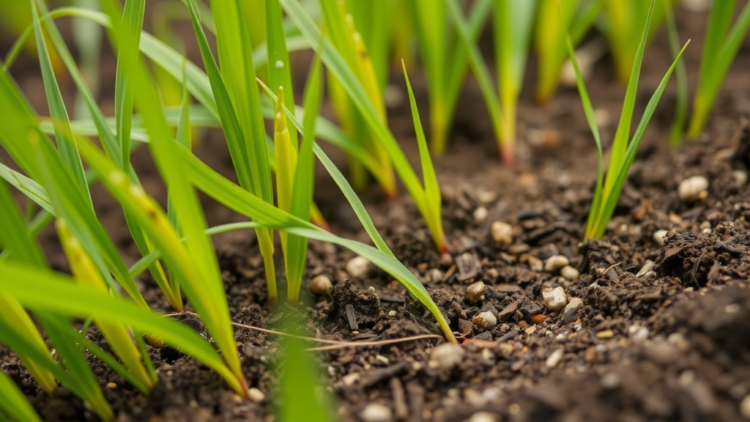
The fight against one of the world’s most destructive crop diseases may be taking an unexpected turn beneath the soil surface. A new study published in the journal Microbial Ecology suggests that the bacterial communities clinging to rice roots—the rhizosphere—shift in distinctive ways depending on whether a rice cultivar can resist rice blast, the devastating fungal disease caused by Magnaporthe oryzae. Even more intriguingly, the researchers isolated a strain of Bacillus velezensis from the roots of healthy rice plants and demonstrated that it displays strong antifungal activity against the blast pathogen in laboratory assays, positioning it as a promising candidate for sustainable disease management.
Rice blast has long been regarded as the most important fungal disease of rice, a staple crop that feeds roughly half of the global population. The pathogen, Magnaporthe oryzae, infects leaves, stems, and panicles, producing the characteristic diamond-shaped lesions that can decimate yields under favorable humid conditions. Conventional control relies heavily on fungicide applications and the deployment of resistance genes in cultivars, but the fungus is notorious for its adaptive capacity, repeatedly overcoming single resistance genes in the field. This has driven scientists to look beyond the plant’s own genome for partners in defense, and the rhizosphere microbiome has emerged as a compelling frontier.
The rhizosphere—the narrow zone of soil influenced by root exudates—harbors some of the densest and most metabolically active microbial communities on Earth. Plant roots actively recruit and nourish specific microbes through the release of sugars, organic acids, and signaling compounds, and in return, certain bacteria can suppress pathogens, modulate plant hormones, or prime immune responses. Whether the rhizosphere communities of disease-resistant rice cultivars are fundamentally different from those of susceptible ones, and how those communities respond when the blast pathogen attacks, had remained incompletely resolved. The new greenhouse study set out to answer precisely those questions.
The research team, led by Tingting Yang and Di Han of the College of Plant Protection at Shenyang Agricultural University, together with colleagues at Liaoning Academy of Agricultural Sciences, grew blast-resistant and blast-susceptible rice cultivars under controlled greenhouse conditions and compared their rhizobacterial communities both before and after challenge with M. oryzae. Using 16S rDNA amplicon sequencing—a technique that catalogs bacterial taxa by amplifying a conserved genetic marker—they profiled the diversity and composition of the root-associated bacteria across the experimental treatments.
The sequencing results revealed statistically significant differences in rhizobacterial diversity and community composition between resistant and susceptible cultivars, confirming that the plant genotype leaves a measurable imprint on which bacteria congregate around its roots. More striking was what happened after pathogen infection: both cultivar types underwent distinct community shifts, but the direction and magnitude of those shifts differed between resistant and susceptible plants. The researchers detected differential microbial enrichment patterns across cultivars and disease states, indicating that the rhizosphere is not a passive bystander in the rice–blast interaction but a dynamic environment that responds to both plant genotype and pathogen pressure.
Among the taxa whose abundance changed, one genus stood out. Bacillus species were consistently enriched in the rhizospheres of healthy plants of resistant cultivars and, tellingly, in infected plants of susceptible cultivars. This dual pattern suggests that Bacillus populations may be associated with disease status in both contexts—either helping to maintain health in resistant plants or responding to infection in susceptible ones. Bacillus species are well known in agricultural microbiology for their ability to produce antimicrobial compounds, form protective biofilms on roots, and induce systemic resistance in host plants, which makes their enrichment patterns particularly noteworthy for biocontrol-oriented research.
To probe the structure of these microbial communities more deeply, the team applied network analysis, a computational approach that maps co-occurrence and potential ecological interactions among taxa. The analysis showed that cultivar resistance was associated with measurable differences in the architecture of the rhizosphere microbial community. In practical terms, resistant and susceptible rice varieties appear to host rhizobacterial networks with different organization, hinting that community structure—not merely the presence or absence of particular species—may contribute to the disease-suppressive potential of the root environment.
The study then moved from community profiling to the isolation and characterization of individual candidates. From the rhizosphere of healthy rice plants, the researchers recovered a bacterial strain designated Bacillus velezensis H2. The strain was characterized through a combination of morphological and biochemical tests, 16S rRNA gene sequencing, and single-nucleotide polymorphism (SNP) profiling to confirm its taxonomic identity. B. velezensis is a species that has attracted considerable attention in biocontrol research because many of its strains carry extensive biosynthetic machinery for antimicrobial secondary metabolites.
Whole-genome analysis using the antiSMASH platform—an algorithmic pipeline that scans bacterial genomes for biosynthetic gene clusters—identified multiple clusters in the H2 genome involved in secondary metabolite production. Among these were genes encoding nonribosomal peptide synthetases, the giant multifunctional enzymes responsible for assembling many of the lipopeptide antibiotics that Bacillus species are famous for, such as members of the surfactin, iturin, and fengycin families. The presence of these clusters provides a genomic rationale for the strain’s observed biological activity and suggests that H2 is genetically equipped to interfere with fungal pathogens in the root zone.
Laboratory assays confirmed that promise in practice. In vitro tests demonstrated that B. velezensis H2 exhibits strong antifungal activity against Magnaporthe oryzae, directly inhibiting the growth of the blast pathogen. While in vitro inhibition does not guarantee field-level disease suppression—greenhouse and field validation remain essential next steps—the combination of rhizosphere origin, rich biosynthetic potential, and demonstrable antagonism makes H2 a compelling candidate for development as a biocontrol agent. If it can colonize rice roots effectively and express its antifungal arsenal under realistic soil conditions, it could contribute to reducing the chemical fungicide burden in rice production systems.
The broader significance of the study lies in its integrated perspective. Rather than treating plant immunity and the microbiome as separate domains, the work links cultivar resistance, rhizobacterial community structure, pathogen-induced shifts, and a concrete antagonistic isolate into a single narrative. It reinforces a growing consensus in plant pathology: breeding for resistance and engineering beneficial microbiomes may be complementary strategies. Rice blast remains a moving target, but evidence that resistant cultivars cultivate distinct and potentially protective bacterial communities—and that strains like B. velezensis H2 can directly oppose the pathogen—offers a scientifically grounded path toward more sustainable, microbiome-aware crop protection.
Subject of Research: Rhizosphere bacterial community shifts in rice blast-resistant cultivars and the antagonistic activity of Bacillus velezensis against the rice blast pathogen
Article Title: Rhizosphere Bacterial Community Shifts in Rice Blast–Resistant Cultivars and the Antagonistic Activity of Bacillus velezensis
Article References: Yang, T., Han, D., Ding, A., Du, S., Wang, W., Huang, Y., & Ahsan, T. (2026). Rhizosphere Bacterial Community Shifts in Rice Blast–Resistant Cultivars and the Antagonistic Activity of Bacillus velezensis. Microbial Ecology. https://doi.org/10.1007/s00248-026-02858-4
Image Credits: AI Generated
DOI: 10.1007/s00248-026-02858-4
Keywords: rhizosphere microbiome, rice blast disease, Bacillus velezensis, Magnaporthe oryzae, biocontrol, 16S rDNA sequencing, secondary metabolites, nonribosomal peptide synthetases, antiSMASH, disease resistance, Rhizosphere, Bacterial
Cite Scienmag News
APA
MLA
Chicago
Alan Morgan. (September 12, 2026). Rice Blast Resistance May Start Underground: Rhizosphere Bacteria and a Potent Bacillus Ally. Scienmag. https://scienmag.com/rice-blast-resistance-may-start-underground-rhizosphere-bacteria-and-a-potent-bacillus-ally/
Alan Morgan. “Rice Blast Resistance May Start Underground: Rhizosphere Bacteria and a Potent Bacillus Ally.” Scienmag, 12 September 2026, https://scienmag.com/rice-blast-resistance-may-start-underground-rhizosphere-bacteria-and-a-potent-bacillus-ally/. Accessed 12 September 2026.
Alan Morgan. “Rice Blast Resistance May Start Underground: Rhizosphere Bacteria and a Potent Bacillus Ally.” Scienmag. September 12, 2026. https://scienmag.com/rice-blast-resistance-may-start-underground-rhizosphere-bacteria-and-a-potent-bacillus-ally/
Copy citation
Download RIS
Tags: 16S rDNA sequencingAntiSMASHBacillus velezensisBacillus velezensis antifungal activitybacterialbeneficial soil bacteriabiocontrolbiological control of rice blastcrop disease resistance strategiesdisease resistanceMagnaporthe oryzaeMagnaporthe oryzae fungal pathogennonribosomal peptide synthetasesplant-microbe symbiosisrhizosphererhizosphere bacterial communitiesrhizosphere microbiomerice blast diseaserice blast resistancerice root microbiomesecondary metabolitessoil microbial interactionssustainable crop disease managementunderground plant defense mechanisms