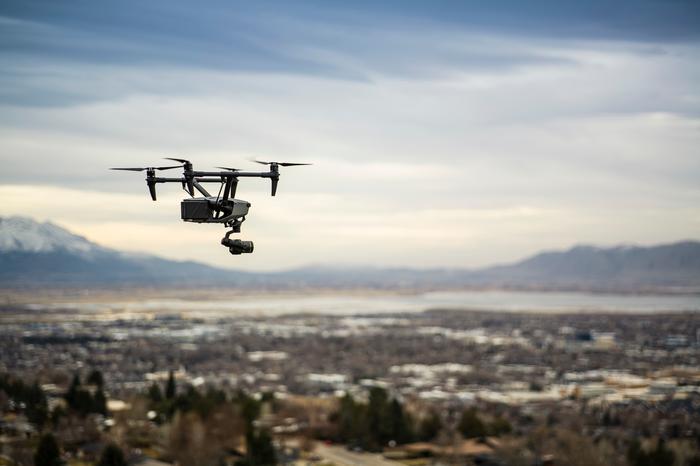
Led by engineering professor Cammy Peterson, the research team has designed a groundbreaking air traffic control system utilizing a network of inexpensive, small radar units. These radars present a feasible alternative to conventional multi-million-dollar radar systems typically found at airports. Instead of large, cumbersome installations, Peterson’s team introduces a more practical solution that can be deployed at a fraction of the cost, promoting safety and efficiency in low-altitude air travel.
The BYU team recognizes that while high-end radar systems have a plethora of advanced features, they are often impractical for widespread use in low-altitude monitoring. The solution devised by Peterson and her colleagues involves a collaborative network of small radars, each contributing to a comprehensive tracking system for drones flying below 400 feet. Their setup allows for a more agile and responsive approach to tracking drone movement, promoting safety in increasingly congested airspace.
This innovative system incorporates several key functionalities that allow it to track drones effectively. Ground station computers are interconnected with multiple radar units, which are strategically positioned to provide maximum coverage. Each radar unit monitors a specified area of the sky, detecting and recording the positions of any moving objects within sight. This data is then transmitted, converted into a global coordinate system, and shared with other ground stations in real-time, thereby painting an accurate and dynamic picture of air traffic.
One challenge inherent to this method is ensuring each radar unit maintains accurate calibration to provide precise tracking information. Peterson emphasized the importance of this aspect, explaining that for the system to work effectively, it must ensure that all radars interpret the position of the same aircraft consistently. This accuracy is paramount not just for real-time tracking but also for future developments in automated and semi-automated drone traffic management.
To ensure these units operate synchronously, each radar unit is calibrated to share data on an agreed global coordinate frame, enabling a unified perspective of all aerial movements within the monitored area. Fellow researcher Tim McLain added that this synchronized recognition of aircraft locations is vital for collision avoidance and overall airspace safety. As a result, this research moves beyond just academic exercise into practical applications that could transform the way we think about drone air traffic.
The versatility of these small radar units makes their deployment optimal for various existing structures, such as lamp posts and cell towers. This flexible installation minimizes infrastructure costs, making the proposed system not only more affordable but also easier to implement. As urban environments see increased drone activity, ready-to-use integrations into existing frameworks could significantly enhance public safety.
In elaborating on the potential of this radar-based system, Peterson pointed to recent publications highlighting their findings. The team received financial backing from the National Science Foundation to pursue this line of research, which aims to establish more reliable real-time drone tracking. Such advancements are crucial in building confidence in drone operations, particularly when it comes to preventing mid-air collisions involving drones.
Significantly, while initial tests focused on three radars, there is potential for scaling up the network to include additional units with broader coverage capabilities. Peterson outlined the collaborative nature such networks could facilitate, stating that it would enable multiple companies to share the same airspace without compromising safety. This approach could foster greater innovation within the drone delivery space, ultimately benefiting consumers and businesses alike.
However, one must consider the limitations that weather conditions may impose on radar effectiveness. Additionally, potential physical disturbances that could misalign radar units raise valid concerns. To mitigate this, the research team developed an online calibration technique. This innovative solution recalibrates the radar units in real-time, correcting discrepancies due to unintended shifts while the system collects data.
The research indicates that the calibration adjustments can be performed within a mere ten seconds, allowing for minimal disruption to the tracking data. Graduate student Brady Anderson explained that a mathematical model underpins this rapid calibration process. Their research demonstrates that this dynamic calibration method significantly enhances tracking accuracy compared to previous efforts utilizing static or “batch” data.
The implications of this work extend beyond merely tracking individual drones; they touch upon the very future of drone operations. By equipping this system with intelligent algorithms capable of adapting to real-time conditions, the air traffic control system pioneered by Peterson and her team represents a forward-thinking approach suited to a future with increasingly crowded airspaces.
In conclusion, as the number of drones in our skies continues to proliferate, the need for efficient and reliable management of drone air traffic is paramount. BYU’s innovative radar-based air traffic system represents a significant advancement towards ensuring aerial safety. With this newfound capability, urban areas can anticipate a future where drones coexist with traditional aircraft, enhancing services while minimizing risks associated with aerial traffic congestion.
Subject of Research: Low-altitude air traffic control for drones
Article Title: Online Calibration for Networked Radar Tracking of UAS
News Publication Date: 22-Nov-2024
Web References: DOI
References: N/A
Image Credits: Nate Edwards/BYU Photo
Keywords
Air traffic, Radar, Drone management, UAS safety, Low-altitude tracking, Online calibration.
Tags: addressing unauthorized drone incidentsaffordable UAV detection technologyBrigham Young University drone researchchallenges in drone traffic managementcollision avoidance for dronesdrone management solutionsengineering advancements in UAV detectionenhancing aviation safety with dronesFAA regulations for unmanned aircraftinnovative air traffic control systemslow-altitude airspace safetysmall radar units for airspace monitoring