In a groundbreaking leap at the nexus of nanotechnology and oncology, recent advancements in DNA nanostructure research are charting an unprecedented path toward the early detection of breast cancer, potentially revolutionizing diagnostic methodologies. As breast cancer remains one of the most pervasive malignancies globally, the urgency to refine detection tools has never been greater. Scientists are now deploying intricately engineered DNA nanostructures that promise heightened specificity and sensitivity, surpassing the capabilities of traditional biomarkers and imaging techniques.
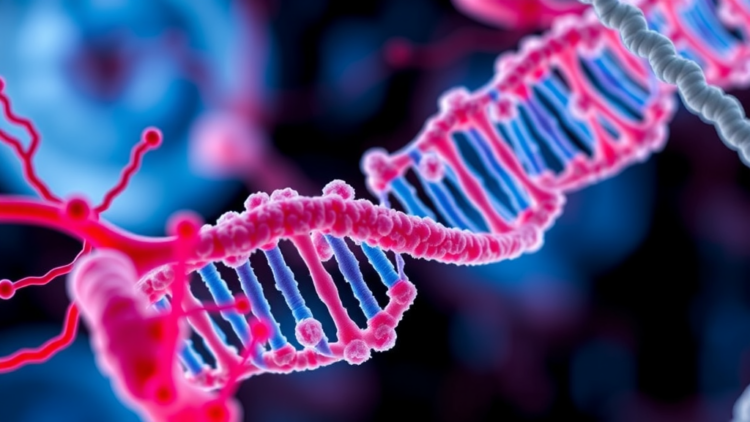
The foundation of this pioneering work lies in the remarkable ability to design DNA molecules that self-assemble into predetermined shapes and sizes, creating nanoscale architectures capable of precise molecular recognition. These DNA nanostructures act as sophisticated sensors, designed to identify and bind to breast cancer biomarkers with exceptional accuracy. Unlike conventional methods that often grapple with false positives and delayed diagnosis, DNA-based nanodevices offer a new paradigm of detection grounded in molecular precision.
A systematic review led by Mondal, Feng, and Birbilis, published in Medical Oncology, meticulously consolidates the advances in this domain. Their comprehensive analysis reveals how the unique programmability of DNA nanostructures facilitates the development of platforms capable of not only identifying circulating tumor DNA (ctDNA) fragments but also detecting specific protein markers and microRNAs closely associated with breast cancer pathology. These nanodevices exhibit a multifaceted approach to biomarker interrogation, enabling simultaneous detection and quantification within complex biological fluids.
At the heart of this technology is the principle of molecular complementarity. DNA nanostructures are engineered with sequences complementary to the target molecules, allowing for highly selective hybridization events that generate detectable signals. Such hybridization is coupled with innovative amplification strategies, including enzymatic reactions and nanomaterial enhancements, which significantly amplify signal output, thus enabling the detection of cancer biomarkers at ultralow concentrations. This sensitivity addresses one of the most vexing challenges in early cancer diagnostics—identifying minimal residual disease in asymptomatic patients.
Moreover, the modular nature of DNA nanostructures allows customization tailored to patient-specific molecular profiles. This adaptability paves the way for precision oncology, where diagnostics are no longer one-size-fits-all but are intricately personalized. By accommodating heterogeneity inherent in breast cancer subtypes, these nanostructures facilitate nuanced assessments that can inform therapeutic decisions and prognostic evaluations, potentially transforming patient outcomes.
The integration of these DNA nanostructures with cutting-edge signal transduction mechanisms further elevates their diagnostic utility. Advanced fluorescence, electrochemical, and colorimetric readouts have been encoded into these nanodevices, rendering the detection process compatible with point-of-care settings. This democratization of diagnostic technology portends a future where early breast cancer detection is more accessible, timely, and minimally reliant on expensive infrastructure.
Furthermore, the biocompatibility and programmability of DNA nanostructures minimize off-target effects and false signals while maintaining stability in physiological environments. The review highlights multiple strategies for enhancing stability and functional longevity, such as chemical modifications and protective coatings, ensuring robustness during in vivo applications. This attribute is critical for longitudinal monitoring, enabling dynamic tracking of disease progression or therapeutic response.
Emerging evidence also underscores the potential of DNA nanostructures to serve dual roles—not only as diagnostic platforms but also as vehicles for targeted drug delivery. This convergence of diagnostic and therapeutic functionalities, often termed theranostics, illustrates a future in which DNA-based nanotechnologies may simultaneously identify, monitor, and treat breast cancer at a molecular level, all while minimizing systemic toxicity.
The authors emphasize the importance of multidisciplinary collaboration that has propelled these innovations—melding expertise in molecular biology, materials science, chemistry, and clinical oncology. Such synergy has driven the optimization of DNA nanostructure design, fabrication, and functional testing, accelerating the translation from bench to bedside.
Despite these promising strides, challenges persist in scaling these technologies for widespread clinical deployment. Issues such as standardizing nanostructure synthesis, ensuring production reproducibility, obtaining regulatory approvals, and validating clinical efficacy through large-scale trials remain critical obstacles that the research community must address. The review calls for concerted efforts to navigate these hurdles to fulfill the immense potential of DNA nanostructure-based diagnostics.
Looking ahead, advancements in artificial intelligence and machine learning algorithms are expected to synergize with nanotechnology, enabling sophisticated data interpretation and pattern recognition from multiplexed biomarker readouts. This integration could usher in a new era of highly responsive, real-time cancer monitoring tools that further enhance early detection capabilities.
The unveiling of DNA nanostructures as a frontier technology marks a paradigm shift in breast cancer diagnostics, injecting a newfound precision into the detection process that promises to save lives through earlier interventions. By harnessing the intricacies of genetic material to detect minute molecular signatures, this approach exemplifies the transformative power of nanomedicine and personalized healthcare.
As this field rapidly evolves, the medical community eagerly anticipates clinical validation and widespread adoption of DNA nanostructure-based methods. The potential to move beyond traditional histological and imaging-based diagnostics and into a realm of molecular accuracy signals an exciting horizon for what precision oncology can accomplish in combating breast cancer.
In summary, the meticulous review presented by Mondal and colleagues delineates a comprehensive roadmap for the integration of DNA nanostructures into breast cancer detection paradigms. Their findings not only highlight the current achievements but also delineate future directions poised to overcome existing challenges, ultimately facilitating superior patient care through innovations at the molecular scale.
Subject of Research: Breast cancer detection using DNA nanostructures
Article Title: Pioneering precision: a systematic review on exploring the frontier of breast cancer detection with DNA nanostructures
Article References:
Mondal, H.S., Feng, Y. & Birbilis, N. Pioneering precision: a systematic review on exploring the frontier of breast cancer detection with DNA nanostructures. Med Oncol 43, 64 (2026). https://doi.org/10.1007/s12032-025-03160-y
Image Credits: AI Generated
DOI: https://doi.org/10.1007/s12032-025-03160-y
Tags: advancements in nanotechnology and oncologycirculating tumor DNA detectioncomprehensive review of nanostructure researchDNA nanostructures for breast cancer detectionDNA-based cancer diagnosticsearly detection of breast cancerengineered DNA sensorsinnovative biomarkers for cancernanotechnology in medical diagnosticsprecision molecular recognitionrevolutionary cancer diagnostic methodologiessensitivity and specificity in cancer detection