
Researchers at Pohang University of Science and Technology (POSTECH) and Kyungpook National University have made groundbreaking advancements in the treatment of lung cancer through the development of a novel inhalable therapeutic delivery system. This innovative approach employs mucoadhesive protein nanoparticles, mirroring the extraordinary adhesive properties of marine mussels. The collaborative effort, led by Professor Hyung Joon Cha from POSTECH and Dr. Yeonsu Jeong, alongside Professor Yun Kee Jo from Kyungpook National University, marks a significant leap toward improving lung cancer treatment outcomes.
Lung cancer persists as one of the most lethal forms of cancer worldwide, with non-small cell lung cancer (NSCLC) constituting 85% of cases. The challenge in managing NSCLC largely stems from its asymptomatic nature during the early stages, which hinders timely diagnosis and treatment intervention. Current treatment modalities predominantly rely on intravenous administration of anticancer drugs. Such methods, however, often lead to systemic exposure, affecting both malignant cells and healthy tissues, and resulting in severe side effects that compromise patient well-being.
Inhalable therapeutics have emerged as a promising alternative, facilitating localized delivery of medication directly to the lungs. This method not only enhances drug availability at the site of action but also minimizes systemic toxicity. Nevertheless, the effectiveness of this delivery system has been hampered by the inherent mucosal barriers and the presence of immune cells within the lung’s microenvironment. Addressing these challenges, the research team has crafted a novel mucoadhesive protein nanoparticle specifically designed for targeted lung cancer therapy.
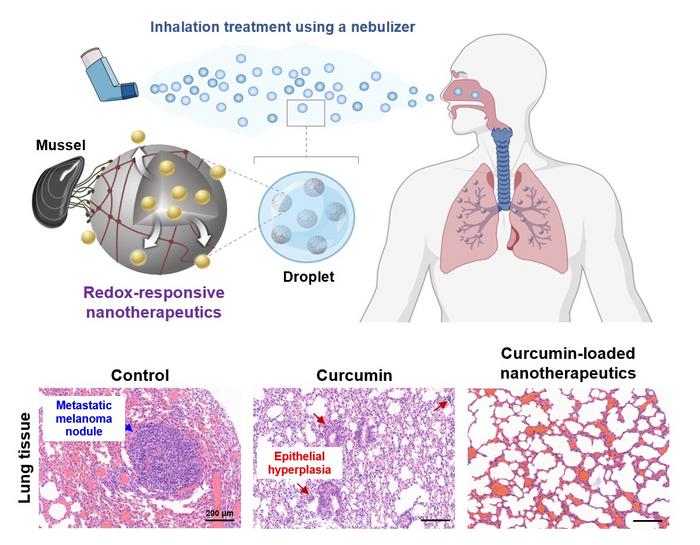
The design of the nanoparticle is inspired by the unique adhesive qualities of marine mussel proteins, which are renowned for their underwater adhesion capabilities. The research team utilized the characteristics of foot protein type 6 (fp-6) to inform their engineering decisions. By modifying foot protein type 1 (fp-1) to integrate cysteine, they effectively created a biomaterial with superior adhesive strength and optimized drug release properties. This innovative engineering allows for precise delivery of therapeutic agents within the lung cancer microenvironment, addressing previously unmet challenges in the treatment landscape.
One of the standout features of these nanoparticles is their ability to selectively release therapeutic payloads while inhibiting premature release in healthy tissues. This targeted action not only minimizes adverse effects but also maximizes the therapeutic benefits of the encapsulated drugs. The intrinsic biocompatibility and biodegradability of the marine mussel proteins used in these nanoparticles further enhance their safety profile, ensuring that they alleviate, rather than exacerbate, patient conditions.
In preclinical trials conducted using animal models of lung cancer, the engineered nanoparticles demonstrated significant efficacy in inhibiting cancer cell metastasis and invasion. Administering these nanoparticles through nebulization facilitated prolonged adhesion to lung tissues, allowing the anticancer agents to act effectively over extended periods. This innovative approach opens the door to revolutionizing lung cancer care, providing patients with a more manageable and less invasive option for drug administration.
As the newly developed inhalation system simplifies the delivery of cancer therapies, it presents an opportunity for patients to self-manage their treatment regimens at home. This convenience mitigates the frequency of hospital visits, enhancing patient autonomy and potentially improving their overall quality of life. By reimagining how lung cancer treatments can be delivered, the research team addresses not only the clinical needs but also the emotional and psychological burdens associated with conventional treatment methods.
Professor Hyung Joon Cha emphasized the transformative potential of their findings, stating, “The outcomes of our study could significantly advance the precision and efficacy of lung cancer treatments, fundamentally improving patients’ quality of life.” His remarks underscore the dual focus of the research: not only eradicating cancer cells more effectively but also ensuring that patients endure a less disruptive treatment experience.
This research was published online in the esteemed journal, Biomaterials, which is recognized as a leading outlet for biomaterials research. The study benefitted from substantial funding through various programs, including the National Research Foundation (NRF) Mid-Career Researcher Program and support from the Ministry of Health and Welfare. Such backing highlights the importance and urgency of advancing cancer therapies that are both effective and accessible.
The innovation lies not only in the materials used but also in understanding the mechanisms involved in drug release and adhesion. The use of redox-activatable technologies further allows for fine-tuning the response of the nanoparticles to their environment, ensuring that drugs are released precisely at the target site where they are needed most. This level of precision in drug delivery could signify a monumental shift in the treatment landscape for lung cancer, potentially setting a precedent for treating other forms of cancer through similar methodologies.
As the research progresses toward clinical trials, the global scientific and medical communities watch with anticipation, hopeful that these advancements will lead to breakthroughs that emphasize both efficacy and improved patient experiences in lung cancer treatment. The integration of biomaterials science with cancer therapeutics represents a promising frontier, illustrating how interdisciplinary research can forge novel paths toward healing and recovery.
In conclusion, the development of inhalable mucoadhesive protein nanoparticles for lung cancer treatment exemplifies how nature-inspired research can lead to practical solutions in medicine. As this exciting work continues to unfold, its implications for patient treatment, safety, and autonomy are profound, offering hope for better outcomes in the fight against one of the deadliest cancers in the world.
Subject of Research: Development of inhalable mucoadhesive protein nanoparticles for lung cancer treatment.
Article Title: Redox-activatable inhalable mucoadhesive proteinic nanotherapeutics for targeted treatment of lung cancer.
News Publication Date: 16-Dec-2024.
Web References: Link to Journal Article.
References: Funding from National Research Foundation (NRF) Mid-Career Researcher Program and Ministry of Health and Welfare’s Dental and Medical Technology R&D Program.
Image Credits: POSTECH.
Keywords: Lung cancer, inhalable therapeutics, mucoadhesive nanoparticles, drug delivery, biomaterials.