


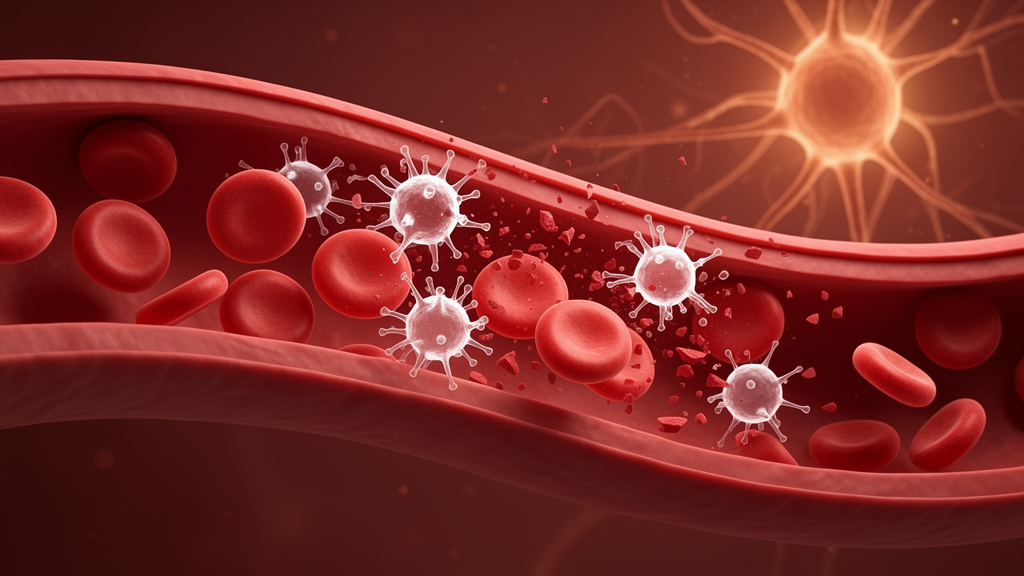
Immune-mediated alloimmunization and hemolytic anemia can complicate ABO-incompatible hematopoietic stem cell transplantation, and a new review in Blood Research sets out the full clinical spectrum of these complications, from passenger lymphocyte syndrome to newly proposed host- and graft-associated forms of alloimmune hemolytic anemia.
According to the review, the manifestations differ by the direction of the ABO mismatch. After major ABO-incompatible transplantation, clinical presentations may include pure red cell aplasia and delayed hemolysis. Passenger lymphocyte syndrome and delayed hemolysis are described as typical complications of minor ABO-incompatible HSCT. Because delayed hemolysis following either major or minor ABO mismatch can be indistinguishable at the bedside, the authors tentatively propose the terms host-associated alloimmune hemolytic anemia and graft-associated alloimmune hemolytic anemia to distinguish the two conditions by their host or graft origin.
The review acknowledges a practical limitation of this classification: the rarity of these subgroups may limit its clinical utility. In the conclusion, the authors argue that the recognized entities—passenger lymphocyte syndrome, graft-associated alloimmune hemolytic anemia, pure red cell aplasia, and host-associated alloimmune hemolytic anemia—likely represent a continuum of alloimmunity with overlapping pathophysiologies, rather than fully separate diseases. ABO-incompatible HSCT remains common because HLA compatibility is prioritized during donor selection, so host- or graft-driven alloimmunization and hemolysis may arise in a range of clinical forms.
On diagnosis, the review stresses that evaluating post-transplant hemolysis requires a comprehensive approach that excludes alternative etiologies such as drug-induced hemolytic anemia and thrombotic microangiopathy. Beyond isoagglutinins, the authors note that antibodies directed against other red blood cell blood group antigens should also be considered as potential causes of hemolysis, widening the diagnostic net beyond ABO incompatibility alone.
Management across the clinical spectrum includes transfusion support, plasmapheresis, and immunomodulatory therapies, with the conclusion also naming immunoadsorption among supportive options. Prompt detection and diagnosis, followed by this supportive management, are described as essential to mitigate clinical symptoms and improve outcomes. The review, published as an open-access article in Blood Research on 16 September 2026, reports no datasets generated or analysed during the study, and its conclusions rest on a synthesis of the existing literature rather than new clinical data.
Subject of Research: Alloimmune hemolytic anemia following ABO-incompatible hematopoietic stem cell transplantation
Article Title: Expanding the spectrum of post-HSCT hemolysis: from passenger lymphocyte syndrome to host- and graft-associated alloimmune hemolytic anemia
Article References: Jekarl, D. W., Lee, J., Cha, Y., Han, J. H., Cho, S. H., Lim, J., & Kim, Y. (2026). Expanding the spectrum of post-HSCT hemolysis: from passenger lymphocyte syndrome to host- and graft-associated alloimmune hemolytic anemia. Blood Research, 61(1), Article 56. https://doi.org/10.1007/s44313-026-00173-y
Image Credits: AI Generated
DOI: 10.1007/s44313-026-00173-y
Keywords: HSCT, ABO incompatibility, hemolytic anemia, passenger lymphocyte syndrome, pure red cell aplasia, alloimmunization, transfusion medicine, plasmapheresis, Blood Research, Expanding, spectrum, post-HSCT
News Source: Drew Townsend. (October 29, 2026). Review Maps the Full Range of Alloimmune Hemolysis After Stem Cell Transplantation. Scienmag.



