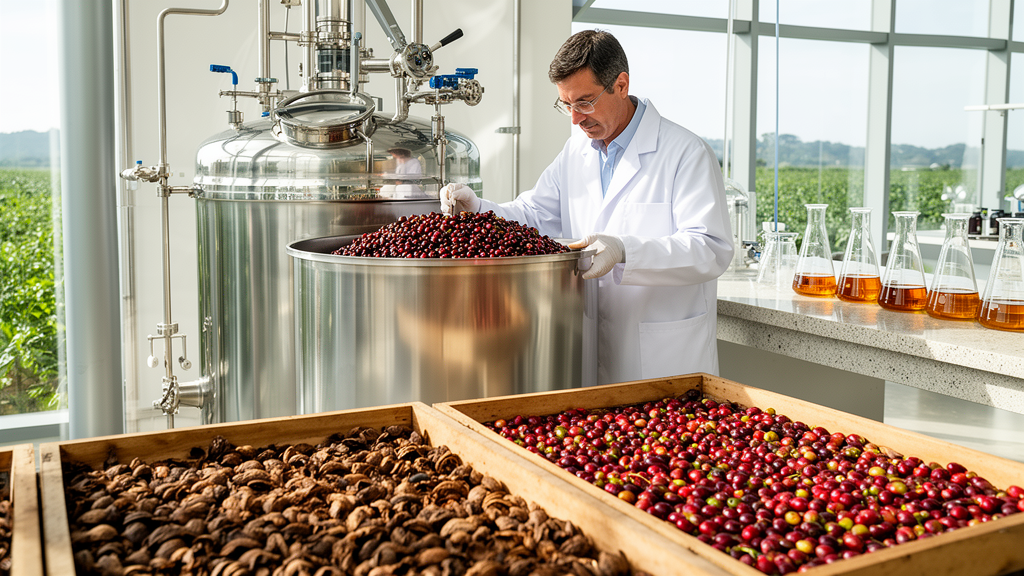
A new mini review published in Frontiers in Bioengineering and Biotechnology presents an integrated perspective on coffee biomass utilization by connecting flavor-oriented yeast-assisted coffee fermentation with the post-consumption biological valorization of spent coffee grounds. The study, led by researchers from the Korea Institute of Science and Technology and affiliated institutions, highlights how these two distinct fields have largely evolved independently despite sharing a common biochemical foundation. By focusing on yeast metabolism, the review examines how metabolic engineering and strain improvement strategies can support distinct applications across the coffee production and consumption chain, aiming to enhance coffee quality while promoting the sustainable utilization of coffee-derived biomass.
Coffee fermentation plays a central role in determining coffee quality through the generation of flavor-related metabolites. Traditionally, this process has relied on spontaneous microbial communities associated with coffee cherries and processing environments, which often results in variable sensory outcomes. To address this inconsistency, controlled fermentation using selected starter cultures has emerged as a strategy for improving process reproducibility. Yeasts are particularly attractive for this purpose because of their ability to degrade coffee mucilage and convert mucilage-derived substrates into diverse flavor-related compounds, including fruity, floral, sweet, and wine-like sensory characteristics.
The biochemical mechanisms underlying yeast-mediated flavor formation begin with the degradation of pectin, which accounts for approximately 20% to 35% of the dry mucilage fraction. Pectin forms a hydrated structural network that restricts the accessibility of fermentable substrates to microorganisms. Coffee-fermenting yeasts degrade pectin primarily through extracellular endopolygalacturonase, which randomly hydrolyzes the alpha-1,4-glycosidic linkages of the homogalacturonan backbone. This process produces predominantly oligogalacturonides and smaller amounts of galacturonic acid, facilitating the release of substrates and flavor precursors that are essential for subsequent yeast metabolism and flavor biosynthesis.
Following pectin degradation, soluble sugars, amino acids, proteins, and organic acids present in the coffee mucilage become readily accessible for yeast metabolism. Sugars such as glucose, fructose, and sucrose serve as primary carbon sources and precursors for numerous flavor-related compounds. For instance, glucose and fructose are metabolized through glycolysis to produce pyruvate, which is then converted to ethanol. Ethanol serves as an important precursor for the biosynthesis of ethyl esters, such as ethyl acetate, which imparts floral and grape-like sensory notes to coffee. Additionally, ethanol can be condensed with medium-chain acyl-CoAs to produce ethyl hexanoate and ethyl octanoate, compounds associated with pineapple-like sensory notes.
Amino acids in the coffee mucilage are primarily catabolized via the Ehrlich pathway to produce flavor-related aldehydes and fusel alcohols. For example, phenylalanine is transaminated to phenylpyruvate and subsequently decarboxylated to 2-phenylethanal, which can be reduced to 2-phenylethanol. These compounds are associated with honey, cocoa, and rose-like sensory notes in coffee. Similarly, branched-chain amino acids such as valine are metabolized to produce fusel alcohols like isobutyl alcohol, which contributes wine-like sensory notes. Organic acid metabolism also contributes to the biochemical environment of fermentation, potentially influencing subsequent flavor development by altering the acidity of the fermentation environment.
The influence of yeast-assisted fermentation on roasted coffee flavor depends on the biochemical and physicochemical changes occurring during subsequent processing. Microbial volatile compounds produced in the surrounding mucilage can diffuse into coffee beans, although their transfer is influenced by the parchment layer and the physicochemical properties of individual compounds. During roasting, some fermentation-derived volatiles may be lost through volatilization or thermal degradation, whereas others can be retained and contribute to the final aroma profile. Fermentation of green coffee beans with specific yeast species has been shown to increase the concentrations of fruity esters, some of which persist after roasting and contribute to enhanced fruity attributes in the resulting coffee.
Beyond the direct contribution of microbial metabolites, yeast-assisted fermentation can modify the composition of non-volatile flavor precursors in coffee beans, including reducing sugars, free amino acids, and phenolic compounds. These changes can subsequently influence the formation of aroma-active compounds during roasting, providing an additional mechanism through which fermentation affects coffee flavor. However, the direct quantitative contribution of yeast-derived metabolites to roasted coffee aroma has not been fully established through isotope-tracing studies. Such investigations could help distinguish the relative contributions of direct microbial metabolite transfer and precursor-mediated aroma formation, which remains a critical area for future research.
Spent coffee grounds, the major byproduct of coffee consumption, have emerged as promising renewable feedstocks for sustainable biorefineries. Approximately six million tons of SCG are generated annually worldwide, with much of this material disposed of through landfilling or incineration. Unlike coffee mucilage, SCG are relatively resistant to direct microbial utilization because their carbohydrates are predominantly present as galactomannan and cellulose embedded within a lignin matrix. Therefore, pretreatment followed by enzymatic hydrolysis is generally required to disrupt the lignocellulosic structure and release fermentable sugars, primarily mannose, glucose, and galactose, which can be assimilated by yeasts possessing the corresponding metabolic pathways.
Appropriate processing has enabled SCG to serve as renewable feedstocks for producing organic acids, carotenoids, microbial oil, and bioethanol. Metabolic engineering and synthetic biology have been applied to yeast strains to improve the conversion of SCG-derived sugars into target products. For example, an engineered Saccharomyces cerevisiae strain expressing a heterologous lactate dehydrogenase produced 11.15 g/L of lactic acid from acid-pretreated SCG whole slurry. This yield was 413% higher than that obtained using washed pretreated SCG, as whole-slurry fermentation retained soluble fermentable sugars released during acid pretreatment, illustrating the potential to extend yeast-based biomanufacturing strategies to coffee-derived residual biomass.
Carotenoids and microbial lipids are also produced from SCG-derived carbohydrates and residual lipids. In one study, a fed-batch strategy involving sequential addition of concentrated SCG hydrolysate was employed to limit exposure to inhibitory compounds, resulting in 29.9 mg/L of total carotenoids. Another integrated biorefinery approach produced 40.2 g/L of microbial oil with an intracellular lipid content of 46% using the oleaginous yeast Lipomyces starkeyi. When SCG hydrolysate was combined with orange peel residues, microbial oil production increased to 52 g/L, with an intracellular lipid content of 56.7%. These findings illustrate the potential of SCG-derived carbon and lipid fractions for carotenoid and microbial lipid production by oleaginous yeasts.
Bioethanol production from SCG-derived sugars offers a potential route for sustainable fuel generation. Genetic engineering has been applied to improve bioethanol production by introducing genes for xylose assimilation into Saccharomyces cerevisiae. A recombinant strain produced 10.1 g/L of bioethanol with a yield of 0.46 g/g of consumed glucose and xylose from SCG hydrolysate. Adaptive laboratory evolution has also been employed to modify yeast sugar utilization, with a mutant Pichia stipitis strain selectively fermenting glucose and achieving a bioethanol yield of 0.54 g/g glucose while retaining 79.9% of the initial mannose for potential downstream recovery.
Direct biological conversion strategies have expanded the range of SCG-derived products to include biohydrogen, biomethane, and hydrolytic enzymes without separate pretreatment or enzymatic hydrolysis. Consolidated bioprocessing using engineered Clostridium thermocellum produced 944 mL/L of biohydrogen from untreated SCG within 120 hours. Solid-state fermentation using Aspergillus spp. enhanced the recovery of phenolic compounds, achieving maximum yields of 7.12 g/kg of chlorogenic acid. Anaerobic co-digestion of SCG with food waste in continuous reactors produced methane yields of 0.48 L/g volatile solids fed at an SCG-to-food waste ratio of 1:25, demonstrating the potential for direct SCG valorization.
Despite differences in feedstock composition, coffee mucilage and SCG hydrolysates contain fermentable sugars that can enter common yeast metabolic pathways. This metabolic overlap suggests opportunities to apply metabolic engineering principles relevant to flavor biosynthesis during coffee fermentation to the production of value-added chemicals from SCG-derived substrates. Future advances in strain engineering could enable the development of coffee starter cultures with enhanced flavor production and robustness under variable fermentation conditions. For SCG valorization, engineering stress-response mechanisms and improving microbial tolerance to SCG-derived inhibitors will be important for enhancing conversion efficiency and economic feasibility.
Overall, future coffee biotechnology should increasingly consider flavor-oriented fermentation and SCG valorization as complementary strategies rather than separate research areas. Advances in microbial strain and community engineering, together with integrated biorefinery design, could support the production of differentiated high-value coffees while maximizing the sustainable utilization of coffee-derived resources. The shared yeast metabolic pathways provide a common engineering framework for these distinct biotechnological processes, highlighting the potential for increasing coffee value while maximizing the utilization of coffee-derived biomass throughout the production and consumption chain.
Subject of Research: Integrated biotechnology for coffee fermentation and spent coffee grounds valorization
Article Title: Coffee biotechnology from yeast-assisted fermentation to spent coffee grounds valorization
Article References: Lee, D., Han, S. M., Kim, S. M., Sung, C., Hwang, S., Lee, J., Gong, G., Ko, J. K., Um, Y., Han, S. O., Park, H. J., & Ahn, J. H. (2026). Coffee biotechnology from yeast-assisted fermentation to spent coffee grounds valorization. Frontiers in Bioengineering and Biotechnology, 14, 1995288. https://doi.org/10.3389/fbioe.2026.1995288
Image Credits: AI Generated
DOI: 10.3389/fbioe.2026.1995288
Keywords: coffee biotechnology, yeast fermentation, spent coffee grounds, flavor biosynthesis, biorefinery, metabolic engineering, pectin degradation, bioethanol production, microbial lipids, carotenoid synthesis, lactic acid production, biohydrogen, anaerobic co-digestion, solid-state fermentation, consolidated bioprocessing, starter cultures, sustainable biomass, coffee quality, enzyme hydrolysis, adaptive laboratory evolution
News Source: Gregory Coleman. (November 16, 2026). Review links coffee fermentation and waste valorization. Scienmag.