• HOME
  • NEWS
  • EXPLORE
    • CAREER
      • Companies
      • Jobs
    • EVENTS
    • iGEM
      • News
      • Team
    • PHOTOS
    • VIDEO
    • WIKI
  • BLOG
  • COMMUNITY
    • FACEBOOK
    • INSTAGRAM
    • TWITTER
Saturday, November 21, 2026
BIOENGINEER.ORG
No Result
View All Result
  • Login
  • HOME
  • NEWS
  • EXPLORE
    • CAREER
      • Companies
      • Jobs
        • Lecturer
        • PhD Studentship
        • Postdoc
        • Research Assistant
    • EVENTS
    • iGEM
      • News
      • Team
    • PHOTOS
    • VIDEO
    • WIKI
  • BLOG
  • COMMUNITY
    • FACEBOOK
    • INSTAGRAM
    • TWITTER
No Result
View All Result
Bioengineer.org
No Result
View All Result
Home NEWS Science News Technology

Review Finds Data Interpretation Dominates Nanosensor ML Integration

by
November 21, 2026
in Technology
Reading Time: 2 mins read
0
Review Finds Data Interpretation Dominates Nanosensor ML Integration

Review Finds Data Interpretation Dominates Nanosensor ML Integration

Share on FacebookShare on TwitterShare on LinkedinShare on RedditShare on Telegram

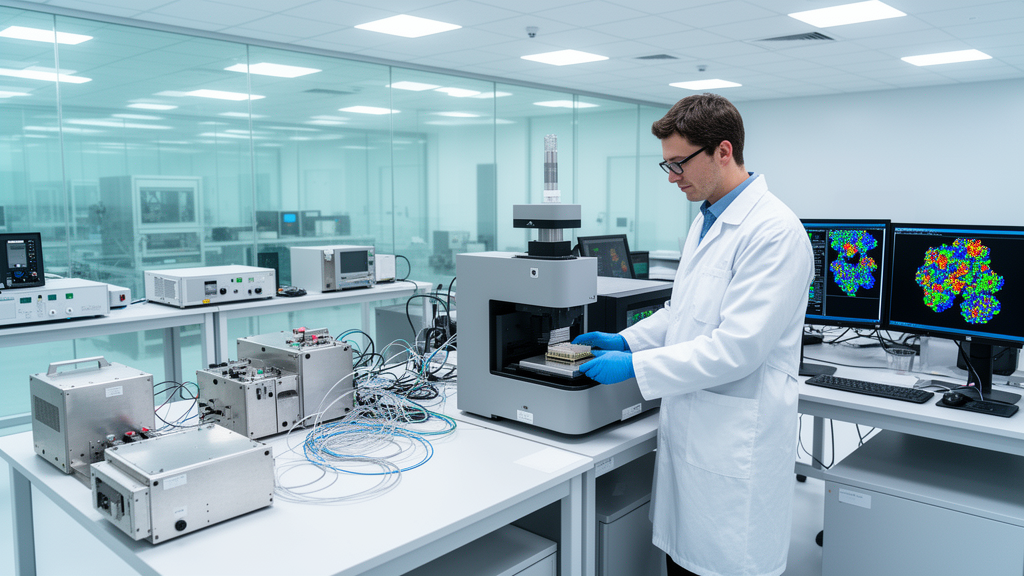
A review published in the Journal of Nanoparticle Research examines the integration of machine learning with nanomaterial-based sensors, identifying specific patterns in how artificial intelligence is currently applied to sensing systems. The study, authored by Haimei Tian and published in Volume 28, article number 308, in 2026, provides a structured taxonomy of the field’s current progress. The review highlights that while nanomaterials offer high sensitivity and tunability for detecting physical, chemical, and biological signals at the nanoscale, the complexity of these interactions makes data analysis challenging.

This technological integration has enabled the development of intelligent sensing systems capable of extracting scientific meaning from raw signals that would otherwise be difficult to interpret. The authors note that the non-linear nature of sensing responses has historically posed significant obstacles to accurate data analysis, which machine learning techniques are now helping to overcome.

Using a method involving the normalized multi-label coding of extracted analytical units, the researchers identified two dominant patterns in the literature. Data Interpretation Transformation emerged as the most common application, accounting for 34% of the coded analytical units. This was followed by Perceptual Decision Enhancement, which represented 27% of the units. These percentages reflect the relative focus of the current research landscape on improving how data is processed and how decisions are made based on sensor outputs.

Despite these advancements, the review outlines several significant challenges that continue to hinder the widespread adoption of these systems. Key issues include data scarcity, fabrication heterogeneity, and the lack of standardized datasets, which complicate the training and validation of machine learning models. Additionally, the study points to overfitting and limited interpretability as major technical hurdles. The difficulty of implementing these systems in real-time scenarios is also cited as a persistent obstacle for researchers and engineers working in the field.

The review provides an integrated framework intended to guide the development of next-generation intelligent sensing systems.

Subject of Research: Integration of machine learning with nanomaterial-based sensors

Article Title: Nanomaterial-based sensors and machine learning integration: current progress, challenges, and future opportunities

Article References: Tian, H. (2026). Nanomaterial-based sensors and machine learning integration: current progress, challenges, and future opportunities. Journal of Nanoparticle Research, 28(12), Article 308. https://doi.org/10.1007/s11051-026-06829-1

Image Credits: AI Generated

DOI: 10.1007/s11051-026-06829-1

Keywords: nanomaterial sensors, machine learning, data interpretation, pattern recognition, noise reduction, predictive modeling, intelligent sensing, feature extraction, perceptual decision, data scarcity, fabrication heterogeneity, standardized datasets, overfitting, model interpretability, real-time implementation, Journal of Nanoparticle Research, nanoscale detection, physicochemical interactions, sensing systems, research review

News Source: Denise Maddox. (November 21, 2026). Review Finds Data Interpretation Dominates Nanosensor ML Integration. Scienmag.

Tags: data interpretationData Scarcityfabrication heterogeneityfeature extractionintelligent sensingJournal of Nanoparticle ResearchMachine Learningmodel interpretabilitynanomaterial sensorsnanoscale detectionnoise reductionoverfittingpattern recognitionperceptual decisionPhysicochemical interactionspredictive modelingreal-time implementationresearch reviewsensing systemsstandardized datasets
Share12Tweet7Share2ShareShareShare1

Related Posts

Degree Proportional Selection Underperforms Uniform Choice Across Empirical Network Datasets

Degree Proportional Selection Underperforms Uniform Choice Across Empirical Network Datasets

November 21, 2026
Hydrothermal Exposure Reduces Carbon-Epoxy Composite Bending Strength and Accelerates Wear

Hydrothermal Exposure Reduces Carbon-Epoxy Composite Bending Strength and Accelerates Wear

November 21, 2026

Electrospun Gum Arabic and Polylactic Acid Composite Boosts Ductility by Seventy-Eight Percent

November 21, 2026

Spectrophotometric Analysis Estimates Polymer Coating Thickness and Surface Wetting Behavior

November 21, 2026

POPULAR NEWS

  • Five Alzheimer Subtypes Display Distinct Cerebrospinal Fluid Lipidomic Profiles

    Five Alzheimer Subtypes Display Distinct Cerebrospinal Fluid Lipidomic Profiles

    29 shares
    Share 12 Tweet 7
  • Pediatric Drug Safety Requires Measuring Target Response Rather Than Plasma Concentration Alone

    29 shares
    Share 12 Tweet 7
  • Hungarian Survey Identifies Distinct Consumer Motivations For Freshwater Aquaculture Market Planning

    29 shares
    Share 12 Tweet 7
  • Study Identifies Four Profiles of Uncertainty Intolerance in Cognitively Frail Inpatients

    29 shares
    Share 12 Tweet 7

About

We bring you the latest biotechnology news from best research centers and universities around the world. Check our website.

Follow us

Recent News

Study Identifies Twenty-Two G Protein-Coupled Receptors as Overlooked Alzheimer Targets

Degree Proportional Selection Underperforms Uniform Choice Across Empirical Network Datasets

Topical Cream From Buddleja cordata Accelerates Excisional Wound Closure in Rats

Subscribe to Blog via Email

Enter your email address to subscribe to this blog and receive notifications of new posts by email.

Join 88 other subscribers
  • Contact Us

Bioengineer.org © Copyright 2023 All Rights Reserved.

Welcome Back!

Login to your account below

Forgotten Password?

Retrieve your password

Please enter your username or email address to reset your password.

Log In
No Result
View All Result
  • Homepages
    • Home Page 1
    • Home Page 2
  • News
  • National
  • Business
  • Health
  • Lifestyle
  • Science

Bioengineer.org © Copyright 2023 All Rights Reserved.