Osaka, Japan – Animal breeding is an interest shared by farm owners and pet lovers, yet how to simply assess animals’ reproductive functions remains a question. An Osaka Metropolitan University researcher provides a potential answer with his review on insulin-like peptide 3 (INSL3)—a circulating hormone secreted from the gonads—that highlights this hormone as a promising fertility indicator in domestic animals. These review results might facilitate early selection of fertile males or sires, reducing the costs and labor required for sire selection. His review was published in Reproductive Medicine and Biology.
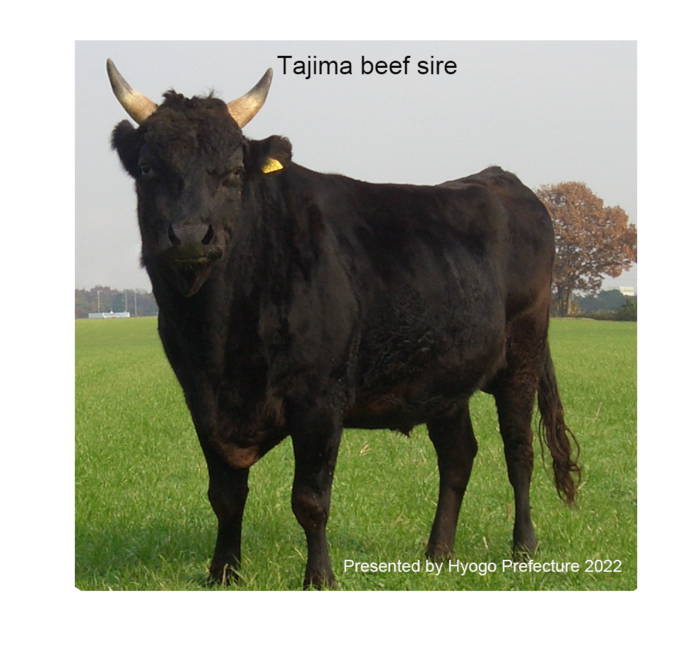
Credit: Osaka Metropolitan University and Hyogo Prefecture
Osaka, Japan – Animal breeding is an interest shared by farm owners and pet lovers, yet how to simply assess animals’ reproductive functions remains a question. An Osaka Metropolitan University researcher provides a potential answer with his review on insulin-like peptide 3 (INSL3)—a circulating hormone secreted from the gonads—that highlights this hormone as a promising fertility indicator in domestic animals. These review results might facilitate early selection of fertile males or sires, reducing the costs and labor required for sire selection. His review was published in Reproductive Medicine and Biology.
While several review papers on INSL3 have been made for experimental animals such as mice, rats, and also for humans, no review papers have been published on domestic animals such as farm and companion animals.
Addressing this gap, Professor Noritoshi Kawate from the Graduate School of Veterinary Science at Osaka Metropolitan University reviewed a wide range of studies on the structure, expression, and reproductive roles of INSL3, as well as its circulation in domestic animals with normal and abnormal reproductive conditions. These findings were further compared with existing data for rodents and humans.
His review includes results from his own research team, which has been examining INSL3 in farm and companion animals since 2010. The team has developed the world’s first immunoassay for quantifying INSL3 in the blood of many animal species, including cattle, goats, pigs, horses, and dogs, among others, in order to analyze the secretion dynamics of INSL3 in domestic animals.
The review results show that, in contrast to what happens in humans, INSL3 secretions in bulls and male goats are immediately stimulated by the pulsatile release of luteinizing hormone from the pituitary gland. Additionally, the extent of the increase in INSL3 caused by the luteinizing hormone pulses is smaller than that of testosterone, a conventional and well-known testicular hormone, suggesting that INSL3 offers more reliable and stable values by a single blood collection.
Furthermore, it is found that in Japanese Black beef bulls with poor semen and dogs with bilateral cryptorchidism, blood INSL3 levels are lower than those in normal animals.
“These review findings about INSL3 are expected to simplify reproductive function assessment in various male animals,” stated Professor Kawate. “In particular, the assay method may facilitate earlier selection of valuable male animals such as beef sire bulls with higher reproductive performance, reducing both expense and labor before their selection. Blood INSL3 levels in female animals, on the other hand, are much lower than those in male animals, making them difficult to measure. To address this, we will continue our research to improve the measurement method.”
###
About OMU
Osaka Metropolitan University is a new public university established in April 2022, formed by merger between Osaka City University and Osaka Prefecture University. For more research news, visit https://www.upc-osaka.ac.jp/new-univ/en-research/research/ or follow @OsakaMetUniv_en and #OMUScience.
Journal
Reproductive Medicine and Biology
DOI
10.1002/rmb2.12485
Method of Research
Literature review
Subject of Research
Animals
Article Title
Insulin-like peptide 3 in domestic animals with normal and abnormal reproductive functions, in comparison to rodents and humans
Article Publication Date
22-Sep-2022