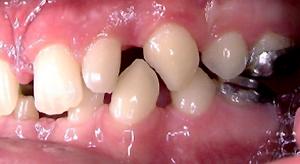
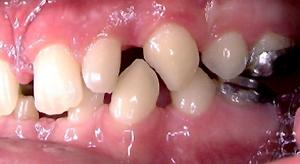
Inherited genetic mutations can rob up to 7 percent of the population of their smile. Several genes are important for the placement and patterning of teeth. These mutations prevent tooth formation, requiring patients to endure numerous and expensive surgeries, implants, and orthodontics to strengthen bone and replace missing teeth. Rena D’Souza, D.D.S., Ph.D., Professor of Dentistry at the University of Utah Health received a grant from the National Institutes of Health (NIH) to build on her past research to characterize the genetics that prevent tooth formation and develop therapies to reverse this process.
“This genetic disorder is not life threatening, but it severely affects the quality of life for patients and can be expensive,” begins D’Souza. On average, it costs $50 thousand to $60 thousand to replace several teeth in one individual. “Imagine having to care for several of your children that are affected,” she said.
The NIH awarded D’Souza and her team a grant of more than $1.7 million to identify how genetic mutations influence a protein pathway responsible for permanent tooth formation.
D’Souza and her team plan to define the relationship between PAX9, a gene that she previously linked to tooth development, and the WNT pathway, a family of proteins that pass signals in cells responsible for normal tooth development.
“I believe the mutated PAX9 gene leads to dysfunction in the WNT10A pathway and this causes a cascade of imbalances preventing teeth from forming,” she said.
These discoveries could lead to new therapies that reestablish the normal interaction between the gene and the pathway to restore tooth development.
“The research of craniofacial anomalies done by Dr. D’Souza elevates our understanding of oral health, and will strengthen our knowledge of overall health as well,” said Wyatt Rory Hume, D.D.S., Ph.D., Dean of the School of Dentistry. “We are very honored and excited to have Dr. D’Souza and her team as part of our School and are delighted that she has received this pivotal support from the National Institutes of Health, which will enable her team to continue this groundbreaking work, benefiting enormous numbers of individuals in future generations.”
The research team will conduct this work using a mouse model. Any potential therapies identified during this grant would require additional study before it could be assessed in people.
“The journey to translate an animal model to humans is daunting, but these studies are the first steps to find new therapies to treat devastating craniofacial disorders,” she said.
Permanent teeth form late in pregnancy or after birth, opening a wider window for therapies aimed at curing this genetic disorder.
D’Souza admits that she fell into this research purely by chance. Almost 20 years earlier, she learned from one of her students about a family with a long history of missing teeth, not from poor hygiene but because the teeth never formed. D’Souza became intrigued. This family and others have provided a pathway to understand the genetics behind tooth development.
“As a clinician, I always wanted to explore how a single shift in the genetic code could cause such a big problem,” says D’Souza. “It is like peeling away the layers of the onion so that you can develop new treatment strategies.”
This grant also complements D’Souza’s interest in public service. She is currently the President-elect of the International Association for Dental Research where she advocates to incorporate oral health into health policies around the world.
“Serendipity can be lost if you do not embrace the unexpected,” D’Souza said. “This research is not just about the science, but about sharing with the community and helping to treat patients with safe and non-invasive measures.”
U of U Health researchers will collaborate on this project with colleagues at the Cincinnati Children’s Hospital Medical Center, University of Lausanne, University of Pittsburgh, and Perelman School of Medicine.
###
Media Contact
Stacy W. Kish
[email protected]
801-587-2596
@UofUHealth
http://healthsciences.utah.edu/