Credit: © Michael Esbach
A new study suggests that standard ways of measuring well-being and sustainability in communities used by global organizations may be missing critical information and could lead to missteps in management actions. The paper, published today in the journal Nature Ecology & Evolution by a team of 40 scientists, policy-makers and on-the-ground practitioners, suggests alternative and complementary approaches that use indicators grounded in the values of a particular community.
"Well-being is a universally applicable concept, yet because it can mean so many different things to different people, pinning down an exact definition is difficult," said lead author Eleanor Sterling, who is the Jaffe Chief Conservation Scientist in the American Museum of Natural History's Center for Biodiversity and Conservation. "This paper is the result of years of collaboration among people from diverse disciplines and cultures to investigate methods and approaches to creating place-based indicators of well-being relevant for local communities."
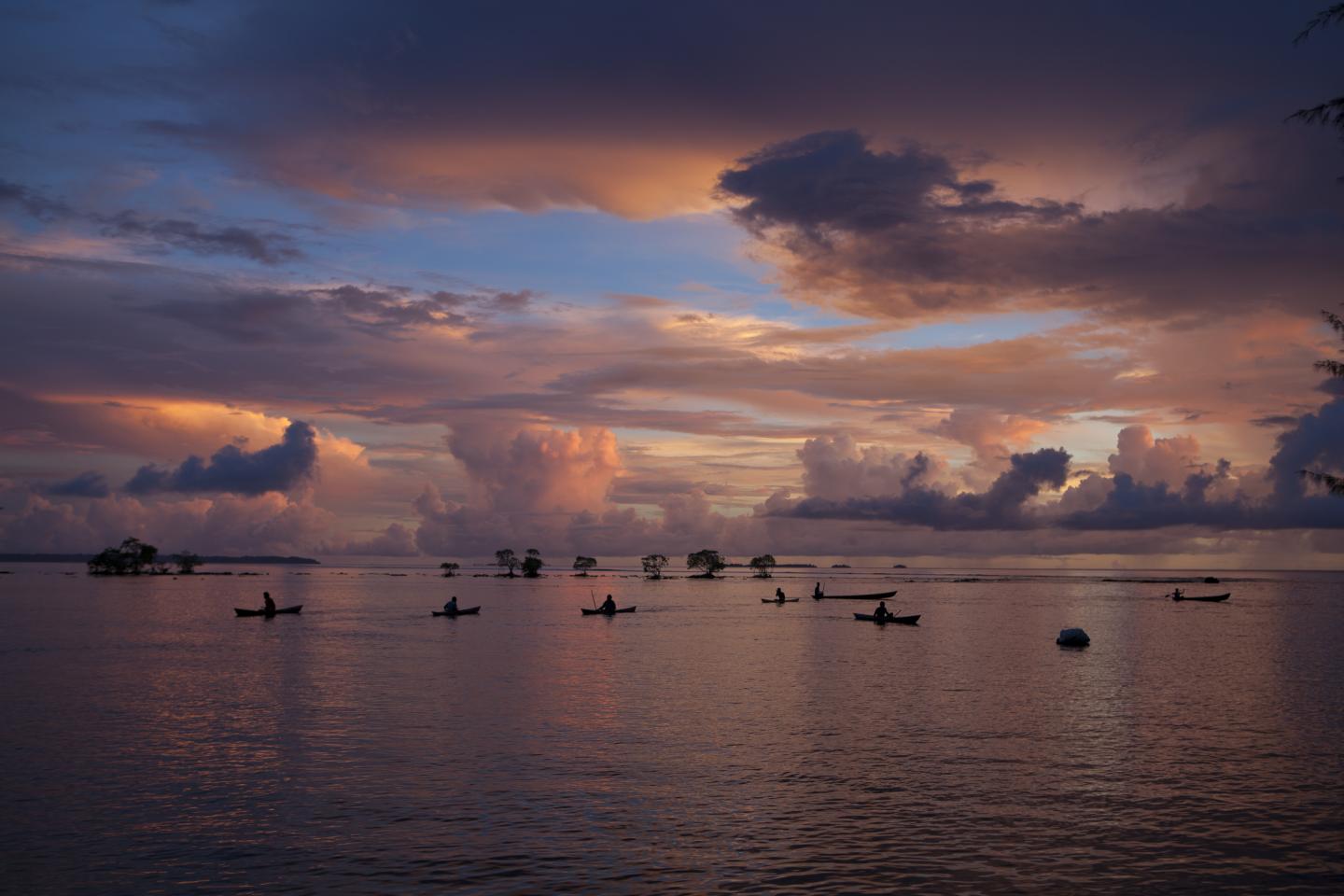
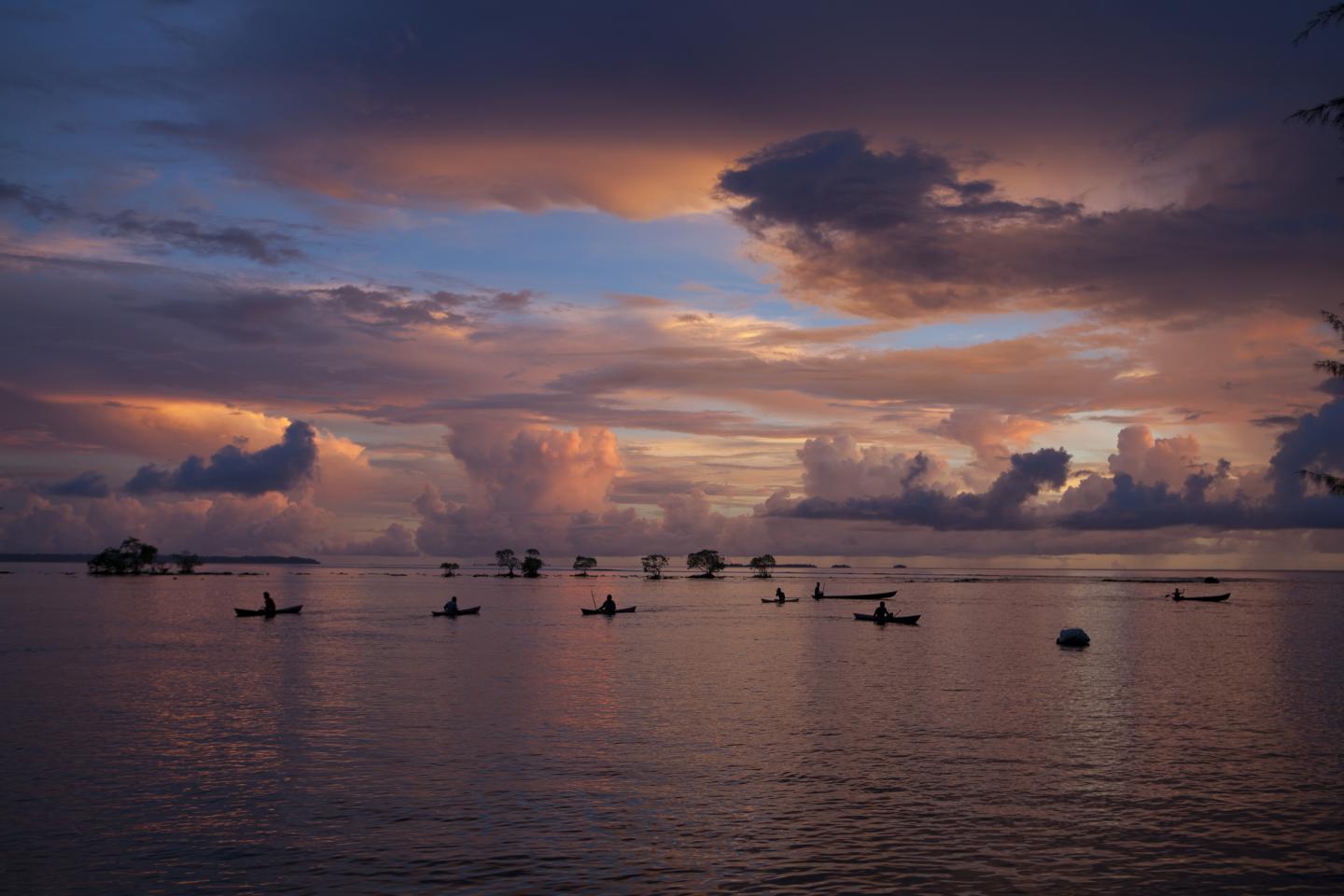
The study grew out of work the authors undertook in the Pacific, where scientists met with community members and local, regional, and national government experts to examine issues such as food security, access to fresh water, quality education, sustainable tourism, and protection of marine and terrestrial resources.
The authors approached the study with the knowledge that choosing indicators is a subjective process and that the decisions around which indicators are measured, and how they are measured, can impact management approaches and outcomes. For instance, a common way to assess the sustainability of marine resources is to measure marine protected area (MPA) coverage. This metric alone, however, does not account for the appropriateness of MPA location, design, or management effectiveness and may even exclude sustainably managed areas not formally considered as MPAs. The paper suggests capturing these other crucial aspects of marine management, including customary management systems.
Another example of the disconnect between locally appropriate indicators and those used by many large organizations is the issue of food security. One way some global organizations assess food security is to interview community members with a series of standardized questions, which includes the following: "During the last 12 months, was there a time when your household ran out of food because of a lack of money or other resources?" However, the researchers found that questions about food security that are framed around vulnerability may be inappropriate and not generate accurate data due to a strong cultural reluctance to admit to food shortages because of deep obligation felt by some communities to share food with their families and guests. Studies suggest that more appropriate questions could focus on resilience, by looking at the percentage of households that report having a stable food supply throughout the year and the average length of time for which households in the community have an emergency food supply after a disaster.
"This paper distills our thinking around how to approach environmental challenges in a way that is responsible, effective, and ethical," Sterling said. "We discuss why inclusion of local peoples' knowledges and myriad perspectives is crucial to developing appropriate indicators and management approaches for the intricately linked concepts of sustainability and well-being, and suggest ways to bridge between these locally derived solutions and broader scale efforts."
###
Other institutions involved in this work include Pace University, Australian Museum, The University of Queensland, The Field Museum, Bioversity International, Ecological Solutions Solomon Islands, Yale University, French National Center for Scientific Research, University of California Santa Barbara, University of Hawai'i at Mānoa, Michigan State University, Office of the High Representative for the Least Developed Countries-United Nations, USDA Forest Service, Brown University, Kamehameha Schools, Solomon Islands Community Conservation Partnership, NYC Urban Field Station, Department of Natural Resource and Environmental Management, Institut de Recherche pour le Développement, Solomon Islands Ministry of Forests and Research, College of the Marshall Islands, MarTina Corporation, Barnard College, National Tropical Botanical Garden, and the Wildlife Conservation Society.
This work is supported by the National Science Foundation under grant numbers EF-1427091 and 1444184, the Gordon and Betty Moore Foundation, Lynette and Richard Jaffe, and the Jaffe Family Foundation.
Nature Ecology & Evolution paper: https://www.nature.com/articles/s41559-017-0349-6
AMERICAN MUSEUM OF NATURAL HISTORY (AMNH.ORG)
The American Museum of Natural History, founded in 1869, is one of the world's preeminent scientific, educational, and cultural institutions. The Museum encompasses 45 permanent exhibition halls, including those in the Rose Center for Earth and Space and the Hayden Planetarium, as well as galleries for temporary exhibitions. It is home to the Theodore Roosevelt Memorial, New York State's official memorial to its 33rd governor and the nation's 26th president, and a tribute to Roosevelt's enduring legacy of conservation. The Museum's five active research divisions and three cross-disciplinary centers support approximately 200 scientists, whose work draws on a world-class permanent collection of more than 34 million specimens and artifacts, as well as specialized collections for frozen tissue and genomic and astrophysical data, and one of the largest natural history libraries in the world. Through its Richard Gilder Graduate School, it is the only American museum authorized to grant the Ph.D. degree. Beginning in 2015, the Richard Gilder Graduate School also began granting the Master of Arts in Teaching (MAT) degree, the only such freestanding museum program. Annual visitation has grown to approximately 5 million, and the Museum's exhibitions and Space Shows are seen by millions more in venues on five continents. The Museum's website, mobile apps, and MOOCs (massive open online courses) extend its scientific research and collections, exhibitions, and educational programs to additional audiences around the globe. Visit amnh.org for more information.
Follow
Become a fan of the Museum on Facebook at facebook.com/naturalhistory, follow us on Twitter at @AMNH, on Instagram at @AMNH, and on Tumblr at amnhnyc.
Media Contact
Kendra Snyder
[email protected]
212-496-3419
@amnh
http://www.amnh.org
Original Source
https://www.amnh.org/about-the-museum/press-center/rethinking-well-being-and-sustainability-measurements http://dx.doi.org/10.1038/s41559-017-0349-6