• HOME
  • NEWS
  • EXPLORE
    • CAREER
      • Companies
      • Jobs
    • EVENTS
    • iGEM
      • News
      • Team
    • PHOTOS
    • VIDEO
    • WIKI
  • BLOG
  • COMMUNITY
    • FACEBOOK
    • INSTAGRAM
    • TWITTER
Sunday, May 17, 2026
BIOENGINEER.ORG
No Result
View All Result
  • Login
  • HOME
  • NEWS
  • EXPLORE
    • CAREER
      • Companies
      • Jobs
        • Lecturer
        • PhD Studentship
        • Postdoc
        • Research Assistant
    • EVENTS
    • iGEM
      • News
      • Team
    • PHOTOS
    • VIDEO
    • WIKI
  • BLOG
  • COMMUNITY
    • FACEBOOK
    • INSTAGRAM
    • TWITTER
  • HOME
  • NEWS
  • EXPLORE
    • CAREER
      • Companies
      • Jobs
        • Lecturer
        • PhD Studentship
        • Postdoc
        • Research Assistant
    • EVENTS
    • iGEM
      • News
      • Team
    • PHOTOS
    • VIDEO
    • WIKI
  • BLOG
  • COMMUNITY
    • FACEBOOK
    • INSTAGRAM
    • TWITTER
No Result
View All Result
Bioengineer.org
No Result
View All Result
Home NEWS Science News Biology

Researchers target TANGO2 to study iron-rich blood molecule

Bioengineer by Bioengineer
October 21, 2022
in Biology
Reading Time: 2 mins read
0
Amit Reddi, associate professor, School of Chemistry and Biochemistry
Share on FacebookShare on TwitterShare on LinkedinShare on RedditShare on Telegram

Heme, the iron-holding molecule that gives blood its red color, is essential for life. Yet, ironically, it can be quite toxic if not properly handled. In fact, numerous diseases – from various cancers to cardiovascular diseases – are associated with defects in heme homeostasis. 
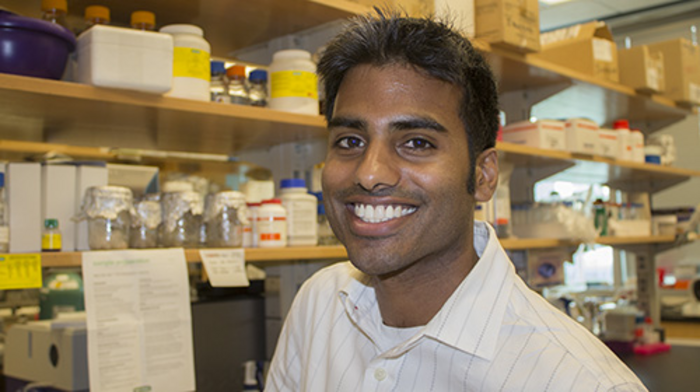
Amit Reddi, associate professor, School of Chemistry and Biochemistry

Credit: Georgia Tech

Heme, the iron-holding molecule that gives blood its red color, is essential for life. Yet, ironically, it can be quite toxic if not properly handled. In fact, numerous diseases – from various cancers to cardiovascular diseases – are associated with defects in heme homeostasis. 


The way heme is biosynthesized and degraded has been known for decades, but how it is mobilized from sites of synthesis and storage for use in cells has not been clear. Researchers at the Georgia Institute of Technology have developed new tools and approaches to image, monitor, and probe heme in biological systems to study how organisms handle this essential but potentially cytotoxic metabolite. Their findings are published in the journal Nature.


In a collaboration with Zhejiang University and the University of Maryland School of Medicine, the research team discovered a previously uncharacterized protein, HRG-9 (also called TANGO2), that helps to mobilize heme from sites of synthesis or storage for use in metabolism. The discovery of a new protein that ensures heme is made bio-available may serve as a new therapeutic target in many disease contexts – either to limit heme, to starve cells of this essential nutrient, or to cause heme to over accumulate and render it toxic to cells.


“Since mutations in the TANGO2 gene cause a hereditary disease characterized by developmental delays and defects in metabolism, our finding that TANGO2 plays a role in heme homeostasis suggests that the development of heme-centered therapies may treat such diseases,” said Amit Reddi, associate professor in the School of Chemistry at Georgia Tech and co-PI on the paper.


The researchers hope that understanding the mechanisms of heme trafficking will provide clues about how such ‘essential toxins’ are safely trafficked throughout the cell. It could also inspire therapeutic strategies to treat diseases associated with heme dysregulation, including anemias, porphyrias, and certain neurodegenerative and cardiovascular disorders.

Citation

Sun, F., Zhao, Z., Willoughby, M.M. et al. HRG-9 homologues regulate haem trafficking from haem-enriched compartments. Nature (2022). https://doi.org/10.1038/s41586-022-05347-z


Journal

Nature

DOI

10.1038/s41586-022-05347-z

Method of Research

Observational study

Subject of Research

Cells

Article Title

HRG-9 homologues regulate haem trafficking from haem-enriched compartments.

Article Publication Date

19-Oct-2022
Share12Tweet8Share2ShareShareShare2

Related Posts

Uncovering C. elegans Immunity via Genetic Screens — Biology

Uncovering C. elegans Immunity via Genetic Screens

May 16, 2026
Single mother must adapt swiftly — the survival of her colony depends on it — Biology

Single mother must adapt swiftly — the survival of her colony depends on it

May 15, 2026

Why Are Nearly Everyone Right-Handed? It Might Be Linked to How We Learned to Walk

May 15, 2026

Excessive Neuronal Activity Initiates Severe Autoimmune Brain Disorder

May 15, 2026

POPULAR NEWS

  • Research Indicates Potential Connection Between Prenatal Medication Exposure and Elevated Autism Risk

    844 shares
    Share 338 Tweet 211
  • New Study Reveals Plants Can Detect the Sound of Rain

    730 shares
    Share 291 Tweet 182
  • Salmonella Haem Blocks Macrophages, Boosts Infection

    62 shares
    Share 25 Tweet 16
  • Breastmilk Balances E. coli and Beneficial Bacteria in Infant Gut Microbiomes

    58 shares
    Share 23 Tweet 15

About

We bring you the latest biotechnology news from best research centers and universities around the world. Check our website.

Follow us

Recent News

Interacting with an AI Doctor Before In-Person Consultations Enhances Cancer Patients’ Comprehension and Lowers Anxiety

Cerebellar Growth Links Brain Maturation and Language

Flexible Framework Optimizes Data Center Site Planning

Subscribe to Blog via Email

Enter your email address to subscribe to this blog and receive notifications of new posts by email.

Join 82 other subscribers
  • Contact Us

Bioengineer.org © Copyright 2023 All Rights Reserved.

Welcome Back!

Login to your account below

Forgotten Password?

Retrieve your password

Please enter your username or email address to reset your password.

Log In
No Result
View All Result
  • Homepages
    • Home Page 1
    • Home Page 2
  • News
  • National
  • Business
  • Health
  • Lifestyle
  • Science

Bioengineer.org © Copyright 2023 All Rights Reserved.