

• HOME
  • NEWS
  • EXPLORE
    • CAREER
      • Companies
      • Jobs
    • EVENTS
    • iGEM
      • News
      • Team
    • PHOTOS
    • VIDEO
    • WIKI
  • BLOG
  • COMMUNITY
    • FACEBOOK
    • INSTAGRAM
    • TWITTER
Saturday, October 31, 2026
BIOENGINEER.ORG
No Result
View All Result
  • Login
  • HOME
  • NEWS
  • EXPLORE
    • CAREER
      • Companies
      • Jobs
        • Lecturer
        • PhD Studentship
        • Postdoc
        • Research Assistant
    • EVENTS
    • iGEM
      • News
      • Team
    • PHOTOS
    • VIDEO
    • WIKI
  • BLOG
  • COMMUNITY
    • FACEBOOK
    • INSTAGRAM
    • TWITTER
No Result
View All Result
Bioengineer.org
No Result
View All Result
Home NEWS Science News Health

Researchers Say Earlier Inflammasome Framework Anticipated Clonal Thrombo-Inflammation Model in Myeloproliferative Neoplasms

by
October 30, 2026
in Health
Reading Time: 2 mins read
0
Researchers Say Earlier Inflammasome Framework Anticipated Clonal Thrombo-Inflammation Model in Myeloproliferative Neoplasms

Researchers Say Earlier Inflammasome Framework Anticipated Clonal Thrombo-Inflammation Model in Myeloproliferative Neoplasms

Share on FacebookShare on TwitterShare on LinkedinShare on RedditShare on Telegram

A correspondence published in Clinical and Experimental Medicine argues that a recently proposed model of clonal thrombo-inflammation in myeloproliferative neoplasms overlooks earlier work by the same authors that anticipated several of its central elements. Alessandro Lucchesi and Mariasanta Napolitano write that a model put forward by El-Sehrawy and colleagues, organised around the inflammasome, clonal stability and a multi-compartmental thrombotic niche, was addressed in two reviews their group published in 2021, neither of which is cited in the newer publication.

According to the correspondence, the first of the earlier reviews set out the pathogenetic role of the NLRP3 and AIM2 inflammasomes and their link to hypercoagulable states. The second formalised the vascular consequence of this process as the Circulating Wound, described as a self-sustaining lesion in which tissue-factor-rich clonal platelets, thrombin generation, protease-activated receptor signalling and TGF-β crosstalk reinforce one another.

The authors state that this coagulative arm is absent from the more recent model. They argue that the difference matters for the therapeutic reading of the framework, since the thrombotic circuit they described treats the vascular lesion as a mutually reinforcing loop rather than as separate compartments.

To support the earlier formulation, the correspondence summarises experimental findings from 53 therapy-naive patients with myeloproliferative neoplasms. The letter sets out where the two accounts diverge and why, in the authors’ view, that divergence bears on how the model should be interpreted clinically.

The piece is published as an open-access correspondence rather than as an original research article, so its claims rest on the prior reviews and the previously reported patient findings rather than on new data presented here.

Subject of Research: A correspondence highlighting an earlier inflammasome and thrombosis framework for myeloproliferative neoplasms

Article Title: Inflammasome, clonal stability and the thrombotic circuit in myeloproliferative neoplasms: an antecedent framework

Article References: Lucchesi, A., & Napolitano, M. (2026). Inflammasome, clonal stability and the thrombotic circuit in myeloproliferative neoplasms: an antecedent framework. Clinical and Experimental Medicine, 26(1), Article 356. https://doi.org/10.1007/s10238-026-02343-9

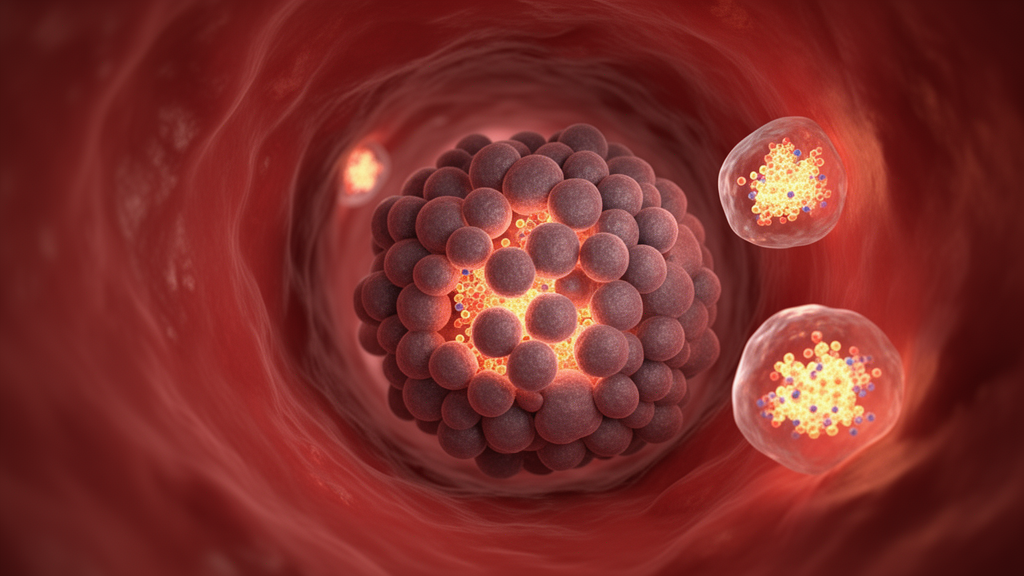
Image Credits: AI Generated

DOI: 10.1007/s10238-026-02343-9

Keywords: myeloproliferative neoplasms, inflammasome, NLRP3, AIM2, thrombo-inflammation, clonal stability, Circulating Wound, thrombosis, tissue factor, TGF-beta, correspondence, clonal

News Source: Ophelia Keating. (October 30, 2026). Researchers Say Earlier Inflammasome Framework Anticipated Clonal Thrombo-Inflammation Model in Myeloproliferative Neoplasms. Scienmag.


Tags: AIM2Circulating Woundclonalclonal stabilitycorrespondenceinflammasomemyeloproliferative neoplasmsNLRP3TGF-betathrombo-inflammationthrombosistissue factor
Share12Tweet7Share2ShareShareShare1

Related Posts

ZNF207 shields glutamine transporter ASCT2 from degradation to fuel liver cancer growth

ZNF207 shields glutamine transporter ASCT2 from degradation to fuel liver cancer growth

October 30, 2026
Most Ethiopian HIV patients on dolutegravir therapy show good knowledge, survey finds

Most Ethiopian HIV patients on dolutegravir therapy show good knowledge, survey finds

October 30, 2026

Serum and urine protein biomarkers may sharpen prostate cancer detection beyond PSA

October 30, 2026

One gene locus flags atrial fibrillation risk after major surgery, UK Biobank study finds

October 30, 2026

POPULAR NEWS

  • Microbial Sources and Stress Shape the Hidden Endophytes of an Invasive Plant

    Microbial Sources and Stress Shape the Hidden Endophytes of an Invasive Plant

    29 shares
    Share 12 Tweet 7
  • Firebreaks Leave Lasting Scars in Grasslands While Wildfire Heals Fast

    29 shares
    Share 12 Tweet 7
  • ZNF207 shields glutamine transporter ASCT2 from degradation to fuel liver cancer growth

    29 shares
    Share 12 Tweet 7
  • Systematic review maps sustainability tensions in offshore wind development

    29 shares
    Share 12 Tweet 7

About

We bring you the latest biotechnology news from best research centers and universities around the world. Check our website.

Follow us

Recent News

Microbial Sources and Stress Shape the Hidden Endophytes of an Invasive Plant

Firebreaks Leave Lasting Scars in Grasslands While Wildfire Heals Fast

ZNF207 shields glutamine transporter ASCT2 from degradation to fuel liver cancer growth

Subscribe to Blog via Email

Enter your email address to subscribe to this blog and receive notifications of new posts by email.

Join 86 other subscribers
  • Contact Us

Bioengineer.org © Copyright 2023 All Rights Reserved.

Welcome Back!

Login to your account below

Forgotten Password?

Retrieve your password

Please enter your username or email address to reset your password.

Log In
No Result
View All Result
  • Homepages
    • Home Page 1
    • Home Page 2
  • News
  • National
  • Business
  • Health
  • Lifestyle
  • Science

Bioengineer.org © Copyright 2023 All Rights Reserved.
