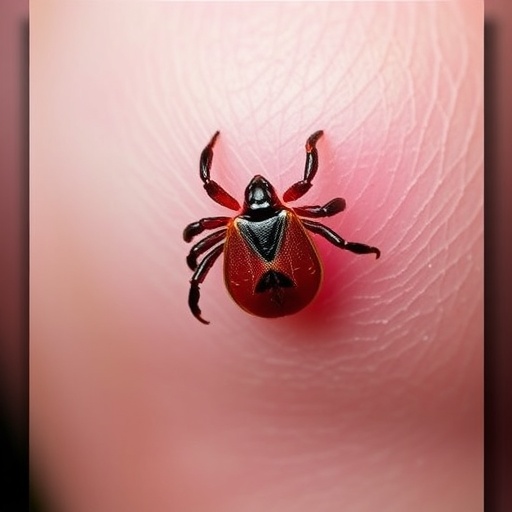
Researchers at Baylor College of Medicine and the Texas Department of State Health Services have documented a likely case of soft tick-borne relapsing fever linked to an infected tick found inside an apartment in the Austin metropolitan area. The investigation provides evidence that Ornithodoros turicata, a soft-bodied tick capable of transmitting Borrelia turicatae, can bring the pathogen into residential environments previously considered unlikely sites of exposure. The findings, published in Open Forum Infectious Diseases, broaden concerns about the geographic and ecological settings in which this neglected bacterial disease may occur.
The investigation began after an Austin-area resident discovered an engorged tick attached to the ankle while sitting inside an apartment. Rather than discarding it, the resident submitted the live specimen to the Zoonosis Control Branch of the Texas Department of State Health Services. Preliminary follow-up raised concerns that the tick could be infected with bacteria responsible for soft tick-borne relapsing fever, prompting the state agency to send the specimen to the laboratory of Job Lopez at Baylor College of Medicine for detailed examination.
Researchers identified the tick as Ornithodoros turicata, a species distributed across parts of the southern United States and traditionally associated with caves, animal burrows, rock shelters and other protected habitats. Unlike hard ticks, which often remain attached for extended periods, soft ticks generally feed rapidly, frequently at night, and may be difficult for people to notice. Their brief feeding behavior can make exposure difficult to reconstruct, particularly when a person does not see or retain the tick.
Laboratory analysis confirmed that the specimen carried Borrelia turicatae, a spiral-shaped bacterium known as a spirochete. Additional testing indicated that the organism was viable and that the tick had the potential to transmit it during feeding. Genetic analysis further verified the identity of the bacterium, distinguishing it from other Borrelia species that cause relapsing fever or Lyme disease. The researchers’ findings establish a biologically plausible connection between the infected tick and the resident’s illness, although the report characterizes the human infection as a likely case rather than a definitively confirmed diagnosis.
Several weeks before the tick was discovered, the resident had experienced repeated episodes of high fever, chills, severe fatigue, headaches, nausea and rash. The illness later progressed to facial paralysis, resulting in multiple emergency department visits and eventual hospitalization. Clinicians investigated a broad range of infectious diseases, including Lyme disease, but the cause was not initially identified. The recurrent nature of the fever was consistent with relapsing fever, in which bacterial populations rise in the bloodstream and then decline, producing alternating periods of illness and apparent recovery.
Relapsing fever can be diagnostically challenging because symptoms overlap with influenza, other tick-borne infections and a variety of systemic diseases. In soft tick-borne relapsing fever, fever episodes may recur as the bacterium changes the surface proteins it displays to the immune system. This antigenic variation allows portions of the bacterial population to evade existing antibodies, multiply again and trigger another febrile episode. Laboratory detection may therefore depend on timing, with microscopy or molecular testing more likely to succeed during periods of high bacterial concentration in the blood.
The Austin report is significant because it challenges the assumption that exposure to O. turicata and B. turicatae is primarily a rural or wilderness problem. Soft ticks can occupy sheltered habitats associated with rodents and other animals, and those habitats may exist near homes, apartment complexes, parks and developed neighborhoods. The discovery of an infected tick inside a residence suggests that urbanization does not necessarily eliminate the environmental conditions needed to support the tick’s life cycle. It also raises the possibility that exposures are being missed because patients and physicians may not expect relapsing fever in metropolitan settings.
The authors emphasize the need for greater awareness among healthcare providers, especially when patients present with recurrent unexplained fevers, rash, neurological symptoms or a history of possible tick exposure. Standard testing for Lyme disease does not reliably identify soft tick-borne relapsing fever, and the two conditions are caused by different bacterial groups with distinct diagnostic challenges. Recognizing the possibility of B. turicatae infection can guide clinicians toward appropriate blood-based molecular testing, microscopic examination during fever and consultation with public health laboratories.
The case also demonstrates the value of collecting and testing ticks encountered by residents. Public health surveillance focused only on known rural habitats may underestimate the presence of infected ticks in cities and suburbs. Expanded monitoring could help determine how frequently O. turicata occurs in residential areas, which animals maintain the bacterium and how often human infections are misclassified. For residents and clinicians in Texas, the report serves as an early warning that soft tick-borne relapsing fever may be an urban health concern as well as a disease of remote environments.
Subject of Research: People
Article Title: Human Exposure to Spirochete-Infected Ornithodoros turicata in a Residential Setting in the Austin, Texas Metropolitan Area
News Publication Date: 24-Jul-2026
Web References: https://academic.oup.com/ofid/article/13/7/ofag428/8741232
References: Open Forum Infectious Diseases. DOI: 10.1093/ofid/ofag428
Keywords: Soft tick-borne relapsing fever, Ornithodoros turicata, Borrelia turicatae, tick-borne disease, Austin, Texas, infectious diseases, urban epidemiology, spirochetes, public health surveillance
Tags: Austin area infectious disease investigationBorrelia turicatae bacterial infectionemerging tick-borne illnesses in the USindoor tick exposure and disease riskneglected bacterial disease in urban settingsOrnithodoros turicata tick transmissionpublic health implications of soft tick bitesresidential exposure to soft tickssoft tick-borne relapsing feversoft tick-borne relapsing fever casetick identification and pathogen detectiontick-borne disease in Texas