• HOME
  • NEWS
  • EXPLORE
    • CAREER
      • Companies
      • Jobs
    • EVENTS
    • iGEM
      • News
      • Team
    • PHOTOS
    • VIDEO
    • WIKI
  • BLOG
  • COMMUNITY
    • FACEBOOK
    • INSTAGRAM
    • TWITTER
Saturday, May 16, 2026
BIOENGINEER.ORG
No Result
View All Result
  • Login
  • HOME
  • NEWS
  • EXPLORE
    • CAREER
      • Companies
      • Jobs
        • Lecturer
        • PhD Studentship
        • Postdoc
        • Research Assistant
    • EVENTS
    • iGEM
      • News
      • Team
    • PHOTOS
    • VIDEO
    • WIKI
  • BLOG
  • COMMUNITY
    • FACEBOOK
    • INSTAGRAM
    • TWITTER
  • HOME
  • NEWS
  • EXPLORE
    • CAREER
      • Companies
      • Jobs
        • Lecturer
        • PhD Studentship
        • Postdoc
        • Research Assistant
    • EVENTS
    • iGEM
      • News
      • Team
    • PHOTOS
    • VIDEO
    • WIKI
  • BLOG
  • COMMUNITY
    • FACEBOOK
    • INSTAGRAM
    • TWITTER
No Result
View All Result
Bioengineer.org
No Result
View All Result
Home NEWS Science News Biology

Researchers identify how the bacterial replicative helicase opens to start DNA replication process

Bioengineer by Bioengineer
February 26, 2019
in Biology
Reading Time: 3 mins read
0
IMAGE
Share on FacebookShare on TwitterShare on LinkedinShare on RedditShare on Telegram

The new discovery may prove useful in developing a novel class of antibiotics and designing molecular nanodevices
IMAGE

Credit: Jillian Chase and David Jeruzalmi

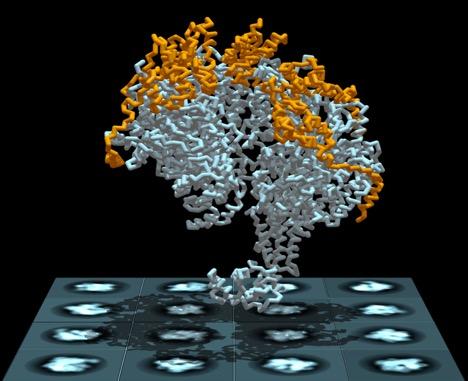
NEW YORK, February 26, 2019 – DNA replication is a complex process in which a helicase ring separates the DNA molecule’s two entwined and encoded strands, allowing each to precisely reproduce its missing half. Until recently, however, researchers have not understood how the helicase–a donut-shaped enzyme composed of six identical proteins–is able to thread just one of the strands when they are bound together. Now, new research from scientists at The Graduate Center of The City University of New York, its Advanced Science Research Center (ASRC), and The City College of New York (CCNY) has solved the mystery.

In a paper published in today’s issue of the journal eLife, researchers explain how the helicase loader protein (P loader) from a bacterial virus attaches to the replicative helicase causing it to spiral open and quickly reclose around one of the DNA strands. The helicase then begins running along the strand and breaking the hydrogen bounds that bind it to the second strand, allowing each to become a substrate that can replicate a complete DNA molecule.

“Going into this research, we knew there had to be a loader protein for this action to take place, but we didn’t know what the process looked like,” said lead investigator David Jeruzalmi, a professor of chemistry and biochemistry at The Graduate Center and CCNY.

“Through our research we were able to identify the mechanism for loading the DNA strand into the helicase, and we also learned that the loader proteins prevent any movement of the helicase at the moment it opens and closes in order to prevent any replication mistakes.”

The researchers studied E. coli bacteria DNA to sort out the replication mechanism. They employed cryo electron microscopy and tomography to image the helicase and all of its loader proteins. In addition to helping them identify a previously unknown mechanism in the DNA replication process, the research might also point to an avenue for a novel class of antibiotics that target the bacterial DNA replication machinery, said the researchers.

“Our research is a beautiful example of the powerful ability of cryo-electron microscopy to provide important findings that can be used to develop new therapeutic drugs,” said co-investigator Amedee des Georges, professor of chemistry and biochemistry at The Graduate Center and CCNY and a member of the ASRC’s Structural Biology Initiative.

###

About The Graduate Center of The City University of New York

The Graduate Center of The City University of New York (CUNY) is a leader in public graduate education devoted to enhancing the public good through pioneering research, serious learning, and reasoned debate. The Graduate Center offers ambitious students more than 40 doctoral and master’s programs of the highest caliber, taught by top faculty from throughout CUNY — the nation’s largest public urban university. Through its nearly 40 centers, institutes, and initiatives, including its Advanced Science Research Center (ASRC), The Graduate Center influences public policy and discourse and shapes innovation. The Graduate Center’s extensive public programs make it a home for culture and conversation.

Media Contact
Shawn Rhea
[email protected]

Related Journal Article

http://dx.doi.org/10.7554/eLife.41140.001

Tags: BiologyCell BiologyGenes
Share20Tweet8Share2ShareShareShare2

Related Posts

Single mother must adapt swiftly — the survival of her colony depends on it — Biology

Single mother must adapt swiftly — the survival of her colony depends on it

May 15, 2026
Why Are Nearly Everyone Right-Handed? It Might Be Linked to How We Learned to Walk — Biology

Why Are Nearly Everyone Right-Handed? It Might Be Linked to How We Learned to Walk

May 15, 2026

Excessive Neuronal Activity Initiates Severe Autoimmune Brain Disorder

May 15, 2026

Precision Anti-Aging Strategies Focus on Eliminating Harmful Senescent Cells While Preserving Beneficial Ones

May 15, 2026
Please login to join discussion

POPULAR NEWS

  • Research Indicates Potential Connection Between Prenatal Medication Exposure and Elevated Autism Risk

    843 shares
    Share 337 Tweet 211
  • New Study Reveals Plants Can Detect the Sound of Rain

    730 shares
    Share 291 Tweet 182
  • Salmonella Haem Blocks Macrophages, Boosts Infection

    62 shares
    Share 25 Tweet 16
  • Breastmilk Balances E. coli and Beneficial Bacteria in Infant Gut Microbiomes

    58 shares
    Share 23 Tweet 15

About

We bring you the latest biotechnology news from best research centers and universities around the world. Check our website.

Follow us

Recent News

REM Sleep Breathing, Metabolism, and Memory Linked

Machine Learning Detects Flow Instability in Channels

LTBP4 Deficiency Reduces Heart Failure in Male Mice

Subscribe to Blog via Email

Enter your email address to subscribe to this blog and receive notifications of new posts by email.

Join 82 other subscribers
  • Contact Us

Bioengineer.org © Copyright 2023 All Rights Reserved.

Welcome Back!

Login to your account below

Forgotten Password?

Retrieve your password

Please enter your username or email address to reset your password.

Log In
No Result
View All Result
  • Homepages
    • Home Page 1
    • Home Page 2
  • News
  • National
  • Business
  • Health
  • Lifestyle
  • Science

Bioengineer.org © Copyright 2023 All Rights Reserved.