• HOME
  • NEWS
  • EXPLORE
    • CAREER
      • Companies
      • Jobs
    • EVENTS
    • iGEM
      • News
      • Team
    • PHOTOS
    • VIDEO
    • WIKI
  • BLOG
  • COMMUNITY
    • FACEBOOK
    • INSTAGRAM
    • TWITTER
Sunday, May 31, 2026
BIOENGINEER.ORG
No Result
View All Result
  • Login
  • HOME
  • NEWS
  • EXPLORE
    • CAREER
      • Companies
      • Jobs
        • Lecturer
        • PhD Studentship
        • Postdoc
        • Research Assistant
    • EVENTS
    • iGEM
      • News
      • Team
    • PHOTOS
    • VIDEO
    • WIKI
  • BLOG
  • COMMUNITY
    • FACEBOOK
    • INSTAGRAM
    • TWITTER
  • HOME
  • NEWS
  • EXPLORE
    • CAREER
      • Companies
      • Jobs
        • Lecturer
        • PhD Studentship
        • Postdoc
        • Research Assistant
    • EVENTS
    • iGEM
      • News
      • Team
    • PHOTOS
    • VIDEO
    • WIKI
  • BLOG
  • COMMUNITY
    • FACEBOOK
    • INSTAGRAM
    • TWITTER
No Result
View All Result
Bioengineer.org
No Result
View All Result
Home NEWS Science News

Researchers help the body protect itself against inflammation and colon cancer

Bioengineer by Bioengineer
January 27, 2017
in Science News
Reading Time: 2 mins read
0
Share on FacebookShare on TwitterShare on LinkedinShare on RedditShare on Telegram
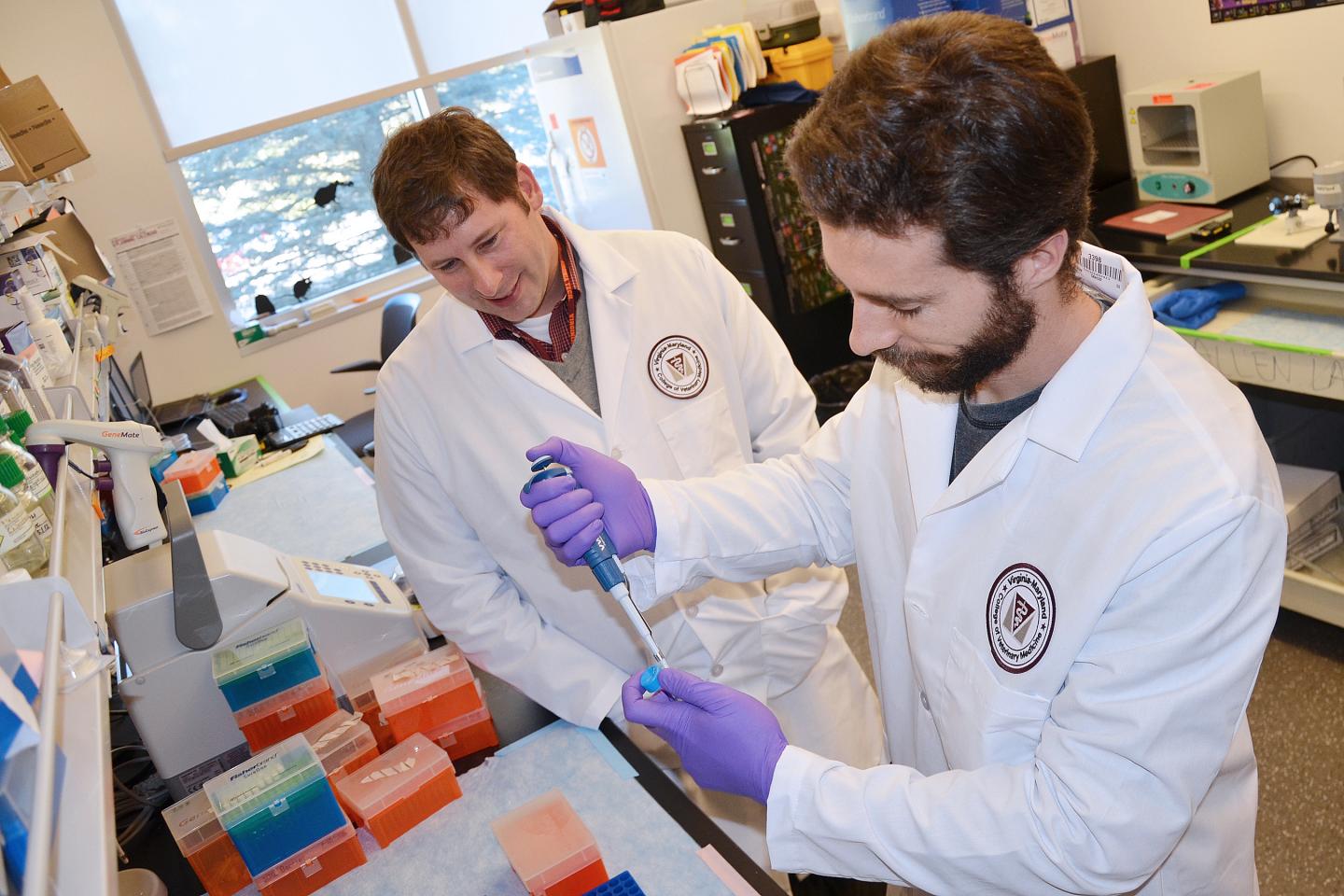
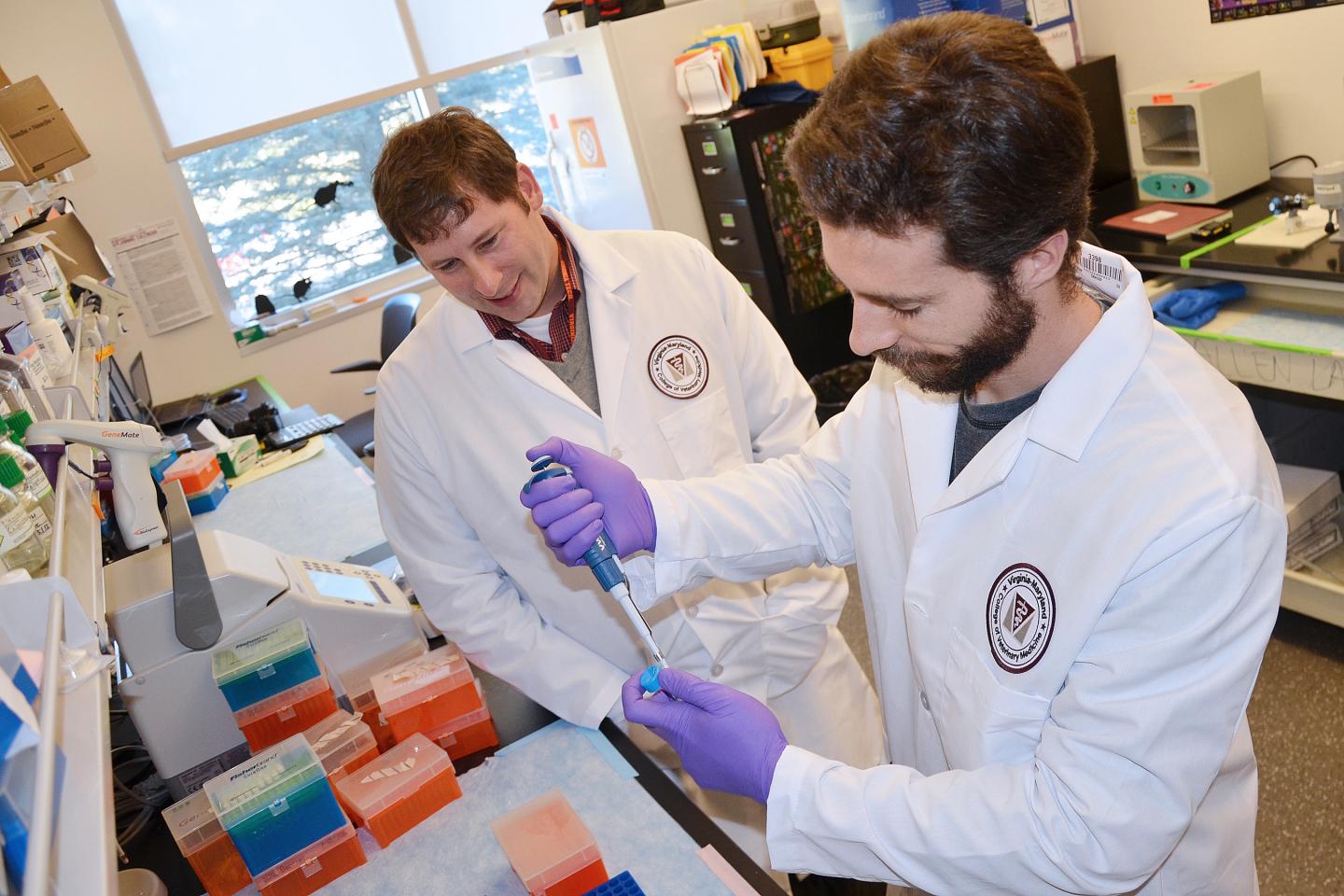
IMAGE

Credit: Michael Sutphin

Could inflammatory bowel disease and colon cancer be prevented by changing the shape of a single protein?

There is an intimate link between uncontrolled inflammation in the gut associated with inflammatory bowel disease and the eventual development of colon cancer. This uncontrolled inflammation is associated with changes in bacteria populations in the gut, which can invade the mucosal tissue after damage to the protective cellular barrier lining the tissue.

But Virginia Tech researchers found that modifying the shape of IRAK-M, a protein that controls inflammation, can significantly reduce the clinical progression of both diseases in pre-clinical animal models.

The altered protein causes the immune system to become supercharged, clearing out the bacteria before they can do any damage. The team's findings were published in eBioMedicine.

"When we tested mice with the altered IRAK-M protein, they had less inflammation overall, and remarkably less cancer," said Coy Allen, an assistant professor of inflammatory disease in the Department of Biomedical Sciences and Pathobiology in the Virginia-Maryland College of Veterinary Medicine and a Fralin Life Science Institute affiliate.

The next step, he said, will be to evaluate these findings in human patients through ongoing collaborations with Carilion Clinic and Duke University. The team is also evaluating their findings in laboratory-assembled 'mini-guts'–live tissue models that Allen and his team assembled by growing intestinal stem cells on petri dishes to form highly complex small intestinal and colon tissue.

"Ultimately, if we can design therapeutics to target IRAK-M, we think it could be a viable strategy for preventing inflammatory bowel disease and cancer," said Allen.

Colon cancer is the second leading cause of cancer-related deaths in the United States and the third most common cancer in men and women, according to the Centers for Disease Control and Prevention.

More than ten Virginia Tech faculty members and students are working on the project, including co-principal investigator Liwu Li, a professor of biological sciences in the College of Science; Clay Caswell, an assistant professor of bacteriology in the veterinary college; Rich Helm, an associate professor of biochemistry in the College of Agriculture and Life Sciences; Dan Slade, an assistant professor of biochemistry in the College of Agriculture and Life Sciences; and Tanya LeRoith, a clinical associate professor of anatomic pathology in the veterinary college.

Daniel Rothschild of Nevada City, California, currently in the combined Ph.D./D.V.M program in the veterinary college, is working in Allen's lab, and was first author on the paper.

"Working on this project alongside Dr. Allen and our fellow collaborators has personally been a great experience," said Rothschild. "It's really exciting when your findings have the potential for clinical implications that can be applied to help patients. From a scientist's perspective, that's what it's all about, and hopefully our findings provide a good avenue for development of future therapeutics to treat maladies such as inflammatory bowel disease and colon cancer."

###

Media Contact

Lindsay Key
[email protected]
540-231-6594
@VTresearch

http://www.vtnews.vt.edu

############

Story Source: Materials provided by Scienmag

Share12Tweet8Share2ShareShareShare2

Related Posts

Impact of Immigration Restrictions on the US Healthcare Workforce

May 31, 2026

Study Reveals Cancer Diagnostic Delays Linked to Population-Based Screening Using Cell-Free DNA Multicancer Early Detection Test

May 31, 2026

Innovative AI Technique Predicts Radiation Dosage Prior to Treatment in Advanced Prostate Cancer

May 31, 2026

COXFA4L2 Boosts Cytochrome C Oxidase in Leigh Syndrome

May 31, 2026
Please login to join discussion

POPULAR NEWS

  • ESMO 2025: mRNA COVID Vaccines Enhance Efficacy of Cancer Immunotherapy

    319 shares
    Share 128 Tweet 80
  • Multi-Hospital Study Reveals Long Covid Burden Is Twice as High as Current Estimates

    81 shares
    Share 32 Tweet 20
  • Common Food Preservatives Associated with Elevated Blood Pressure and Increased Heart Disease Risk

    56 shares
    Share 22 Tweet 14
  • AI-Powered Atlas Uncovers Extensive Whole-Body Damage Linked to Obesity

    53 shares
    Share 21 Tweet 13

About

We bring you the latest biotechnology news from best research centers and universities around the world. Check our website.

Follow us

Recent News

Impact of Immigration Restrictions on the US Healthcare Workforce

Study Reveals Cancer Diagnostic Delays Linked to Population-Based Screening Using Cell-Free DNA Multicancer Early Detection Test

Innovative AI Technique Predicts Radiation Dosage Prior to Treatment in Advanced Prostate Cancer

Subscribe to Blog via Email

Success! An email was just sent to confirm your subscription. Please find the email now and click 'Confirm' to start subscribing.

Join 82 other subscribers
  • Contact Us

Bioengineer.org © Copyright 2023 All Rights Reserved.

Welcome Back!

Login to your account below

Forgotten Password?

Retrieve your password

Please enter your username or email address to reset your password.

Log In
No Result
View All Result
  • Homepages
    • Home Page 1
    • Home Page 2
  • News
  • National
  • Business
  • Health
  • Lifestyle
  • Science

Bioengineer.org © Copyright 2023 All Rights Reserved.