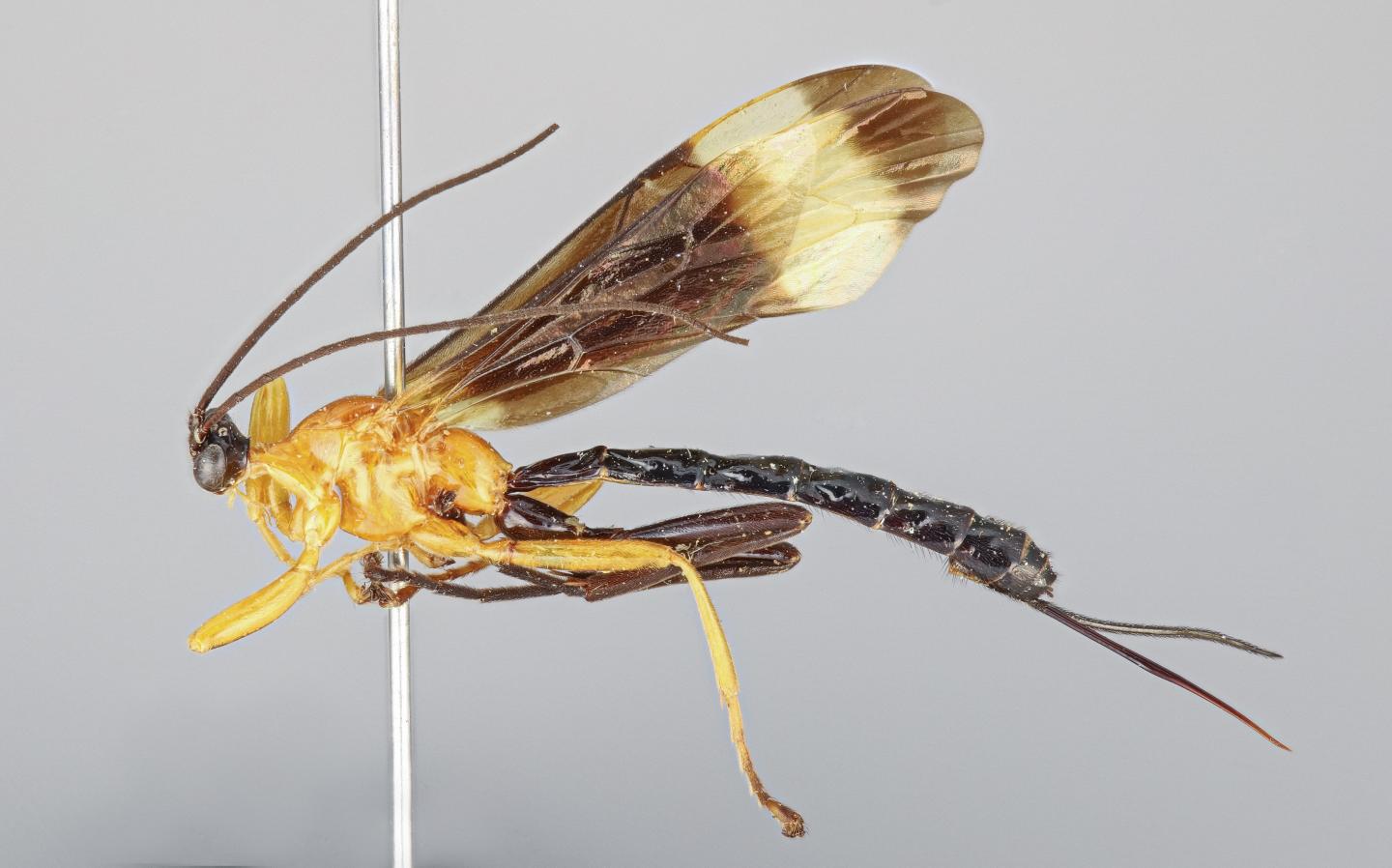
Credit: Photo: Kari Kaunisto
It is estimated that 15 million different species live on our planet, but only 2 million of them are currently known to science. Discovering new species is important as it helps to protect them. Furthermore, new species can also produce compounds that could lead to the development of new medicine.
“Biodiversity is declining at an accelerating rate and, according to estimates, even a million organisms are in danger of becoming extinct in the next few decades. If we want to protect nature’s biodiversity as efficiently as possible, we have to discover as many species as we can,” says Professor of Biodiversity Research Ilari E. Sääksjärvi from the University of Turku, Finland.
Discovering new species enables, for example, studying their habits and defining their geographical distribution.
So far this year, the researchers of the Biodiversity Unit at the University of Turku have described 17 new spider species, 23 insects, one bristly millipede, and one monitor lizard. The new species have been discovered from the Amazon, Europe, India, the Middle East, and the Pacific islands. In addition to the species, the researchers have also described four new genera previously unknown to science.
The Amazing Beauty of Spiders
In one of the most recent studies from the Biodiversity Unit, Doctoral Candidate Alireza Zamani described a new spider species Loureedia phoenixi from Iran.
“The discovery was amazing as the new species belongs to the genus of velvet spiders, of which only few species have been known so far. They are very shy in their habits so discovering a new species was a great and welcome surprise. The species in this genus are amazingly beautiful and colourful so I wish this new discovery can make people understand the beauty and importance of spiders. We discovered the species from an area that is about 1,500 kilometres outside the known geographical distribution of the Loureedia genus,” describes Zamani.
Zamani and Sääksjärvi say that the Loureedia phoenixi spider was named after actor Joaquin Phoenix. The colourful pattern on its back resembles the face paint of the movie character Joker.
The researchers of the Biodiversity Unit have also described tropical parasitoid wasps belonging to the Acrotaphus and Hymenoepimecis genera. These wasps are parasitic on spiders and manipulate the host in complicated ways. The parasitoid wasp lays its egg on the spider and then manipulates it into spinning a special web instead of a normal web for catching prey. The wasp’s pupa nests safely inside this special web while developing into adulthood.
Species Discoveries Support Conservation Efforts
New discoveries increase our information about the history of species and can therefore affect their conservation in the future. A good example is the Varanus bennetti monitor lizard described this year, as the importance of the species’ conservation was concluded only after close field and laboratory studies.
“The monitor lizard species that was first considered an invasive species to Micronesia turned out to be two separate species native to the islands. We described one of these as new to science,” say researchers Valter Weijola and Varpu Vahtera who discovered the species.
Discovering, classifying, and describing a new species is a long process. New discoveries often require challenging field studies in remote places. Before conducting the field study, the researcher has to make sure that the required permits for collecting specimens and taking them out of the country are in order. The studies are conducted together with local scientists as often as possible.
After the field study, the other research work begins: the species is examined in a laboratory, described, named, and classified and then the research article is published in an international journal.
In the last few years, the Biodiversity Unit of the University of Turku has profiled itself especially in describing the biodiversity of unknown ecosystems. Each year, the unit describes dozens of new species which is a great amount even by international standards.
“Our goal is to discover new species and tell their story to the world. At the moment, we are in the process of describing even more new species and genera. Many of these animals live in areas that might transform or even disappear in the next few years. Describing new species to science is a race against the clock. We hope that our research draws people’s attention to the life of these unique species and thus promotes the conservation of biodiversity,” conclude Sääksjärvi and Zamani.
###
Media Contact
Ilari E. Sääksjärvi
[email protected]
Original Source
https:/
Related Journal Article
http://dx.