• HOME
  • NEWS
  • EXPLORE
    • CAREER
      • Companies
      • Jobs
    • EVENTS
    • iGEM
      • News
      • Team
    • PHOTOS
    • VIDEO
    • WIKI
  • BLOG
  • COMMUNITY
    • FACEBOOK
    • INSTAGRAM
    • TWITTER
Monday, February 9, 2026
BIOENGINEER.ORG
No Result
View All Result
  • Login
  • HOME
  • NEWS
  • EXPLORE
    • CAREER
      • Companies
      • Jobs
        • Lecturer
        • PhD Studentship
        • Postdoc
        • Research Assistant
    • EVENTS
    • iGEM
      • News
      • Team
    • PHOTOS
    • VIDEO
    • WIKI
  • BLOG
  • COMMUNITY
    • FACEBOOK
    • INSTAGRAM
    • TWITTER
  • HOME
  • NEWS
  • EXPLORE
    • CAREER
      • Companies
      • Jobs
        • Lecturer
        • PhD Studentship
        • Postdoc
        • Research Assistant
    • EVENTS
    • iGEM
      • News
      • Team
    • PHOTOS
    • VIDEO
    • WIKI
  • BLOG
  • COMMUNITY
    • FACEBOOK
    • INSTAGRAM
    • TWITTER
No Result
View All Result
Bioengineer.org
No Result
View All Result
Home NEWS Science News Health

Researchers find ways to impede progress of neurodegenerative diseases

Bioengineer by Bioengineer
March 30, 2018
in Health
Reading Time: 2 mins read
0
Share on FacebookShare on TwitterShare on LinkedinShare on RedditShare on Telegram
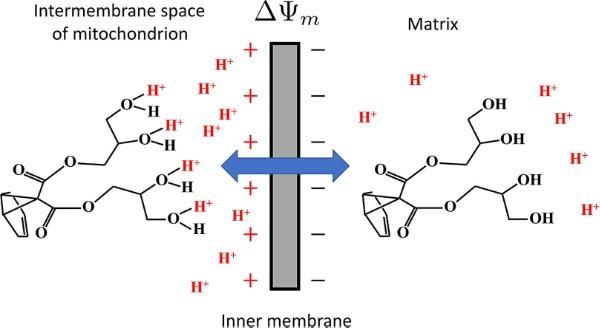
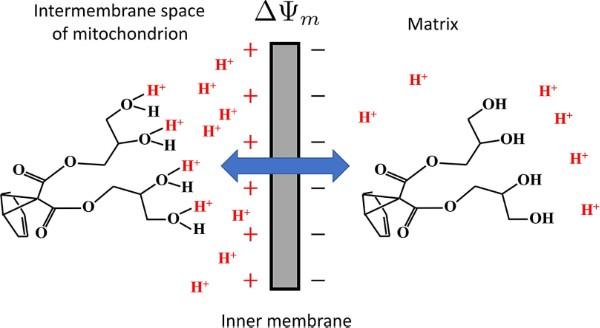
IMAGE

Credit: Kazan Federal University

Kazan University's partner in this research is the Arbuzov Institute of Organic and Physical Chemistry.

The joint team proved that water-soluble polyol-methanofullerenes C60[C9H10O4(OH)4]6 and C60[C13H18O4(OH)4]6 can decrease mitochondrial transmembrane potential. This makes them promising in the creation of targeted mitochondrial medications and composites based on them.

As the paper posits, there is currently no doubt that hyperpolarization of mitochondria and concomitant oxidative stress are associated with the development of serious pathologies, such as Parkinson's disease, Alzheimer's disease, autoimmune syndromes, some cancers, and other conditions. Hyperpolarized mitochondria have an elevated transmembrane potential because of the excess of H+ ions in the intermembrane space in comparison with the matrix (pH 8). Protonophores decrease the mitochondrial potential by facilitating electrogenic transport of protons through inner mitochondrial membrane. The most useful of them are soft protonophores which only remove the excess of the potential but don't decrease it below the necessary limit.

Natalia Kalacheva et al. state that the researched methanofullerenoles can accept protons in acidic medium characteristic for intermembrane space of hyperpolarized mitochondria. Protonated molecules transfer protons into the mitochondrial matrix. As a consequence, the proton gradient is dissipated, which causes a decrease in mitochondrial transmembrane potential and reduction in ROS production.

In the publication, the authors describe water-soluble polyol-methanofullerenes as soft protonophores because they can accept H+ ions only in hyperpolarized mitochondria and cannot penetrate normally polarized mitochondria.

The research was based at the KFU Gene and Cell Technologies Lab and funded by Project 5-100.

###

Media Contact

Yury Nurmeev
[email protected]
@KazanUni

http://kpfu.ru/eng

Related Journal Article

http://dx.doi.org/10.1016/j.bmcl.2018.02.009

Share12Tweet8Share2ShareShareShare2

Related Posts

Exercise’s Impact on SASP Biomarkers in Seniors Unexplored

February 9, 2026

UK’s Rising Synthetic Opioid Crisis: Nitazene-Linked Deaths May Be Underreported by Up to 33%

February 9, 2026

Evaluating Digital Diabetes Screening’s B2C Potential in Switzerland

February 8, 2026

Resilient Together: A Promising Post-Diagnosis Intervention

February 8, 2026
Please login to join discussion

POPULAR NEWS

  • Robotic Ureteral Reconstruction: A Novel Approach

    Robotic Ureteral Reconstruction: A Novel Approach

    82 shares
    Share 33 Tweet 21
  • Digital Privacy: Health Data Control in Incarceration

    63 shares
    Share 25 Tweet 16
  • Mapping Tertiary Lymphoid Structures for Kidney Cancer Biomarkers

    50 shares
    Share 20 Tweet 13
  • Breakthrough in RNA Research Accelerates Medical Innovations Timeline

    53 shares
    Share 21 Tweet 13

About

We bring you the latest biotechnology news from best research centers and universities around the world. Check our website.

Follow us

Recent News

Exercise’s Impact on SASP Biomarkers in Seniors Unexplored

UK’s Rising Synthetic Opioid Crisis: Nitazene-Linked Deaths May Be Underreported by Up to 33%

Mapping NYC Foot Traffic: Insights for Urban Planning

Subscribe to Blog via Email

Enter your email address to subscribe to this blog and receive notifications of new posts by email.

Join 74 other subscribers
  • Contact Us

Bioengineer.org © Copyright 2023 All Rights Reserved.

Welcome Back!

Login to your account below

Forgotten Password?

Retrieve your password

Please enter your username or email address to reset your password.

Log In
No Result
View All Result
  • Homepages
    • Home Page 1
    • Home Page 2
  • News
  • National
  • Business
  • Health
  • Lifestyle
  • Science

Bioengineer.org © Copyright 2023 All Rights Reserved.