• HOME
  • NEWS
  • EXPLORE
    • CAREER
      • Companies
      • Jobs
    • EVENTS
    • iGEM
      • News
      • Team
    • PHOTOS
    • VIDEO
    • WIKI
  • BLOG
  • COMMUNITY
    • FACEBOOK
    • INSTAGRAM
    • TWITTER
Wednesday, June 10, 2026
BIOENGINEER.ORG
No Result
View All Result
  • Login
  • HOME
  • NEWS
  • EXPLORE
    • CAREER
      • Companies
      • Jobs
        • Lecturer
        • PhD Studentship
        • Postdoc
        • Research Assistant
    • EVENTS
    • iGEM
      • News
      • Team
    • PHOTOS
    • VIDEO
    • WIKI
  • BLOG
  • COMMUNITY
    • FACEBOOK
    • INSTAGRAM
    • TWITTER
  • HOME
  • NEWS
  • EXPLORE
    • CAREER
      • Companies
      • Jobs
        • Lecturer
        • PhD Studentship
        • Postdoc
        • Research Assistant
    • EVENTS
    • iGEM
      • News
      • Team
    • PHOTOS
    • VIDEO
    • WIKI
  • BLOG
  • COMMUNITY
    • FACEBOOK
    • INSTAGRAM
    • TWITTER
No Result
View All Result
Bioengineer.org
No Result
View All Result
Home NEWS Science News

Researchers find the incident commander in the brain’s defence system

Bioengineer by Bioengineer
December 8, 2016
in Science News
Reading Time: 2 mins read
0
Share on FacebookShare on TwitterShare on LinkedinShare on RedditShare on Telegram
IMAGE

Credit: Line Reinert

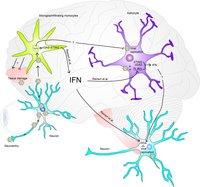
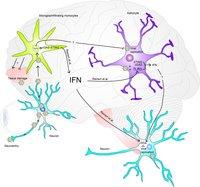
Imagine seeing a building on fire. You grab the phone and call the fire service. What happens next can be compared to the discovery made by researchers from Aarhus University. They have discovered that a specific type of cell in the brain, microglia, acts as the incident commander in the defence against the invading virus, for example a herpes virus.

In cases of viral infection in the brain, this cell type coordinates reinforcements. It recruits additional microglia to the area, which in turn warns the neighbouring cells that something dangerous is happening. These cells are called astroglia and neurons.

After this, the 'fire' is put out, and 'medical help' is called in via proteins, so the cells that have been injured or killed can be removed.

"Viruses which travel via nerve cells into the brain are recognised by several types of cells, though not all cells are able to defend themselves against the infection. But microglia can, and through an alarm system (cGAS/STING), they are able to initiate a very strong immune reaction and suppress the virus," explains one of the researchers behind the discovery, Line Reinert from the Department of Biomedicine at Aarhus University.

The results have just been published in Nature Communications, and on the basis of the new knowledge the researchers hope to be able to contribute to new and better treatment of brain diseases such as multiple sclerosis, Alzheimer's disease and potentially also psychiatric disorders.

"We have identified and described a communication network that begins in the brain, when the cGAS/STING alarm system is activated. This new knowledge can potentially be utilised to prevent other types of diseases of the brain, where the same alarm system is either not activated or is activated too much," says Line Reinert.

The next step is to look at how damage to the brain occurs during infections and other diseases, and examine which mechanisms the brain uses to find the balance between the good and harmful aspects of the immune system.

"The brain is an organ which cannot withstand much damage. So it must therefore have, on the one hand, defence mechanisms against infections and, on the other hand, not utilise these too strongly. If microglia are activated too much, they do not only suppress the virus, but also damage some of the brain tissue. We are now working to understand this," says Søren Riis Paludan, who has led the project group, which has also involved other research groups from Denmark and abroad.

###

The research results – more information

Type of study: Basic research
Partners: Researchers from Aarhus University, The University of Southern Denmark and The University of Massachusetts
External funding: The Lundbeck Foundation, The Danish Council for Independent Research
Read the scientific article: Sensing of HSV-1 by the cGAS-STING pathway in microglia orchestrates antiviral defence in the CNS

Media Contact

Line Reinert
[email protected]
45-87-16-72-69
@aarhusuni

http://www.au.dk

############

Story Source: Materials provided by Scienmag
Share12Tweet8Share2ShareShareShare2

Related Posts

Thalamus-Brainstem Network Shapes Biased Decisions

June 10, 2026
Ligand Control Unlocks Versatile Ethylene Dicarbofunctionalization — Chemistry

Ligand Control Unlocks Versatile Ethylene Dicarbofunctionalization

June 10, 2026

Less than 25% of stroke patients and about 14% of brain injury survivors receive inpatient rehabilitation

June 10, 2026

Newly Identified TMEM63B Variant Drives Severe Respiratory Disorder Through Loss-of-Function Mutation

June 10, 2026
Please login to join discussion

POPULAR NEWS

  • ESMO 2025: mRNA COVID Vaccines Enhance Efficacy of Cancer Immunotherapy

    324 shares
    Share 130 Tweet 81
  • Saying Goodbye to PGY-6: Pediatric Fellowship Realities

    92 shares
    Share 37 Tweet 23
  • Multi-Hospital Study Reveals Long Covid Burden Is Twice as High as Current Estimates

    90 shares
    Share 36 Tweet 22
  • Common Food Preservatives Associated with Elevated Blood Pressure and Increased Heart Disease Risk

    58 shares
    Share 23 Tweet 15

About

We bring you the latest biotechnology news from best research centers and universities around the world. Check our website.

Follow us

Recent News

Thalamus-Brainstem Network Shapes Biased Decisions

Ligand Control Unlocks Versatile Ethylene Dicarbofunctionalization

Less than 25% of stroke patients and about 14% of brain injury survivors receive inpatient rehabilitation

Subscribe to Blog via Email

Enter your email address to subscribe to this blog and receive notifications of new posts by email.

Join 82 other subscribers
  • Contact Us

Bioengineer.org © Copyright 2023 All Rights Reserved.

Welcome Back!

Login to your account below

Forgotten Password?

Retrieve your password

Please enter your username or email address to reset your password.

Log In
No Result
View All Result
  • Homepages
    • Home Page 1
    • Home Page 2
  • News
  • National
  • Business
  • Health
  • Lifestyle
  • Science

Bioengineer.org © Copyright 2023 All Rights Reserved.