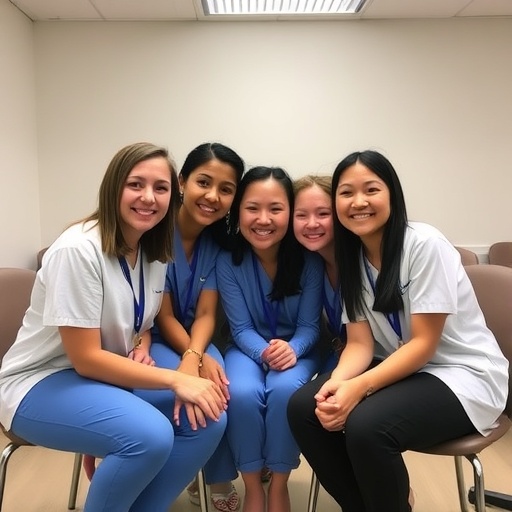
A replication of the 1997 "Woodhull Study on Nursing and the Media" found nurses continue to be underrepresented as sources in heath news stories despite their increasing levels of education and expertise. A companion study found biases among newsrooms about women, nurses and positions of authority in health care can impede a journalist's use of nurses as sources in health news stories, despite unique perspectives that could enrich a story. The research, led by the George Washington University School of Nursing's Center for Health Policy and Media Engagement, was published in two parts in the Journal of Nursing Scholarship and the American Journal of Nursing.
"The lack of progress in nurses' representation in health news stories over the past 20 years was stunning, particularly since the 2010 Institute of Medicine report on 'The Future of Nursing' noted that we can't transform health care and promote the health of the public without recognizing and tapping into the special expertise of nurses," said Diana J. Mason, the principal investigator of the GW study and a registered nurse and senior policy service professor for GW's Center for Health Policy and Media Engagement.
The original Woodhull Study found nurses were represented as sources in less than 4 percent of health news stories in leading print newspapers, newsweeklies and health care trade publications of the day. Using the same publications as the original study, the team, which also included researchers from the Berkeley Media Studies Group, examined a randomly selected sample of 365 health news stories published in September 2017 to determine the type and subject of the article, the profession and gender of speakers and the number of times nurses were referenced without being quoted. They discovered that nurses were identified as sources in 2 percent of health news coverage and mentioned in 13 percent of health news coverage overall.
In addition, the researchers conducted one-on-one telephone interviews with health journalists to better understand the barriers and facilitators to using nurses as sources in news stories. The interviews revealed an overarching theme of biases, not just among journalists, but also editors, public relations staff and health care organizations.
"It was not enough to just document that nothing has changed in 20 years," Barbara Glickstein, co-principal investigator on the study, said. "We had to understand why there has been no movement in who are considered experts."
For example, the researchers heard from participants that preconceptions exist in health news about positions of authority, placing "rock-star doctors" at the top of their lists of sources. The participants explained that their newsroom cultures typically affect their selection of sources and that they have had to defend using a nurse as a source.
"Journalists and the media play an important role in educating the public about issues affecting health and health care, but their biases about who are credible experts is limiting the richness of their reporting," Jean Johnson, executive director of the Center for Health Policy and Media Engagement, said. "If journalists aren't interviewing nurses, they may be missing the best part of the story."
Several additional themes emerged from the interviews, including health journalists not understanding the range of nurses' roles and the nursing profession not routinely engaging journalists. The researchers note that journalists and nurses can both do more to ensure the public benefits from the knowledge and insight nurses can provide.
###
Media Contact
Timothy Pierce
[email protected]
202-994-5647
@GWtweets
http://www.gwu.edu
https://mediarelations.gwu.edu/researchers-find-no-progress-media-representation-nurses-over-last-20-years