


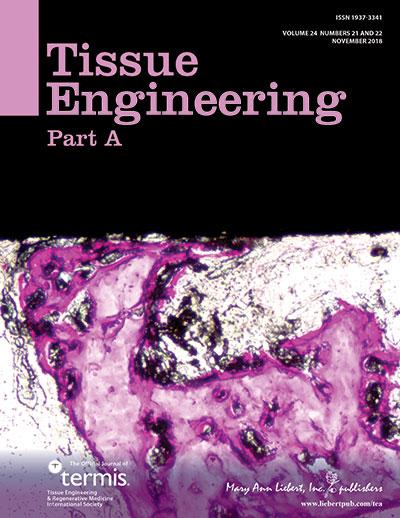
Credit: Mary Ann Liebert, Inc., publishers
New Rochelle, NY, December 7, 2018–The placenta offers an abundant source of placenta-derived mesenchymal stem cells (pMSCs), which a new study has shown can readily form cell sheets that could be implanted in children with congenital heart defects and offer benefits for heart repair and regeneration compared to commonly used synthetic material-based scaffolds. Congenital heart disease is the leading cause of birth-defect-related illness and death. The placenta can be readily collected at birth and the cells harvested for pediatric reparative procedures, as described in the study published in Tissue Engineering, Part A, peer-reviewed journal from Mary Ann Liebert, Inc., publishers. Click here to read the full-text article free on the Tissue Engineering website through January 7, 2019.
Sitaram Emani, MD, Breanna Piekarski, RN, and Sirisha Emani, Children’s Hospital, Boston, MA and Erin Roberts, Kevin Huang, and Joyce Wong, PhD, Boston University, MA are the coauthors of the article entitled “Evaluation of Placental Mesenchymal Stem Cell Sheets for Myocardial Repair and Regeneration .” In the study, the researchers evaluated MSCs independent of their source, demonstrated their ability to form cell sheets, and described other beneficial effects related to paracrine section and cell-cell interactions at the site of MSC implantation. The ability of MSCs to secrete factors to induce cardioprotection, stimulate angiogenesis, and promote migration, proliferation and differentiation of local cardiac stem cells can all affect tissue repair.
“This tremendous work from the Emani Lab at Boston Children’s Hospital furthers the effort to establish the use of placenta-derived mesenchymal stem cells in tissue repair. Excitingly, the study demonstrates that undifferentiated placental MSCs support the migration and proliferation of cardiac cells, ultimately establishing a pathway toward cardiac tissue regeneration,” says Tissue Engineering Co-Editor-in-Chief John P. Fisher, PhD, Fischell Family Distinguished Professor & Department Chair, and Director of the NIH Center for Engineering Complex Tissues at the University of Maryland.
###
About the Journal
Tissue Engineering is an authoritative peer-reviewed journal published monthly online and in print in three parts: Part A, the flagship journal published 24 times per year; Part B: Reviews, published bimonthly, and Part C: Methods, published 12 times per year. Led by Co-Editors-in-Chief Antonios G. Mikos, PhD, Louis Calder Professor at Rice University, Houston, TX, and John P. Fisher, PhD, Fischell Family Distinguished Professor & Department Chair, and Director of the NIH Center for Engineering Complex Tissues at the University of Maryland, the Journal brings together scientific and medical experts in the fields of biomedical engineering, material science, molecular and cellular biology, and genetic engineering. Leadership of Tissue Engineering Parts B (Reviews) and Part C (Methods) is provided by Katja Schenke-Layland, PhD, Eberhard Karls University, Tübingen and John A. Jansen, DDS, PhD, Radboud University, respectively. Tissue Engineering is the official journal of the Tissue Engineering & Regenerative Medicine International Society (TERMIS). Complete tables of content and a sample issue may be viewed on the Tissue Engineering) website.
About the Publisher
Mary Ann Liebert, Inc., publishers is a privately held, fully integrated media company known for establishing authoritative peer-reviewed journals in many promising areas of science and biomedical research, including Stem Cells and Development, Human Gene Therapy, and Advances in Wound Care. Its biotechnology trade magazine, GEN (Genetic Engineering & Biotechnology News), was the first in its field and is today the industry’s most widely read publication worldwide. A complete list of the firm’s 80 journals, books, and newsmagazines is available on the Mary Ann Liebert, Inc., publishers website.
Media Contact
Kathryn Ryan
[email protected]
914-740-2250
Original Source
https:/
Related Journal Article
http://dx.
News source: https://scienmag.com/



