Researchers have discovered the underlying genetic variation that leads to congenital idiopathic megaesophagus (CIM), a frequently deadly gastrointestinal disorder that commonly affects German shepherd dogs. Leigh Anne Clark of Clemson University, U.S. and colleagues report the discovery in a new study publishing March 10th in the journal PLOS Genetics.
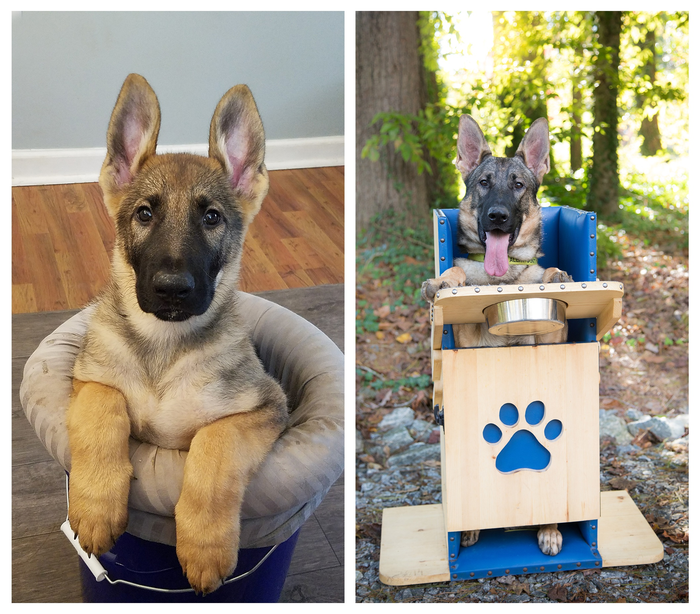
Credit: Beth Grant (CC-BY 4.0, https://creativecommons.org/licenses/by/4.0/)
Researchers have discovered the underlying genetic variation that leads to congenital idiopathic megaesophagus (CIM), a frequently deadly gastrointestinal disorder that commonly affects German shepherd dogs. Leigh Anne Clark of Clemson University, U.S. and colleagues report the discovery in a new study publishing March 10th in the journal PLOS Genetics.
Megaesophagus is an inherited disorder that causes puppies to develop an enlarged esophagus that fails to pass food into the stomach. Often, these puppies cough up their meals and don’t gain weight effectively, leading to euthanasia. In the new study, Clark and her colleagues performed a genome-wide scan to identify genes associated with the disorder. The screen pointed to a genetic variant in the gene that codes for melanin-concentrating hormone receptor 2 (MCHR2), a protein that plays a role in appetite, weight and the movement of food through the gastrointestinal tract. The researchers also discovered that male German shepherds have the disorder almost twice as often as females. They suspect that the higher levels of estrogen in female dogs may help protect them from developing a severe form of the disease.
After identifying the genetic region linked to megaesophagus, the researchers developed a genetic test for the disease. The results of the test, along with the dog’s sex, can predict whether a dog will develop the disease with 75% accuracy. Dog breeders can now use the test to make breeding decisions that will reduce the risk that puppies will develop the disease.
Clark adds, “By identifying the major genetic contributor to CIM in German shepherd dogs, we have provided breeders with a tool that they can use to reduce disease incidence while preserving genetic diversity.”
#####
In your coverage, please use this URL to provide access to the freely available article in PLOS Genetics:
http://journals.plos.org/plosgenetics/article?id=10.1371/journal.pgen.1010044
Citation: Bell SM, Evans JM, Evans KM, Tsai KL, Noorai RE, Famula TR, et al. (2022) Congenital idiopathic megaesophagus in the German shepherd dog is a sex-differentiated trait and is associated with an intronic variable number tandem repeat in Melanin-Concentrating Hormone Receptor 2. PLoS Genet 18(3): e1010044. https://doi.org/10.1371/journal.pgen.1010044
Author Countries: United States, United Kingdom
Funding: This work was supported in part by grants to LAC from the Collie Health Foundation (www.colliehealth.org) and the American Kennel Club (AKC) Canine Health Foundation (02709; www.akcchf.org), as well as a donation by the Upright Canine Brigade (www.caninemegaesophagusinfo.com). SMB was supported by an AKC Canine Health Foundation Clinician-Scientist Fellowship (02654-E) sponsored by the Orthopedic Foundation for Animals (www.ofa.org). REN was supported by an Institutional Development Award from the National Institute of General Medical Sciences of the National Institutes of Health (P20GM109094; www.nigms.nih.gov). The funders had no role in study design, data collection and analysis, decision to publish, or preparation of the manuscript.
Journal
PLoS Genetics
DOI
10.1371/journal.pgen.1010044
Method of Research
Experimental study
Subject of Research
Animals
COI Statement
The authors have declared that no competing interests exist.