

• HOME
  • NEWS
  • EXPLORE
    • CAREER
      • Companies
      • Jobs
    • EVENTS
    • iGEM
      • News
      • Team
    • PHOTOS
    • VIDEO
    • WIKI
  • BLOG
  • COMMUNITY
    • FACEBOOK
    • INSTAGRAM
    • TWITTER
Saturday, February 7, 2026
BIOENGINEER.ORG
No Result
View All Result
  • Login
  • HOME
  • NEWS
  • EXPLORE
    • CAREER
      • Companies
      • Jobs
        • Lecturer
        • PhD Studentship
        • Postdoc
        • Research Assistant
    • EVENTS
    • iGEM
      • News
      • Team
    • PHOTOS
    • VIDEO
    • WIKI
  • BLOG
  • COMMUNITY
    • FACEBOOK
    • INSTAGRAM
    • TWITTER
  • HOME
  • NEWS
  • EXPLORE
    • CAREER
      • Companies
      • Jobs
        • Lecturer
        • PhD Studentship
        • Postdoc
        • Research Assistant
    • EVENTS
    • iGEM
      • News
      • Team
    • PHOTOS
    • VIDEO
    • WIKI
  • BLOG
  • COMMUNITY
    • FACEBOOK
    • INSTAGRAM
    • TWITTER
No Result
View All Result
Bioengineer.org
No Result
View All Result
Home NEWS Science News Health

Researchers develop new tools in the fight against diabetic blindness

Bioengineer by Bioengineer
April 25, 2018
in Health
Reading Time: 2 mins read
0
Share on FacebookShare on TwitterShare on LinkedinShare on RedditShare on Telegram
IMAGE

Credit: Credit: Shyam Chaurasia.

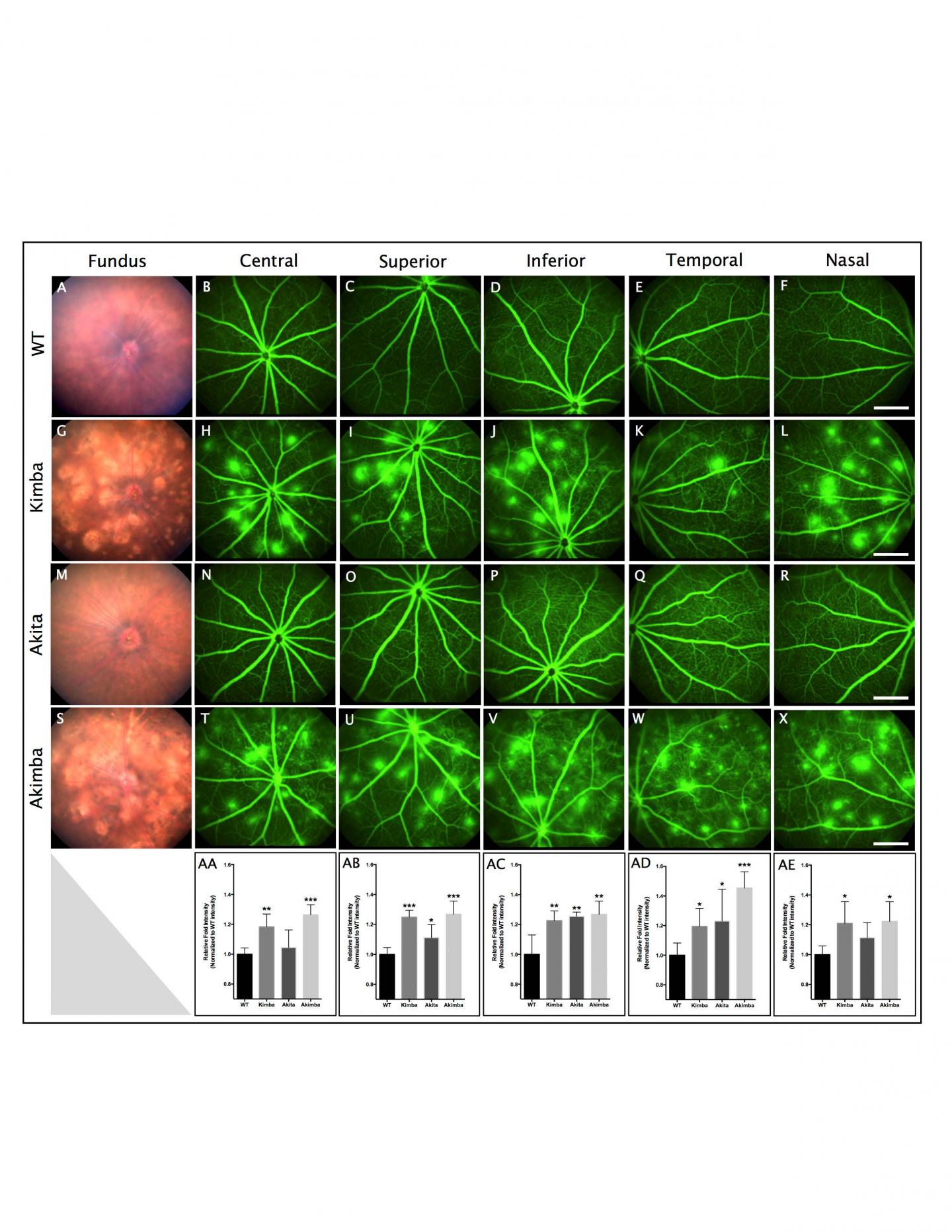
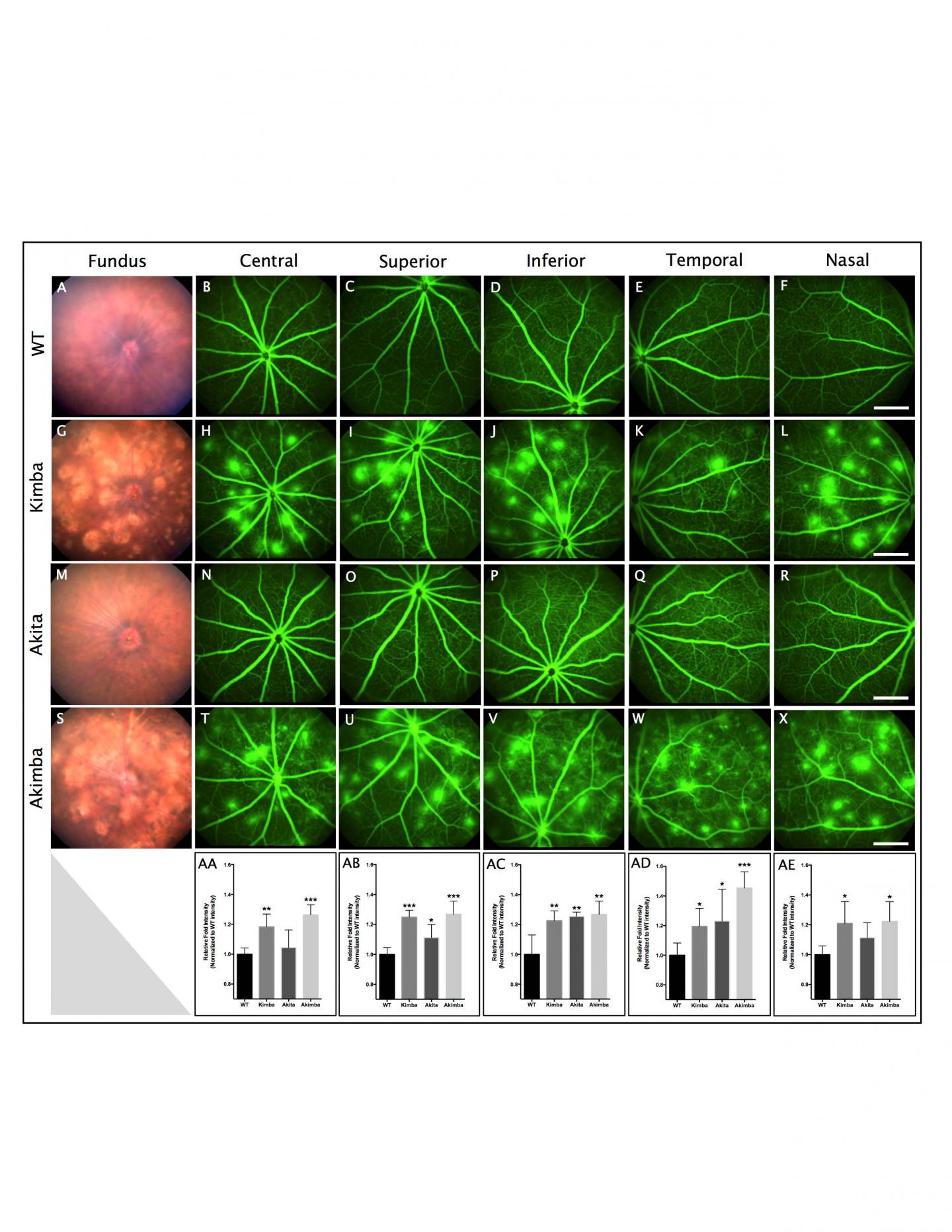
Diabetic retinopathy is a retinal microvascular disease that often causes blindness in adults who have had diabetes mellitus for 10 years or more. Estimates are that 600 million people will have some sort of diabetic retinopathy by 2040. Previously, no good animal models existed that scientists could use to study the disease, its diagnosis or potential treatments. Now, a team of researchers led by the University of Missouri has employed a mouse model exhibiting diabetic retinopathy symptoms that could lead to future translational research studies.

"Diabetic retinopathy is a common retinal complication of diabetes mellitus that can be categorized in different stages in humans," said Shyam Chaurasia, an assistant professor of ophthalmology and vision sciences research in the MU College of Veterinary Medicine. "Multiple interlinked pathways–including malfunctions in the immune system–lead to cellular damage. These vascular and neuronal abnormalities in the retina lead to 'blind spots' and complete blindness. With the prevalence of diabetes reaching record levels, it is important to develop the tools needed to combat this disease."

The team focused on a specific inflammasome, a protein responsible for the activation of inflammatory responses, called the NLRP3 inflammasome. Long-term hyperglycemia results in the activation of the NLRP3 inflammasome causing vascular leakages in the retina and eventually leading to neovascularization, which is the formation of new blood vessels or networks in the retina.

Using advanced retinal imaging techniques, the scientists tested these diabetic mice that processed NLRP3. Using a new technique called laser speckle flowgraphy, the group was able to create the "heat map" of blood flow volume and found significantly decreased levels in the NLRP3 mice. These mice also showed an increased prevalence of a buildup of macrophages in the retina that could be caused by immune responses involved in chronic inflammation that leads to diabetic retinopathy.

"Several new techniques and potential diagnostics are demonstrated in this study for the first time, including the laser speckle flowgraphy technique, which may prove useful in the diagnosis of human DR," Chaurasia said. "This is the first study to show that the activation of the NLRP3 inflammasome is involved in the proliferative changes observed during DR progression, proving that this mouse model could be useful in screening potential drugs to fight the disease."

The study, "The NLRP3 Inflammasome May Contribute to Pathologic Neovascularization in the Advanced Stages of Diabetic Retinopathy," was published in Scientific Reports. Major funding was provided by Department of Veterinary Medicine and Surgery Start-up grant to Dr. Chaurasia. The content is solely the responsibility of the authors and does not necessarily represent the official views of the funding agencies.

###

Media Contact

Jeff Sossamon
[email protected]
573-882-3346
@mizzounews

http://www.missouri.edu

Original Source

https://munews.missouri.edu/news-releases/2018/0425-fighting-diabetic-blindness-mu-researchers-develop-new-target-to-study-potential-treatments/ http://dx.doi.org/10.1038/s41598-018-21198-z


Share12Tweet8Share2ShareShareShare2

Related Posts

Succinate Receptor 1 Limits Blood Cell Formation, Leukemia

February 7, 2026

Palmitoylation of Tfr1 Drives Platelet Ferroptosis and Exacerbates Liver Damage in Heat Stroke

February 7, 2026

Oxygen-Enhanced Dual-Section Microneedle Patch Improves Drug Delivery and Boosts Photodynamic and Anti-Inflammatory Treatment for Psoriasis

February 7, 2026

Scientists Identify SARS-CoV-2 PLpro and RIPK1 Inhibitors Showing Potent Synergistic Antiviral Effects in Mouse COVID-19 Model

February 7, 2026
Please login to join discussion

POPULAR NEWS

  • Robotic Ureteral Reconstruction: A Novel Approach

    Robotic Ureteral Reconstruction: A Novel Approach

    82 shares
    Share 33 Tweet 21
  • Digital Privacy: Health Data Control in Incarceration

    63 shares
    Share 25 Tweet 16
  • Study Reveals Lipid Accumulation in ME/CFS Cells

    57 shares
    Share 23 Tweet 14
  • Breakthrough in RNA Research Accelerates Medical Innovations Timeline

    53 shares
    Share 21 Tweet 13

About

We bring you the latest biotechnology news from best research centers and universities around the world. Check our website.

Follow us

Recent News

Succinate Receptor 1 Limits Blood Cell Formation, Leukemia

Palmitoylation of Tfr1 Drives Platelet Ferroptosis and Exacerbates Liver Damage in Heat Stroke

Oxygen-Enhanced Dual-Section Microneedle Patch Improves Drug Delivery and Boosts Photodynamic and Anti-Inflammatory Treatment for Psoriasis

Subscribe to Blog via Email

Enter your email address to subscribe to this blog and receive notifications of new posts by email.

Join 73 other subscribers
  • Contact Us

Bioengineer.org © Copyright 2023 All Rights Reserved.

Welcome Back!

Login to your account below

Forgotten Password?

Retrieve your password

Please enter your username or email address to reset your password.

Log In
No Result
View All Result
  • Homepages
    • Home Page 1
    • Home Page 2
  • News
  • National
  • Business
  • Health
  • Lifestyle
  • Science

Bioengineer.org © Copyright 2023 All Rights Reserved.
