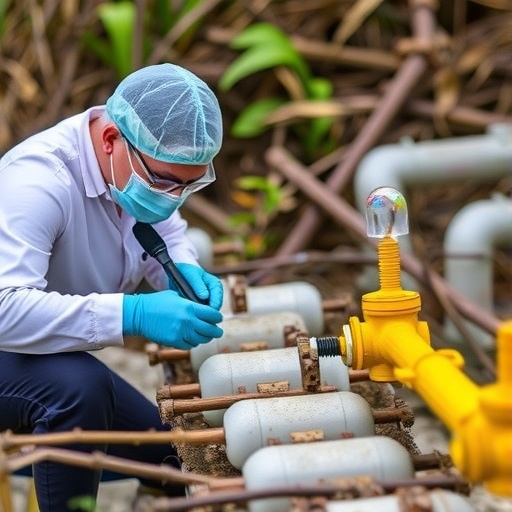
Researchers at Germany’s Helmholtz-Zentrum Dresden-Rossendorf (HZDR) have unveiled two experimental routes to dismantle PFAS—so-called “forever chemicals” notorious for their resistance to degradation. The approach combines physics-driven reactions with careful chemistry measurements to target per- and polyfluoroalkyl substances (PFAS) found in wastewater and natural waters. The work aims to reduce PFAS releases into rivers and ultimately protect drinking-water supplies.
PFAS contain extremely stable carbon–fluorine bonds that make conventional treatment difficult. With more than 10,000 related compounds used industrially, the concern is not only their persistence but also their potential biological effects. Recent detections of PFAS in the Elbe River underscore the urgency of technologies that can break down these molecules rather than merely concentrate or transfer them.
In one process, hydrodynamic cavitation forces PFAS-enriched water through a constriction, generating microscopic vapor bubbles. Long-chain PFAS tend to adsorb onto the bubble surfaces. As bubbles collapse downstream, intense local conditions—temperature spikes of thousands of degrees Celsius—are coupled with reactive hydroxyl radicals, which can attack intermediate products and accelerate molecular breakdown.
In tap-water experiments using the benchmark compound PFOS, longer treatment times increased fluoride release steadily. By the end of the cavitation tests, researchers estimated roughly 37% of dissolved PFOS molecules were degraded at a stable rate, along with mineralization of organically bound fluorine. Follow-up experiments are underway to push degradation beyond 80% and drive further defluorination.
The second route uses cold atmospheric plasma under ambient conditions, paired with gas dispersion to bring PFAS to where reactions occur. Plasma is generated at the water surface while gas is introduced into the contaminated water. Because PFAS attach to gas-bubble interfaces, the rising bubbles continuously circulate contaminated material into the plasma zone.
This setup enabled near-complete degradation of both long- and short-chain PFAS. About 35% of fluorine atoms associated with the target molecules were released as fluoride salts. While the kinetics are faster than cavitation, the researchers note a tradeoff: higher energy consumption per treated volume and a complex mixture of transformation products, including gaseous species.
Because both methods have different strengths, the team is now working toward scalability. Reactor volumes are being increased from tens of milliliters to several liters through multiple electrodes and improved gas injection. Ultimately, the researchers plan to merge plasma’s highly reactive species with cavitation’s radical-generating collapse events.
If that combined strategy performs as expected, it could offer an efficient, next-generation PFAS treatment platform for real-world water systems. The initial findings have been published in scientific journals with DOIs reported by the team.
Keywords
PFAS, hydrodynamic cavitation, cold atmospheric plasma, defluorination, environmental chemistry, water treatment
Subject of Research: Not applicable
Article Title: Enhanced degradation and defluorination of perfluorooctane sulfonate (PFOS) in tap water using gas-dispersed cold atmospheric plasma
News Publication Date: 13-Jun-2026
Web References: http://dx.doi.org/10.1038/s41598-026-57490-6
References:
Amit Kumar, Ysabel Huaccallo-Aguilar, Holger Kryk, Uwe Hampel, Sebastian Felix Reinecke: Enhanced degradation and defluorination of perfluorooctane sulfonate (PFOS) in tap water using gas-dispersed cold atmospheric plasma, Scientific Reports, 2026 (DOI: 10.1038/s41598-026-57490-6).
Amit Kumar, Anett Georgi, Ysabel Huaccallo-Aguilar, Markus Meier, Holger Kryk, Sebastian Felix Reinecke, Uwe Hampel: Degradation and defluorination of perfluorooctane sulfonate (PFOS) forever chemical in water using hydrodynamic cavitation treatment, Chemical Engineering Journal Advances, 2026 (DOI: 10.1016/j.ceja.2026.101046).
Image Credits: B. Schröder/HZDR
Tags: advanced water purification technologiesbreaking down forever chemicals in wastewaterchemical and physical methods to degrade PFASchemical stability of per- and polyfluoroalkyl substancesenvironmental impact of PFAS pollutionfluoride release during PFAS degradationhydrodynamic cavitation for chemical breakdowninnovative water treatment methods for PFASnew approaches to PFAS detoxificationPFAS contamination removal techniquesPFAS detection in natural water sourcesprotecting drinking water from persistent chemical pollutants