• HOME
  • NEWS
  • EXPLORE
    • CAREER
      • Companies
      • Jobs
    • EVENTS
    • iGEM
      • News
      • Team
    • PHOTOS
    • VIDEO
    • WIKI
  • BLOG
  • COMMUNITY
    • FACEBOOK
    • INSTAGRAM
    • TWITTER
Monday, July 13, 2026
BIOENGINEER.ORG
No Result
View All Result
  • Login
  • HOME
  • NEWS
  • EXPLORE
    • CAREER
      • Companies
      • Jobs
        • Lecturer
        • PhD Studentship
        • Postdoc
        • Research Assistant
    • EVENTS
    • iGEM
      • News
      • Team
    • PHOTOS
    • VIDEO
    • WIKI
  • BLOG
  • COMMUNITY
    • FACEBOOK
    • INSTAGRAM
    • TWITTER
  • HOME
  • NEWS
  • EXPLORE
    • CAREER
      • Companies
      • Jobs
        • Lecturer
        • PhD Studentship
        • Postdoc
        • Research Assistant
    • EVENTS
    • iGEM
      • News
      • Team
    • PHOTOS
    • VIDEO
    • WIKI
  • BLOG
  • COMMUNITY
    • FACEBOOK
    • INSTAGRAM
    • TWITTER
No Result
View All Result
Bioengineer.org
No Result
View All Result
Home NEWS Science News

Researchers develop ‘living diode’ using cardiac muscle cells

Bioengineer by Bioengineer
February 14, 2017
in Science News
Reading Time: 2 mins read
0
Share on FacebookShare on TwitterShare on LinkedinShare on RedditShare on Telegram
IMAGE

Credit: University of Notre Dame/Matt Cashore

Scientists are one step closer to mimicking the way biological systems interact and process information in the body – a vital step toward developing new forms of biorobotics and novel treatment approaches for several muscle-related health problems such as muscular degenerative disorders, arrhythmia and limb loss.

Using cardiac muscle cells and cardiac fibroblasts – cells found in connective heart tissue – researchers at the University of Notre Dame have created a "living diode," which can be used for cell-based information processing, according to a recent study in Advanced Biosystems. Bioengineers created the muscle-based circuitry through a novel, self-forming, micro patterning approach.

Using muscle cells opens the door to functional, biological structures or "computational tissues" that would allow an organ to control and direct mechanical devices in the body. The design arranges the two types of cells in a rectangular pattern, separating excitable cells from nonexcitable cells, allowing the team to transduce electrical signals unidirectionally and achieve a diode function using living cells. In addition to the diode-like function, the natural pacing ability of the muscle cells allowed Pinar Zorlutuna, assistant professor of aerospace and mechanical engineering, and her team to pass along information embedded in the electrical signals by modulating the frequency of the cells' electrical activity. Zorlutuna's research was funded by the National Science Foundation.

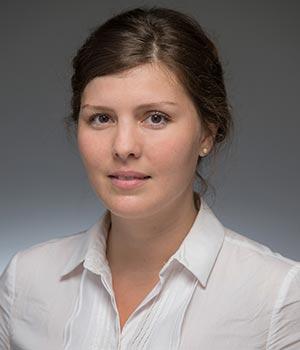
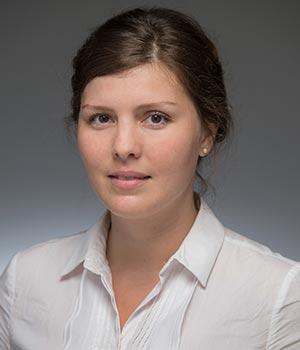
"Muscle cells have the unique ability to respond to external signals while being connected to fibroblasts internally through intercellular junctions. By combining these two cell types, we have the ability to initiate, amplify and propagate signals directionally," said Zorlutuna, who is also director of the Tissue Engineering Laboratory at the university. "The success of these muscle-cell diodes offers a path toward linking such cell-based circuitry to a living system – and creating functional control units for biomedical engineering applications such as bioactuators or biosensors."

The team's work presents a new option in biocomputing, which has focused primarily on using gene circuitries of genetically modified single-cells or neuronal networks doped with chemical additives to create information processing systems. The single-cell options are slower to process information since they relay on chemical processes, and neuronal-based approaches can misfire signals, firing backward up to 10 percent of the time.

Zorlutuna explores biomimetic environments in order to understand and control cell behavior. She also studies cell-cell and cell-environment interactions through tissue and genetic engineering, and micro- and nanotechnology at the Notre Dame Center for Nano Science and Technology. She is a researcher at the University's Center for Stem Cells and Regenerative Medicine and the Harper Cancer Research Institute.

###

Media Contact

Pinar Zorlutuna
[email protected]
574-631-8543
@ND_news

http://www.nd.edu

############

Story Source: Materials provided by Scienmag

Share12Tweet8Share2ShareShareShare2

Related Posts

Bioinspired Microcapsule Reactor Using Engineered Probiotics for IBD Treatment

July 13, 2026
KAIST Uncovers Key to Overcoming Semiconductor Electrical Bottleneck

KAIST Uncovers Key to Overcoming Semiconductor Electrical Bottleneck

July 13, 2026

Nationwide Study Reveals Multimorbidity Factors in Older Chinese Adults

July 12, 2026

Clinicopathologic Study Reveals Amyloid Clearance in Alzheimer’s Disease

July 12, 2026
Please login to join discussion

POPULAR NEWS

  • Detection of EDCs in Breast Milk and Infant Urine Up to Six Months Highlights Early Exposure Risks

    77 shares
    Share 31 Tweet 19
  • New Drug Candidate Developed at McMaster Shows Potential for Treating Brain Cancer

    58 shares
    Share 23 Tweet 15
  • KTU Researchers Explore Ultrasound’s Role in Enhancing Blood Flow Beyond Diagnostics

    53 shares
    Share 21 Tweet 13
  • Experimental Therapy Simultaneously Destroys Prostate Tumor Cells and Reactivates Antitumor Immunity

    46 shares
    Share 18 Tweet 12

About

BIOENGINEER.ORG

We bring you the latest biotechnology news from best research centers and universities around the world. Check our website.

Follow us

Recent News

Bioinspired Microcapsule Reactor Using Engineered Probiotics for IBD Treatment

KAIST Uncovers Key to Overcoming Semiconductor Electrical Bottleneck

Nationwide Study Reveals Multimorbidity Factors in Older Chinese Adults

Subscribe to Blog via Email

Enter your email address to subscribe to this blog and receive notifications of new posts by email.

Join 85 other subscribers
  • Contact Us

Bioengineer.org © Copyright 2023 All Rights Reserved.

Welcome Back!

Login to your account below

Forgotten Password?

Retrieve your password

Please enter your username or email address to reset your password.

Log In
No Result
View All Result
  • Homepages
    • Home Page 1
    • Home Page 2
  • News
  • National
  • Business
  • Health
  • Lifestyle
  • Science

Bioengineer.org © Copyright 2023 All Rights Reserved.