• HOME
  • NEWS
  • EXPLORE
    • CAREER
      • Companies
      • Jobs
    • EVENTS
    • iGEM
      • News
      • Team
    • PHOTOS
    • VIDEO
    • WIKI
  • BLOG
  • COMMUNITY
    • FACEBOOK
    • INSTAGRAM
    • TWITTER
Sunday, October 4, 2026
BIOENGINEER.ORG
No Result
View All Result
  • Login
  • HOME
  • NEWS
  • EXPLORE
    • CAREER
      • Companies
      • Jobs
        • Lecturer
        • PhD Studentship
        • Postdoc
        • Research Assistant
    • EVENTS
    • iGEM
      • News
      • Team
    • PHOTOS
    • VIDEO
    • WIKI
  • BLOG
  • COMMUNITY
    • FACEBOOK
    • INSTAGRAM
    • TWITTER
  • HOME
  • NEWS
  • EXPLORE
    • CAREER
      • Companies
      • Jobs
        • Lecturer
        • PhD Studentship
        • Postdoc
        • Research Assistant
    • EVENTS
    • iGEM
      • News
      • Team
    • PHOTOS
    • VIDEO
    • WIKI
  • BLOG
  • COMMUNITY
    • FACEBOOK
    • INSTAGRAM
    • TWITTER
No Result
View All Result
Bioengineer.org
No Result
View All Result
Home Headlines

Researchers develop device that emulates human kidney function

Bioengineer.org by Bioengineer.org
January 19, 2018
in Headlines, Health, Science News
Reading Time: 2 mins read
0
Share on FacebookShare on TwitterShare on LinkedinShare on RedditShare on Telegram
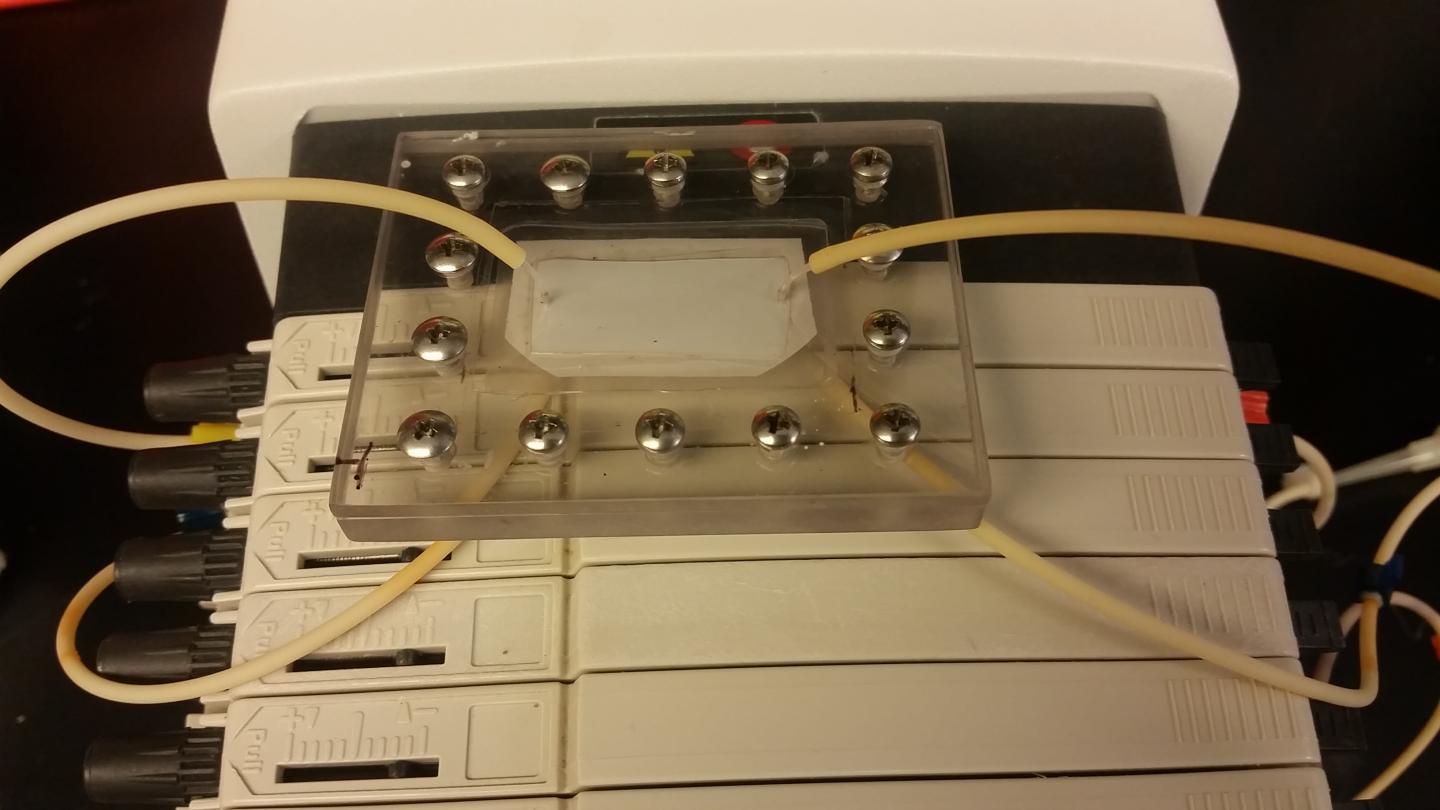
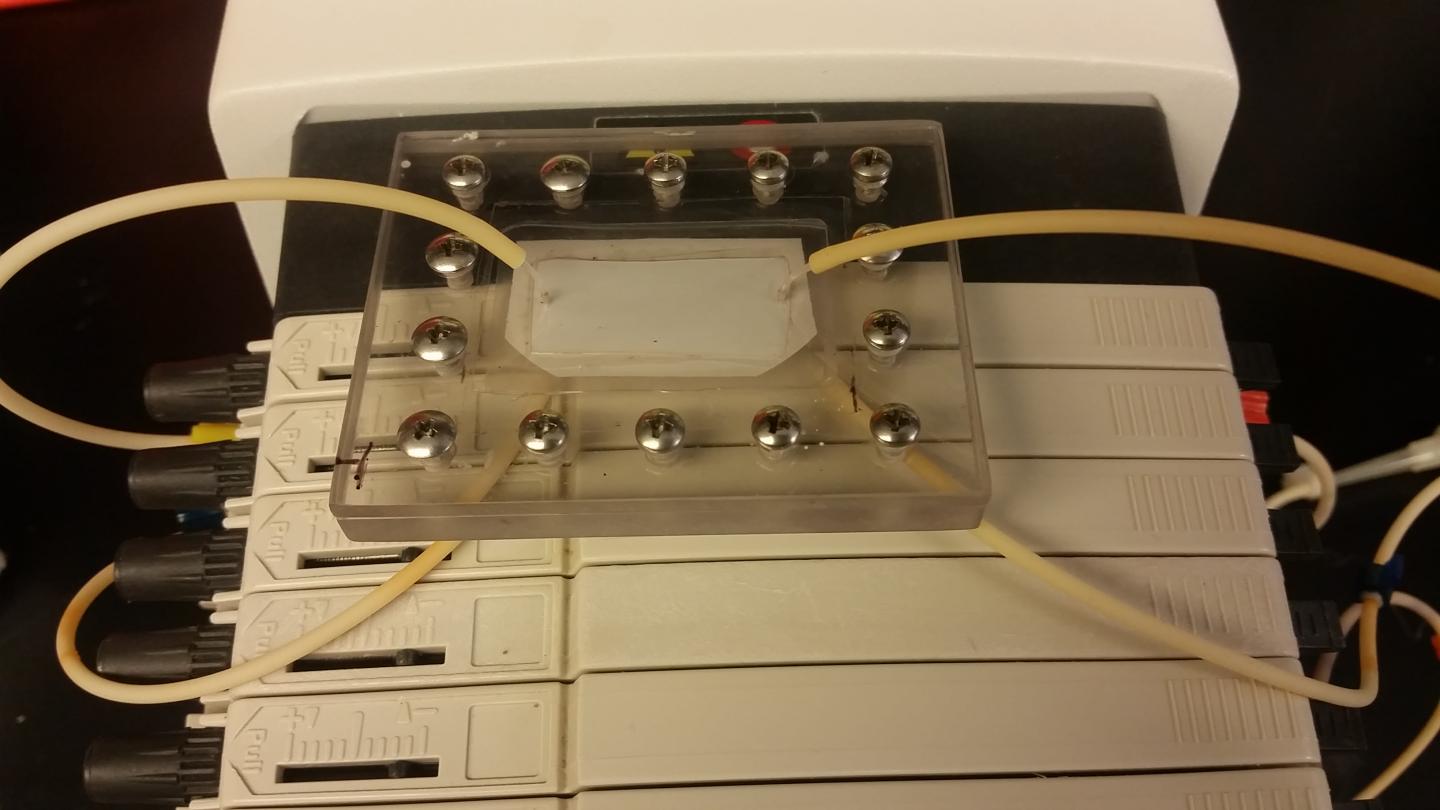
IMAGE

Credit: Gretchen Mahler

BINGHAMTON, NY – Instead of running tests on live kidneys, researchers at Binghamton, University State University of New York have developed a model kidney for working out the kinks in medicines and treatments.

Developed by Assistant Professor Gretchen Mahler and Binghamton biomedical engineering alumna Courtney Sakolish PhD '16, the reusable, multi-layered and microfluidic device incorporates a porous growth substrate, with a physiological fluid flow, and the passive filtration of the capillaries around the end of a kidney, called the glomerulus, where waste is filtered from blood.

"This is a unique platform to study interactions between drugs and cells or tissues, specifically in the kidney, where current models were lacking," said Sakolish. "These platforms will, hopefully, in the future, be used as an animal alternative during pre-clinical testing to more accurately direct these studies toward successful results in humans."'

"This is tissue engineering, but not for the purpose or replacing an organ or tissue in a person," said Mahler. "The idea is that we can recreate the major organ functions in a simplified way for use as a drug screening tool. Finding new drugs is very hard, expensive and inefficient. We hope that by using human cells in a physiological environment we can help to direct resources toward the most promising new drug candidates and determine that other new drug candidates will fail, faster."

Results suggest that cells grown in the device exhibit more natural behaviors than when grown in traditional culturing methods, and the filtration by the glomerulus is necessary for healthy cell function.

"We found that the more complex, dynamic culturing conditions (like those used in this project) are necessary to accurately predict renal drug toxicity in human systems," said Sakolish. "When we compared physiological renal function and drug toxicity in traditional static culturing against our new model, we found significant differences in the ways that cells behaved. In our platform, cells looked and acted like those that you would find in the body, showing more sensitive responses to drugs than traditional static culturing."

Mahler said that while others have developed microfluidic models of the proximal tubule before, this is the first to offer glomerular filtration.

"This type of device uses human cells in a dynamic, more physiologic environment, potentially making it better at predicting the body's response to drugs than animals (animal effectiveness studies often don't translate to humans) or static cell cultures, which are the most commonly used preclinical screening tools," said Mahler.

###

This work was supported by the Clifford D. Clark Graduate Fellowship, the Binghamton University Howard Hughes Medical Institute Program, the National Science Foundation, National Institutes of Health, the SUNY Research Foundation and the Michael Connolly Endowment Fund.

The paper, "A novel microfluidic device to model the human proximal tubule and glomerulus," was published in RSC Advances.

Media Contact

Gretchen Mahler
[email protected]
607-777-5238
@binghamtonu

http://www.binghamton.edu

Share12Tweet8Share2ShareShareShare2

Related Posts

Forskolin Extract Boosts Gut Hormone GLP-1 and Strengthens Intestinal Barrier in Cell Study

Forskolin Extract Boosts Gut Hormone GLP-1 and Strengthens Intestinal Barrier in Cell Study

October 4, 2026
Empathy, Not Mood, Drives Helping in Autistic Children, Study Finds

Empathy, Not Mood, Drives Helping in Autistic Children, Study Finds

October 4, 2026

Simple Sugar Dextrose Emerges as Best Carbon Source for Zero-Exchange Shrimp Hatcheries

October 4, 2026

Nose-to-Brain Protein Delivery Shows Promise for Protecting Dopamine Neurons in Parkinson’s Models

October 4, 2026
Please login to join discussion

POPULAR NEWS

  • Alloys That Shrink Their Own Grains: New PIX Mechanism Refines Metals With Heat Alone

    Alloys That Shrink Their Own Grains: New PIX Mechanism Refines Metals With Heat Alone

    29 shares
    Share 12 Tweet 7
  • Endurance Exercise Reshapes the Liver in Males and Females Through Distinct Molecular Routes

    29 shares
    Share 12 Tweet 7
  • Single Transcription Factor PU.1 Rapidly Converts Fibroblasts into Macrophage-Lineage Cells

    29 shares
    Share 12 Tweet 7
  • New Scale Measures How Ready Nurse Educators Really Are for the AI Era

    29 shares
    Share 12 Tweet 7

About

We bring you the latest biotechnology news from best research centers and universities around the world. Check our website.

Follow us

Recent News

Alloys That Shrink Their Own Grains: New PIX Mechanism Refines Metals With Heat Alone

Endurance Exercise Reshapes the Liver in Males and Females Through Distinct Molecular Routes

Single Transcription Factor PU.1 Rapidly Converts Fibroblasts into Macrophage-Lineage Cells

Subscribe to Blog via Email

Enter your email address to subscribe to this blog and receive notifications of new posts by email.

Join 85 other subscribers
  • Contact Us

Bioengineer.org © Copyright 2023 All Rights Reserved.

Welcome Back!

Login to your account below

Forgotten Password?

Retrieve your password

Please enter your username or email address to reset your password.

Log In
No Result
View All Result
  • Homepages
    • Home Page 1
    • Home Page 2
  • News
  • National
  • Business
  • Health
  • Lifestyle
  • Science

Bioengineer.org © Copyright 2023 All Rights Reserved.