• HOME
  • NEWS
  • EXPLORE
    • CAREER
      • Companies
      • Jobs
    • EVENTS
    • iGEM
      • News
      • Team
    • PHOTOS
    • VIDEO
    • WIKI
  • BLOG
  • COMMUNITY
    • FACEBOOK
    • INSTAGRAM
    • TWITTER
Wednesday, September 2, 2026
BIOENGINEER.ORG
No Result
View All Result
  • Login
  • HOME
  • NEWS
  • EXPLORE
    • CAREER
      • Companies
      • Jobs
        • Lecturer
        • PhD Studentship
        • Postdoc
        • Research Assistant
    • EVENTS
    • iGEM
      • News
      • Team
    • PHOTOS
    • VIDEO
    • WIKI
  • BLOG
  • COMMUNITY
    • FACEBOOK
    • INSTAGRAM
    • TWITTER
  • HOME
  • NEWS
  • EXPLORE
    • CAREER
      • Companies
      • Jobs
        • Lecturer
        • PhD Studentship
        • Postdoc
        • Research Assistant
    • EVENTS
    • iGEM
      • News
      • Team
    • PHOTOS
    • VIDEO
    • WIKI
  • BLOG
  • COMMUNITY
    • FACEBOOK
    • INSTAGRAM
    • TWITTER
No Result
View All Result
Bioengineer.org
No Result
View All Result
Home NEWS Science News Chemistry

Researchers achieve coherent control of two-dimensional material solid-state spin defects

Bioengineer by Bioengineer
June 14, 2023
in Chemistry
Reading Time: 3 mins read
0
Researchers Achieve Coherent Control of Two-dimensional Material Solid-state Spin Defects
Share on FacebookShare on TwitterShare on LinkedinShare on RedditShare on Telegram

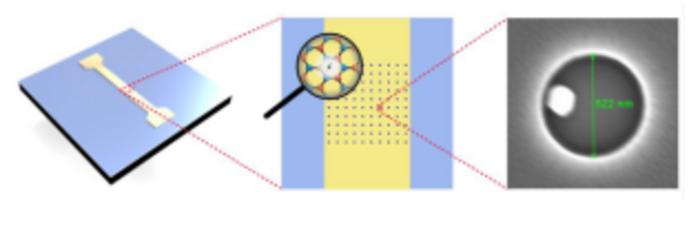
A team led by Prof. GUO Guangcan, with the collaborative efforts from Wigner Research Centre for Physics, revealed a new approach to discovering a new spin defect with an excellent probability of 85% and achieved coherent control of an ultrabright single spin in hexagonal boron nitride (hBN) at room temperature. The study was published in Nature Communications.
Researchers Achieve Coherent Control of Two-dimensional Material Solid-state Spin Defects

Credit: GUO Naijie et al.

A team led by Prof. GUO Guangcan, with the collaborative efforts from Wigner Research Centre for Physics, revealed a new approach to discovering a new spin defect with an excellent probability of 85% and achieved coherent control of an ultrabright single spin in hexagonal boron nitride (hBN) at room temperature. The study was published in Nature Communications.

Solid-state spin defects are of great importance in quantum information, such as the nitrogen-vacancy (NV) center in diamonds, which has been widely applied in quantum computing and quantum networks. The two-dimensional material hBN is considered a remarkable host for color-center spin defects. The spin defects in hBN have attracted great attention with their advantages in two-dimensional quantum devices and integrated quantum nanodevices.

Among the discovered spin defects in hBN, the negatively charged boron vacancy (VB–) defect is the most prevailing one. Researchers from Prof. GUO’s team in their previous research conducted the measurement of temperature dependence based on the VB– defect and demonstrated the coherent dynamics of the multi-spin VB– center. They found it hard to detect a single VB– defect for its low-quantum efficiency for the optical transition. Despite several reports of enhanced photoluminescence of the VB– defect, observing the coherent control of a single spin is still a challenge.

In this study, the researchers managed to isolate individual color centers in hBN powder samples with the help of capillary force. They discovered a class of ultrabright single-spin color centers with an excellent probability of 85%, which is enhanced by 21-fold compared with previous methods.

The researchers then measured its optical properties with significant antibunching characteristics and photon emissivity up to 25 MHz, which is the highest fluorescence count of single spin color centers found in hBN so far. They further captured its Rabi oscillation signal and conducted Hahn echo experiments. It was the first time that a single-spin color center in hBN was manipulated at room temperature, representing a new stage in the application of quantum information.


Moreover, the researchers realized the first principles calculations to clarify the structure of this color-center defect. It was found that the complex of carbon-oxygen dopants may be the source of this type of single-spin color-center defects, and the simulated optically detected magnetic resonance (ODMR) spectra of the CNCB3 model are consistent with the experimental results.

The coherent control of an ultrabright single spin in hBN at room temperature takes a leap in quantum areas, which provides a possibility for addressing spins that can be optically controlled.


Jane FAN Qiong 

Tel: +86-551-63607280 

E-mail:[email protected]


Journal

Nature Communications

DOI

10.1038/s41467-023-38672-6

Article Title

Coherent control of an ultrabright single spin in hexagonal boron nitride at room temperature

Article Publication Date

20-May-2023

Share12Tweet8Share2ShareShareShare2

Related Posts

β-Sitosterol from Ipomoea carnea Jacq. As a promising anti-inflammatory agent: Evidence from in silico modeling and in vitro validation

β-Sitosterol from Ipomoea carnea Jacq. As a promising anti-inflammatory agent: Evidence from in silico modeling and in vitro validation

August 31, 2026
Graded membranes point to a sustainable route for refining complex petroleum

Graded membranes point to a sustainable route for refining complex petroleum

August 31, 2026

Round-robin tests quantify catalyst activity and deactivation in CO2 hydrogenation modelling

August 30, 2026

Researchers reveal guiding principles for electrochemical synthesis of multimetallic nanocrystals

August 30, 2026

POPULAR NEWS

  • β-Sitosterol from Ipomoea carnea Jacq. As a promising anti-inflammatory agent: Evidence from in silico modeling and in vitro validation

    29 shares
    Share 12 Tweet 7
  • Design, fabrication and characterization of a wearable Fiber Bragg grating sensor for cardiorespiratory monitoring using finger plethysmography

    29 shares
    Share 12 Tweet 7
  • KAIST opens the era of industrial-scale microbial foods, proposing growth strategies for the next-generation protein market

    29 shares
    Share 12 Tweet 7
  • Virologist awarded $2 million NIH grant to investigate how virus-infected cells live and die

    29 shares
    Share 12 Tweet 7

About

We bring you the latest biotechnology news from best research centers and universities around the world. Check our website.

Follow us

Recent News

β-Sitosterol from Ipomoea carnea Jacq. As a promising anti-inflammatory agent: Evidence from in silico modeling and in vitro validation

Design, fabrication and characterization of a wearable Fiber Bragg grating sensor for cardiorespiratory monitoring using finger plethysmography

KAIST opens the era of industrial-scale microbial foods, proposing growth strategies for the next-generation protein market

Subscribe to Blog via Email

Success! An email was just sent to confirm your subscription. Please find the email now and click 'Confirm' to start subscribing.

Join 85 other subscribers
  • Contact Us

Bioengineer.org © Copyright 2023 All Rights Reserved.

Welcome Back!

Login to your account below

Forgotten Password?

Retrieve your password

Please enter your username or email address to reset your password.

Log In
No Result
View All Result
  • Homepages
    • Home Page 1
    • Home Page 2
  • News
  • National
  • Business
  • Health
  • Lifestyle
  • Science

Bioengineer.org © Copyright 2023 All Rights Reserved.