• HOME
  • NEWS
  • EXPLORE
    • CAREER
      • Companies
      • Jobs
    • EVENTS
    • iGEM
      • News
      • Team
    • PHOTOS
    • VIDEO
    • WIKI
  • BLOG
  • COMMUNITY
    • FACEBOOK
    • INSTAGRAM
    • TWITTER
Thursday, December 4, 2025
BIOENGINEER.ORG
No Result
View All Result
  • Login
  • HOME
  • NEWS
  • EXPLORE
    • CAREER
      • Companies
      • Jobs
        • Lecturer
        • PhD Studentship
        • Postdoc
        • Research Assistant
    • EVENTS
    • iGEM
      • News
      • Team
    • PHOTOS
    • VIDEO
    • WIKI
  • BLOG
  • COMMUNITY
    • FACEBOOK
    • INSTAGRAM
    • TWITTER
  • HOME
  • NEWS
  • EXPLORE
    • CAREER
      • Companies
      • Jobs
        • Lecturer
        • PhD Studentship
        • Postdoc
        • Research Assistant
    • EVENTS
    • iGEM
      • News
      • Team
    • PHOTOS
    • VIDEO
    • WIKI
  • BLOG
  • COMMUNITY
    • FACEBOOK
    • INSTAGRAM
    • TWITTER
No Result
View All Result
Bioengineer.org
No Result
View All Result
Home NEWS Science News Biology

Researcher receives $5M grant to further cancer studies

Bioengineer by Bioengineer
July 22, 2020
in Biology
Reading Time: 2 mins read
0
IMAGE
Share on FacebookShare on TwitterShare on LinkedinShare on RedditShare on Telegram

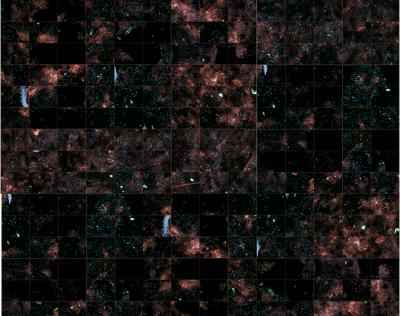
The grant from the Cancer Prevention and Research Institute of Texas will support Dr. Tanmay Lele’s research on cancer and how it progresses
IMAGE

Credit: Texas A&M University College of Engineering

On May 20, Dr. Tanmay Lele, professor in the Department of Biomedical Engineering at Texas A&M University, received a $5 million Recruitment of Established Investigators grant from the Cancer Prevention and Research Institute of Texas (CPRIT) to further knowledge about cancer and how it progresses.

Lele’s research focuses on mechanobiology — the mechanical aspects of biology — where he works to understand how cells sense external mechanical forces as well as how they generate mechanical forces, and how these mechanical forces impact cell function.

In cancer, both cellular mechanical forces and the mechanical properties of resisting cellular structures go awry. These errors cause abnormalities in cell structure. A particularly striking feature of cancer cells is the highly irregular and/or distended shape of the nucleus.

“The nuclei in normal tissue have smooth surfaces, but over time the surfaces of cancer nuclei become irregular in shape,” Lele said. “Now, why? Nobody really knows. We’re still at the tip of the iceberg at trying to figure this problem out. But nuclear abnormalities are ubiquitous and occur in all kinds of cancers — breast, prostate and lung cancers.”

Pathologists study biopsies and note abnormalities in the shape of the cell and its nucleus to grade the severity of cancer. Lele and his team are computerizing the analysis of nuclear shapes to research the cause of abnormal cancer structures.

Using photos of nuclei and cells in human tissue taken by a pathologist, Lele’s team has developed a computational algorithm to measure the degree of irregularity in the nucleus. With the algorithm, the team can run statistical analyses of the abnormalities and search for correlations between the extent of the irregularity, changes to genetic or molecular signatures in tumors and, ultimately, patient outcomes.

Lele’s research aims to help the medical community develop new knowledge of human cancers and how they progress, to better diagnose and manage cancers. Understanding the mechanisms behind the abnormalities can help develop therapies to better treat cancers by targeting the nucleus.

“Like any other basic field, we are trying to make discoveries with the hope that they will have long-term impacts on human health,” Lele said.

The cancer grant from CPRIT is a collaborative effort with Dr. Michael Mancini and Dr. Fabio Stossi from the Baylor College of Medicine.

###

Media Contact
Amy Halbert
[email protected]

Original Source

https://engineering.tamu.edu/news/2020/07/researcher-receives-5m-grant-to-further-cancer-research.html?_ga=2.45771814.364519276.1595253141-8037009.1591719143

Tags: cancerCell BiologyMedicine/Health
Share12Tweet8Share2ShareShareShare2

Related Posts

blank

Rice miRNA: Key Regulator in Fungal Interactions

December 3, 2025
Human Impact Alters Leopard and Ungulate Dynamics

Human Impact Alters Leopard and Ungulate Dynamics

December 3, 2025

Adaptive Microsatellite Variants in Indian Yak Populations

December 2, 2025

Guide to Single-Cell RNA Transcriptomics Unveiled

December 2, 2025
Please login to join discussion

POPULAR NEWS

  • New Research Unveils the Pathway for CEOs to Achieve Social Media Stardom

    New Research Unveils the Pathway for CEOs to Achieve Social Media Stardom

    204 shares
    Share 82 Tweet 51
  • Scientists Uncover Chameleon’s Telephone-Cord-Like Optic Nerves, A Feature Missed by Aristotle and Newton

    121 shares
    Share 48 Tweet 30
  • Neurological Impacts of COVID and MIS-C in Children

    107 shares
    Share 43 Tweet 27
  • MoCK2 Kinase Shapes Mitochondrial Dynamics in Rice Fungal Pathogen

    69 shares
    Share 28 Tweet 17

About

We bring you the latest biotechnology news from best research centers and universities around the world. Check our website.

Follow us

Recent News

Boosting Cancer Immunotherapy by Targeting DNA Repair

Evaluating eGFR Equations in Chinese Children

Metformin-Alogliptin Combo vs. Monotherapy in Diabetes

Subscribe to Blog via Email

Enter your email address to subscribe to this blog and receive notifications of new posts by email.

Join 69 other subscribers
  • Contact Us

Bioengineer.org © Copyright 2023 All Rights Reserved.

Welcome Back!

Login to your account below

Forgotten Password?

Retrieve your password

Please enter your username or email address to reset your password.

Log In
No Result
View All Result
  • Homepages
    • Home Page 1
    • Home Page 2
  • News
  • National
  • Business
  • Health
  • Lifestyle
  • Science

Bioengineer.org © Copyright 2023 All Rights Reserved.