
• HOME
  • NEWS
  • EXPLORE
    • CAREER
      • Companies
      • Jobs
    • EVENTS
    • iGEM
      • News
      • Team
    • PHOTOS
    • VIDEO
    • WIKI
  • BLOG
  • COMMUNITY
    • FACEBOOK
    • INSTAGRAM
    • TWITTER
Monday, October 5, 2026
BIOENGINEER.ORG
No Result
View All Result
  • Login
  • HOME
  • NEWS
  • EXPLORE
    • CAREER
      • Companies
      • Jobs
        • Lecturer
        • PhD Studentship
        • Postdoc
        • Research Assistant
    • EVENTS
    • iGEM
      • News
      • Team
    • PHOTOS
    • VIDEO
    • WIKI
  • BLOG
  • COMMUNITY
    • FACEBOOK
    • INSTAGRAM
    • TWITTER
  • HOME
  • NEWS
  • EXPLORE
    • CAREER
      • Companies
      • Jobs
        • Lecturer
        • PhD Studentship
        • Postdoc
        • Research Assistant
    • EVENTS
    • iGEM
      • News
      • Team
    • PHOTOS
    • VIDEO
    • WIKI
  • BLOG
  • COMMUNITY
    • FACEBOOK
    • INSTAGRAM
    • TWITTER
No Result
View All Result
Bioengineer.org
No Result
View All Result
Home Headlines

Research reveals insight into how lung cancer spreads

Bioengineer.org by Bioengineer.org
January 21, 2018
in Headlines, Health, Science News
Reading Time: 2 mins read
0
Share on FacebookShare on TwitterShare on LinkedinShare on RedditShare on Telegram
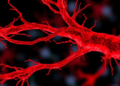
IMAGE

Credit: MD Anderson Cancer Center

A cellular component known as the Golgi apparatus may play a role in how lung cancer metastasizes, according to researchers at The University of Texas MD Anderson Cancer Center whose findings were reported in the Nov. 21 online issue of the Journal of Clinical Investigation.

The Golgi apparatus, often referred to as a cellular "post office" for its ability to package proteins into vesicles for transportation to other sites within or outside the cell, may offer a new therapeutic approach for preventing metastasis. Think of vesicles as miniature mail trucks composed of a fatty shell filled with secretory liquids that travel from the Golgi to destinations within the cell where their contents are put to use. The Golgi can appear as a compacted membranous "stack" near the cell's nucleus or as a dispersed system of interconnected membranes. Vesicles can "bud" from the Golgi in either form.

"Our findings show that certain proteins in the Golgi that control Golgi compaction may actually promote vesicle budding and transport and enhance the tumor cell's ability to metastasize" said Jonathan Kurie, M.D., professor of Thoracic Head and Neck Medical Oncology. "These findings highlight the potential utility of targeting certain cellular processes in the Golgi."

According to Kurie, tumor cells gain their metastatic ability through a Golgi-related process driving the budding and transport of secretory vesicles. Unknown before this study was whether Golgi compaction was responsible for vesicular trafficking leading to metastasis. This study shows that Golgi compaction is associated with EMT or epithelial-to-mesenchymal transition, a process that allows a cell to detach and move away from its neighbors during wound healing and other normal processes and is thought to play a role in cancer cell migration.

Using lung adenocarcinoma cell lines isolated from mice and patients, Kurie's team found that EMT depends on a Golgi protein called PAQR11 for successful tumor cell migration and metastasis in lung cancers.

"We concluded that, through PAQR11, tumor cells can hijack a normal Golgi compaction process in order to gain metastatic ability," said Kurie.

###

MD Anderson study team participants included Xiaochao Tan, Ph.D.; Priyam Banerjee; Ph.D., Hou-Fu Guo, Ph.D.; Daniela Pankova, Ph.D.; Xin Liu, Ph.D.;Yongming Xue, Jonathon Roybal and Don Gibbons, M.D., all of Thoracic Head and Neck Medical Oncology; Tomasz Zal, Ph.D., Immunology; and Chad Creighton, Ph.D., Bioinformatics and Computational Biology. Other participating institutions include the University of Michigan, Ann Arbor, Mich.; Ewha Woman's University School of Medicine, Seoul, South Korea; University of York, York, U.K.; Harbin Medical University Cancer Hospital, Harbin, China; University of Houston and Baylor College of Medicine, Houston.

The study was funded by the National Institutes of Health (R01CA181184, R01CA125123, GM087364, GM105920, GM112786P30, EY007551, K08CA151661, NRF-2010-0027945, CA015672, 1S10OD012304-01, and 1S10RR09552-01), the American Cancer Society (RGS-09-278-01-CSM), the Cancer Prevention Research Institute of Texas (RP120713), and MCubed and the Fastforward Protein Folding Disease Initiative at the University of Michigan.

Media Contact

Ron Gilmore
[email protected]
713-745-1898
@mdandersonnews

http://www.mdanderson.org

Share12Tweet8Share2ShareShareShare2

Related Posts

Machines Learn to Listen: Two Decades of AI-Powered Bioacoustics Reviewed

Machines Learn to Listen: Two Decades of AI-Powered Bioacoustics Reviewed

October 5, 2026
Overactive Inflammasome in Artery Muscle Cells Drives Dangerous Vessel Thickening in Mice

Overactive Inflammasome in Artery Muscle Cells Drives Dangerous Vessel Thickening in Mice

October 5, 2026

Giving Trees Room to Breathe: Wider Spacing Boosts Poplar Growth, Biodiversity and Soil Health

October 5, 2026

Cobalt Emerges as a Multitasking Powerhouse for Energy and Environmental Technologies

October 5, 2026
Please login to join discussion

POPULAR NEWS

  • Alloys That Shrink Their Own Grains: New PIX Mechanism Refines Metals With Heat Alone

    Alloys That Shrink Their Own Grains: New PIX Mechanism Refines Metals With Heat Alone

    29 shares
    Share 12 Tweet 7
  • Endurance Exercise Reshapes the Liver in Males and Females Through Distinct Molecular Routes

    29 shares
    Share 12 Tweet 7
  • Single Transcription Factor PU.1 Rapidly Converts Fibroblasts into Macrophage-Lineage Cells

    29 shares
    Share 12 Tweet 7
  • New Scale Measures How Ready Nurse Educators Really Are for the AI Era

    29 shares
    Share 12 Tweet 7

About

We bring you the latest biotechnology news from best research centers and universities around the world. Check our website.

Follow us

Recent News

Alloys That Shrink Their Own Grains: New PIX Mechanism Refines Metals With Heat Alone

Endurance Exercise Reshapes the Liver in Males and Females Through Distinct Molecular Routes

Single Transcription Factor PU.1 Rapidly Converts Fibroblasts into Macrophage-Lineage Cells

Subscribe to Blog via Email

Success! An email was just sent to confirm your subscription. Please find the email now and click 'Confirm' to start subscribing.

Join 85 other subscribers
  • Contact Us

Bioengineer.org © Copyright 2023 All Rights Reserved.

Welcome Back!

Login to your account below

Forgotten Password?

Retrieve your password

Please enter your username or email address to reset your password.

Log In
No Result
View All Result
  • Homepages
    • Home Page 1
    • Home Page 2
  • News
  • National
  • Business
  • Health
  • Lifestyle
  • Science

Bioengineer.org © Copyright 2023 All Rights Reserved.